Introduction
When people are making the decision between natural stone paving or 20mm porcelain tiles to have in their outdoor area, they want a durable material, a design and colour that catches the eye and something that suits their budget.
People often think that Porcelain is quite delicate but in actual fact it is one of the hardest types of paving materials.
Choosing between these materials often feels like a toss-up, but the "physics" of each stone tells a different story. Whether you are weighing up sandstone vs limestone vs porcelain or looking for granite or sandstone paving, the decision impacts everything from how often you need to power-wash to how much heat the patio holds in the summer. In Ireland, the key is balancing the traditional charm of natural stone with the near-zero maintenance of modern vitrified porcelain.
Outdoor Porcelain Tiles
Porcelain is made by heating clay type materials at extremely high temperatures. It includes clay in the form of kaolinite. The raw materials for porcelain are mixed with water and form a paste. The paste is worked to a required shape before firing in a kiln.
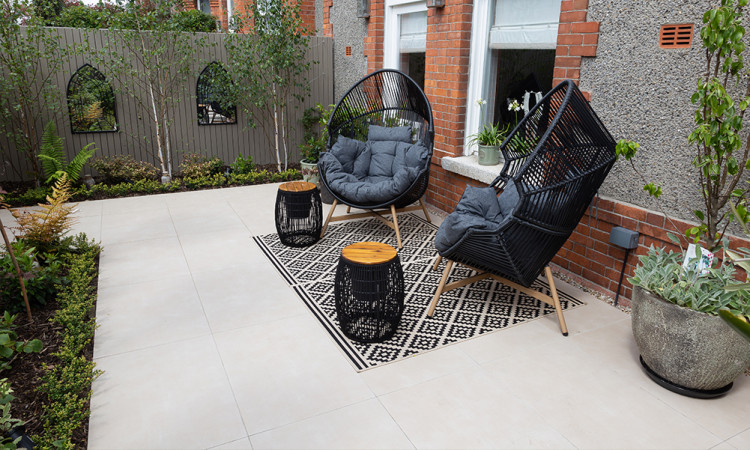
Our 20mm porcelain has been created for the Irish market and has the strength to handle our climate. If you decide to go for 20mm outdoor porcelain, our range has a wide range of colours and designs. They include; light grey, beige, cream to black, or grey. Our range also includes a very popular wood effect outdoor porcelain option
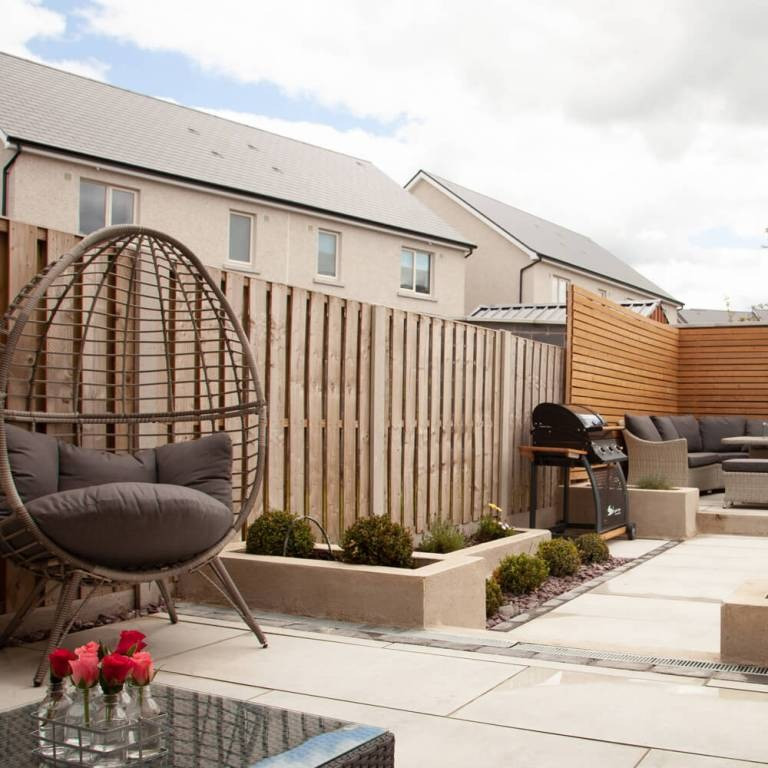
Our range also includes a very popular wood effect option. All of our outdoor 20mm porcelain range contains an R11 anti-slip rating.
Anti-slip rating is a heavy duty slip-resistance that is suitable for commercial and residential applications
In terms of thickness all of our outdoor porcelain is 20mm thick which is the perfect depth to create a long-lasting patio which will perform very well and last for years. 20mm porcelain is also the perfect material for driveways.
Natural Paving Slabs
In the Geology of natural stone there are three major rock groups, igneous, sedimentary, and metamorphic.
Limestone vs Sandstone Paving: Which is right for you?: This is a classic Irish debate. Sandstone is a sedimentary rock with a "riven" (uneven) surface that offers a warm, multicoloured look. However, it is more porous than its rivals. On the flip side, limestone is denser and usually more uniform in colour. If you are choosing a limestone or porcelain patio, remember that limestone will "age" and mellow over time, while porcelain remains frozen in the state it was installed.
Both limestone and sandstone are members of the sedimentary rock group. Sedimentary rock is formed from materials that have settled at the bottom of a body of water or been deposited in a desert environment and have then been compressed over millions of years, creating a layered stone. The sediment comes from eroded rocks carried there by rivers.
Granite is part of the igneous rock group. Igneous rocks are formed by molten magma from within the earth. When magma erupts, it cools and solidifies to form volcanic rocks.
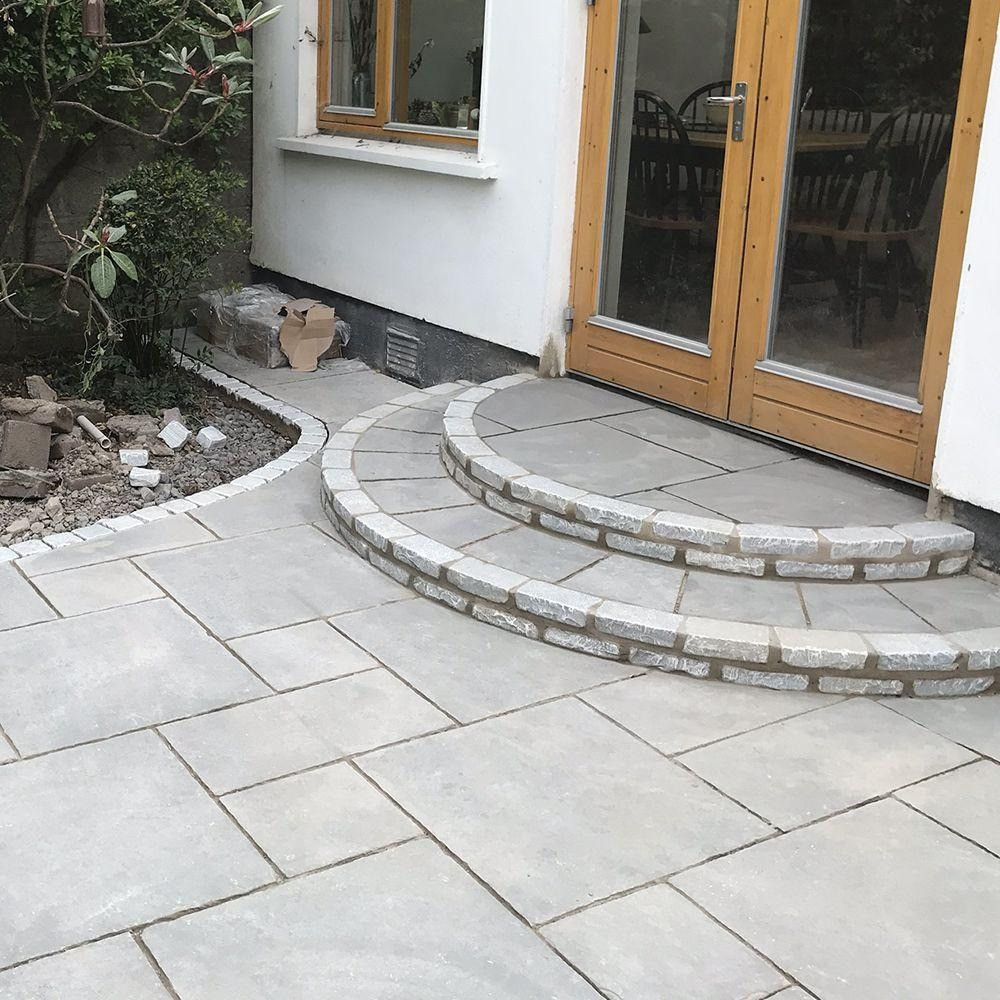
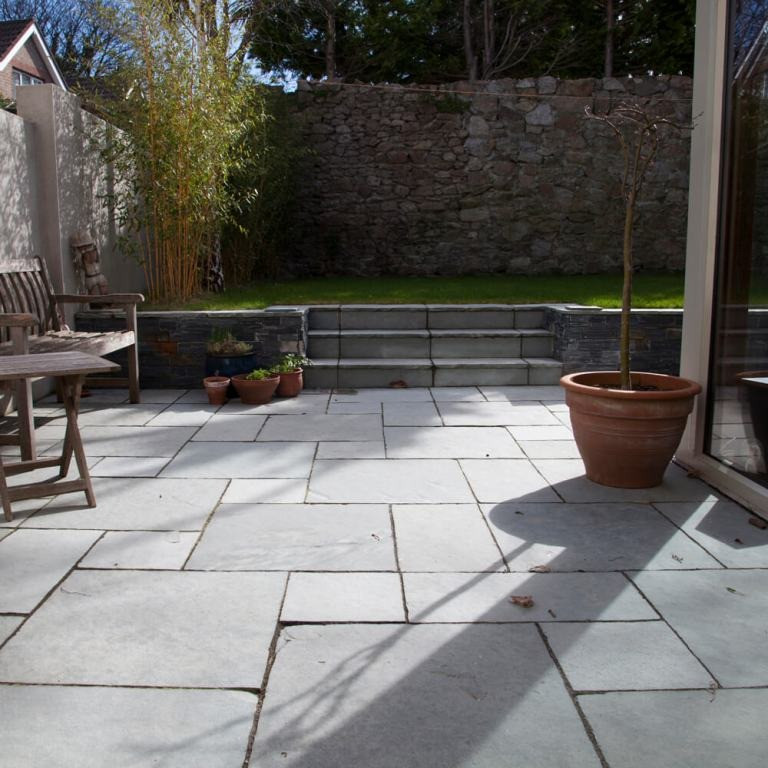
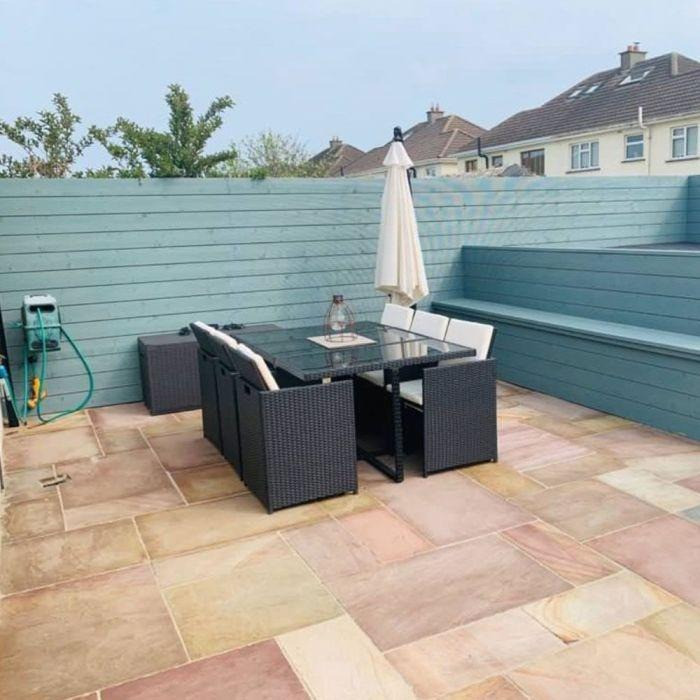
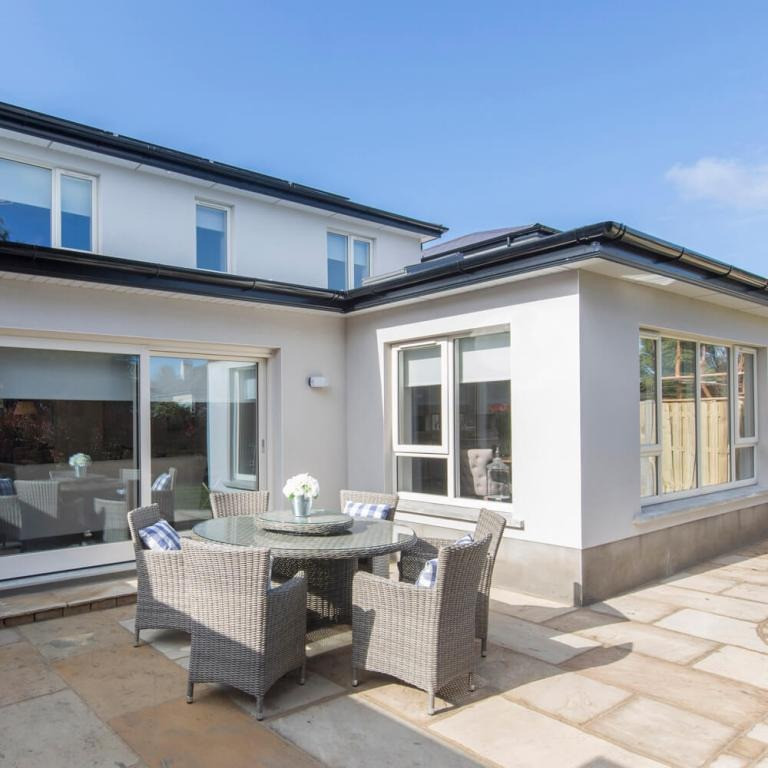
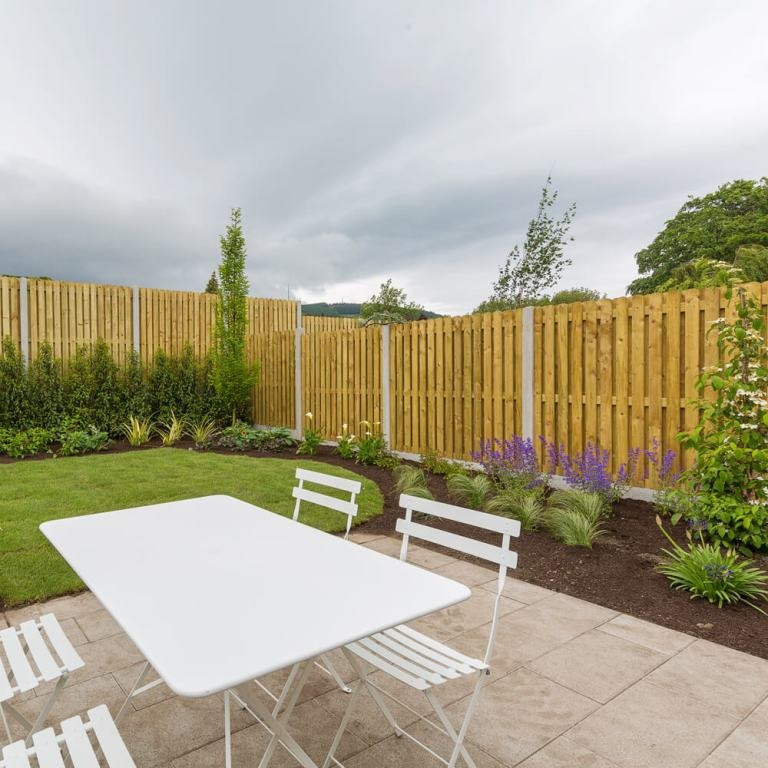
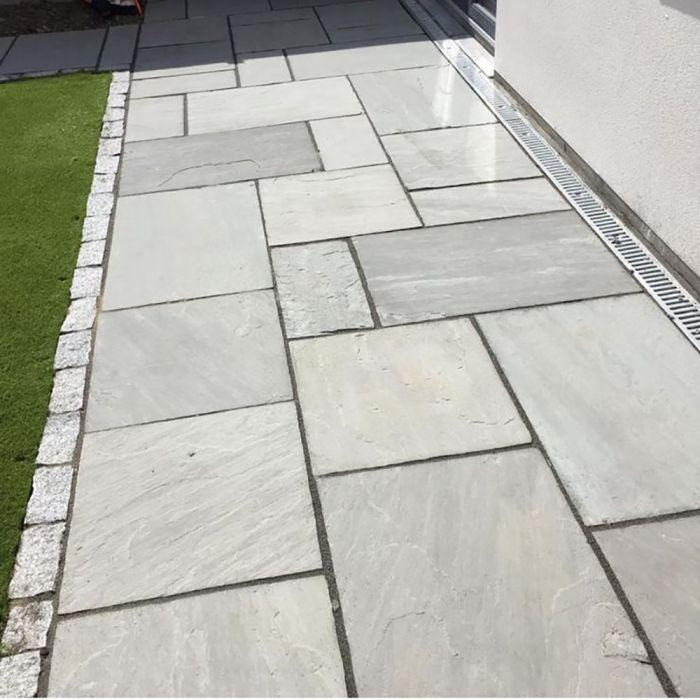
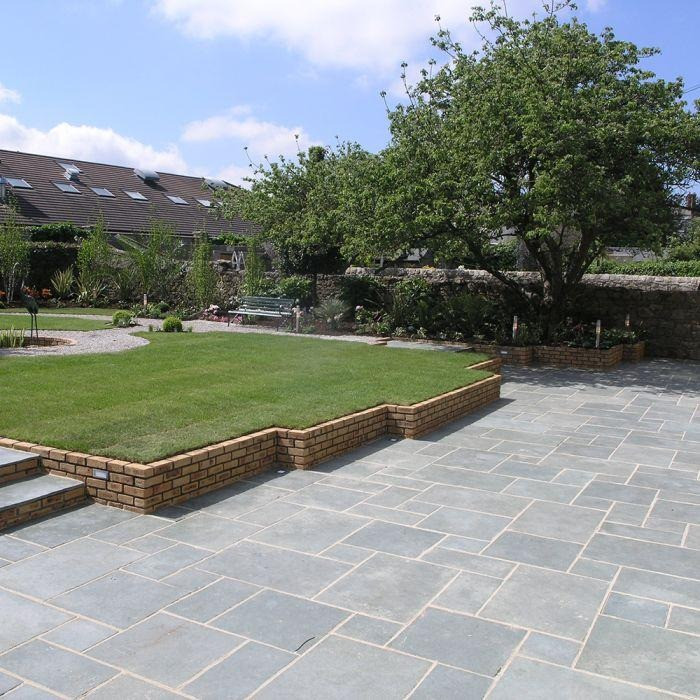
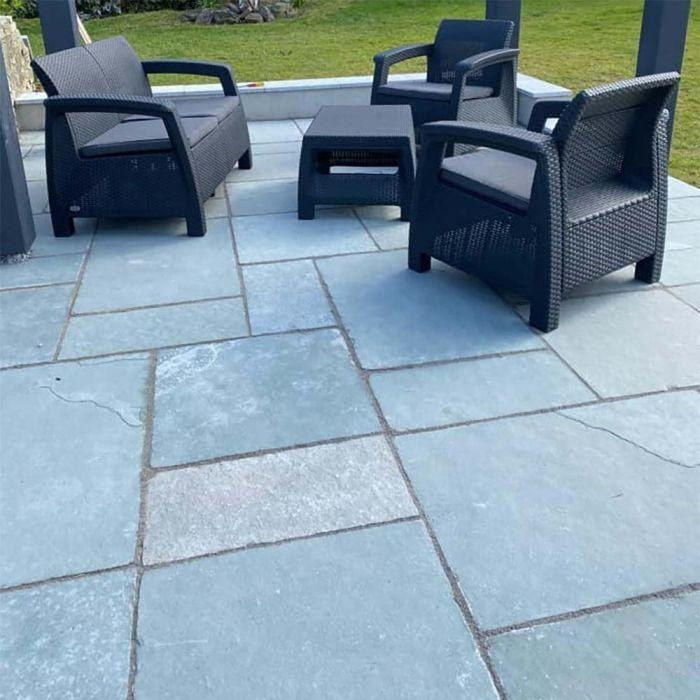
Sandstone and limestone are both very popular materials for paving and can be used for pathways or garden patios. One of the major benefits of both limestone and sandstone is their low water absorption which means they can withstand high levels of wet conditions.
Granite is the second strongest rock behind diamond. An igneous rock's mode of formation and composition generally makes them very hard, strong, and resistant to deterioration, thus creating a long-lasting paving material.
If you decide to go with paving slabs for your patio, or driveway, we have a huge selection with various colours and sizes that can suit any outdoor setting. (browse our range of paving slabs)
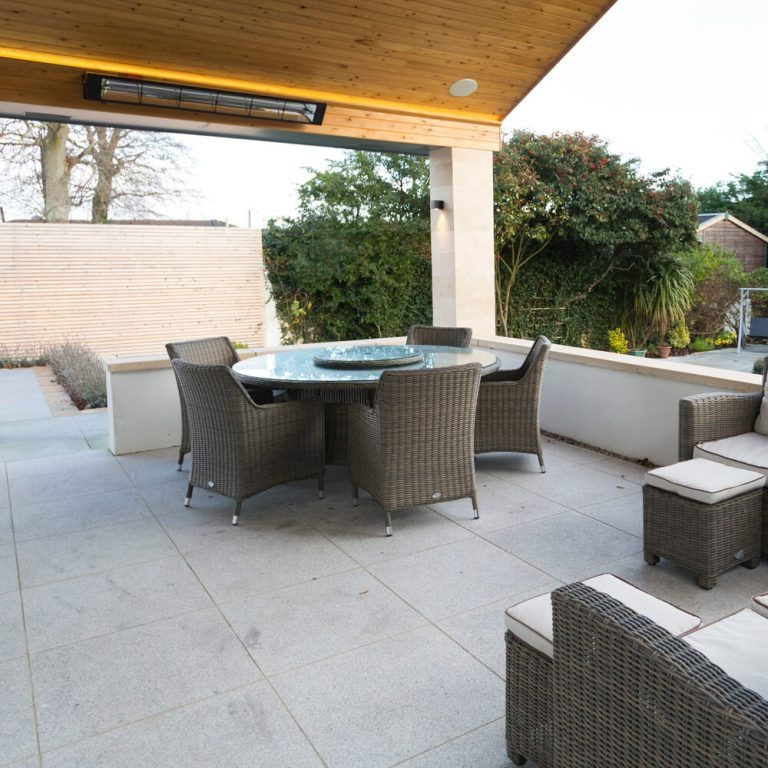
Our sandstone paving slabs are ethically sourced in India and we have a broad selection of different products including Camel Dust sandstone paving slabs, Mint Sandstone paving slabs, and Kandla Grey sandstone paving slabs.
Our limestone finishes are available in four different colours and three sizes. This hard-wearing material comes in a fantastic mix of colours including; Black Limestone Paving, Kota Green paving slabs, Kota Grey slabs, Kota Yellow, and Egyptian Limestone Paving. The available sizes are 600×300, 600×600 and 600x900mm, we can supply these materials in single sizes or any size combination to make up a pattern. Limestone paving is perfect for the Irish climate as it is non-porous and has great anti-slip properties.
Lastly, we also have Granite paving which is a classic paving option that is very popular with our customers. We have two colours to pick from, silver granite and the more colourful, Yellow Granite. Our granite paving is available in bush-hammered and flamed finish that has natural anti-slip properties that thrives in the ever-changing Irish weather! Also, our silver granite paving is available in a polished finish, this material can give any indoor space a very classy and decadent look.
Porcelain Tiles vs Granite Tiles: The Battle of the Heavyweights When comparing limestone vs granite paving, granite always wins on pure density. It is an igneous rock, forged in fire, making it incredibly hard-wearing for driveways. However, when you look at granite tile vs porcelain tile, porcelain actually offers better stain resistance. While granite is tough, it can still absorb oils or tannins from fallen leaves if not sealed. Porcelain’s vitrified surface is completely sealed by nature of its firing process, making it the "set and forget" alternative to even the strongest natural stones.
Maintenance Garden Slabs
Natural stone paving slabs need after-care and we would recommend our natural stone to be sealed with specialist products immediately after installation and at regular 12-month intervals to protect the stone. The best option to clean your stone is to brush it quite regularly.
We also suggest that you use a soap with a neutral ph and rinse with water to finish. Power washing can also be used but be careful to avoid spraying water directly into the grout or jointing material. We recommend that you test your cleaning product on your natural stone patio on a small area of your paving first to make sure you are happy with the result before you commit to cleaning the whole area.
| Feature | 20mm Porcelain | Sandstone | Limestone | Granite |
|---|---|---|---|---|
| Rock Group | Man-made (Vitrified) | Sedimentary | Sedimentary | Igneous |
| Porosity | Ultra-Low (<0.05%) | High (Needs Sealing) | Low to Medium | Low (Very Dense) |
| Maintenance | Zero-Minimal | High (Prone to Algae) | Moderate | Moderate (Annual Wash) |
| Finish/Texture | Smooth but Gritty (R11) | Riven (Natural Layers) | Honed or Riven | Bush-hammered/Flamed |
| Best Use | Modern Patios | Rustic/Traditional | Formal Gardens | Driveways & Edging |
How much does it cost?
20mm Porcelain Tiles are generally more expensive than natural stone due to their supercharged characteristics. However, the natural options have their own inherent qualities that make them superb paving options. Both can withstand the Irish climate, though it should be noted that we recommend our natural stone paving is sealed and cared for to keep it looking as it should and help it withstand the weather over time.
Paving Materials: Expert FAQ
Is there a big difference between limestone and sandstone?
Yes. In the context of limestone vs sandstone paving, limestone is generally tougher and less porous. Sandstone is softer and easier to cut but will require more frequent cleaning to prevent green algae from growing in its open pores.
Should I choose a sandstone v porcelain patio?
If you want a traditional, rustic garden with natural colour variations, go for sandstone. If you want a modern, sleek finish that looks exactly the same in 10 years as it does today, 20mm porcelain is the superior choice for the Irish climate.
Which is better: limestone or porcelain paving for a North-facing garden?
For shaded or North-facing areas in Ireland, we always recommend limestone vs porcelain paving. Porcelain is the winner here because it does not absorb moisture, meaning it won't become slippery with moss or lichen in the shade.
Is granite more durable than porcelain?
Both are extremely hard-wearing. While granite paving is incredibly strong and traditional, porcelain tiles are more resistant to stains and frost damage. For a driveway, granite is a classic choice, but for a dining patio, porcelain's ease of cleaning often makes it the favorite.
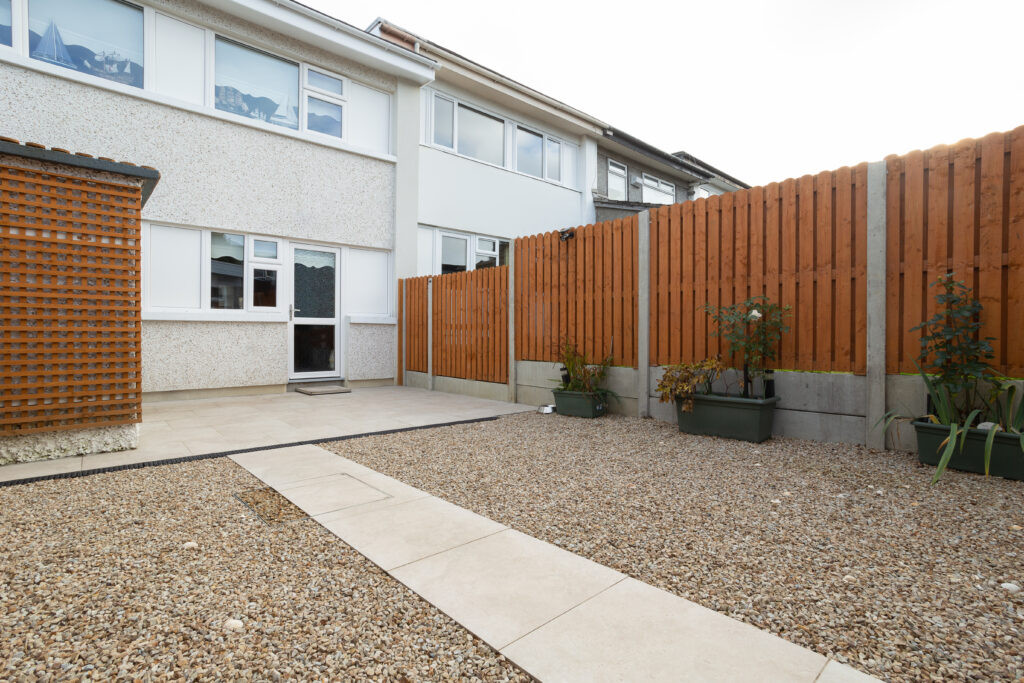
Natural stone paving can be used to create outdoor features such as patio, steps, porch, gardens or driveways.
It is worth noting, that some of our outdoor porcelain tiles have matching indoor tiles, so you can create all of a seamless transition between your outdoor and indoor living space.
Recap: Outdoor Porcelain Tiles
Outdoor porcelain tiles are designed to make your outdoors safer, easily maintainable, and more attractive. Porcelain is moss, mould, frost and salt resistant, as well as R11 anti-slip-rated.
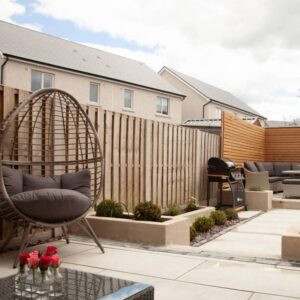
Recap: Natural Paving Slabs
At Tile Merchant we stock a huge range of natural sandstone and limestone paving slabs, handpicked to suit both the Irish outdoors and the aesthetic trends of Irish homes and gardens.
Why Tile Merchant?
We offer extremely competitive pricing on our entire range of tiles and likewise. We stock a huge range of wall and floor tiles and our prices are competitive for retail and trade. Our stock is widely available in our tile stores in Ireland, which are open 7 days a week.
Alternatively, if you’d prefer to shop our tiles online, we can supply you with samples delivered for free.

Article written by Tile Merchant