- Introduction
- How to Cut Tiles Without a Tile Cutter
- How to Use a Tile Cutter Like a Pro
- How to Cut Curved Tiles or Around Pipes
- Manual vs. Electric Tile Cutters
- How to Cut Porcelain Tiles
- How to Cut Ceramic Tiles
- How to Use an Angle Grinder Safely
- Pro Tips for a Clean Finish
- Conclusion
- Ready to Get Started?
- Planning A Renovation?
- Why Choose Tile Merchant?
Introduction
Cutting tiles might sound intimidating, but it’s easier than most people think once you understand the basics. Whether you’re fitting new tiles in your kitchen, bathroom, or outdoor patio, knowing how to cut tiles correctly will make all the difference between a neat, professional finish and a frustrating mess of chipped edges.
Tiling remains one of the most common DIY renovation jobs in Irish homes, and cutting tiles cleanly is usually the one step that makes people hesitate before starting a project themselves.
In this guide, we’ll walk you through the best ways to cut ceramic and porcelain tiles, with or without a tile cutter, so you can achieve precise results every time. You’ll also discover when to use a manual tile cutter, an angle grinder, or even an electric tile cutter for tougher materials.

How to Cut Tiles Without a Tile Cutter
If you don’t own a tile cutter yet, don’t worry, because you can still get a clean cut using a few simple tools.
Here’s how:
- Mark your line: Use a pencil or marker to clearly mark where you want the cut.
- Score the surface: Using a glass cutter or a sharp utility knife and a straight edge, firmly score along the line once.
- Snap the tile: Place a pencil or thin rod under the scored line and gently press down on both sides to snap it cleanly.
- Smooth the edges: Use a tile file or fine sandpaper to tidy up any roughness.
This method works well for ceramic tiles and thin indoor tiles (around 10mm). It’s not ideal for dense porcelain or 20mm outdoor tiles, but perfect if you’re making small adjustments or cutting around edges.
If you plan to do a full tiling project, investing in a proper tile cutter will save you hours and give you cleaner, more consistent results.
Can You Cut Tiles Without Any Tools?
Technically, yes, but we'd strongly advise against it, and it's worth being direct about why. Cutting a tile without a glass cutter, utility knife, or any scoring tool usually means attempting to snap or break the tile using brute force, a hard edge, or an improvised blade. This is a genuinely risky approach: tiles don't fracture predictably without a clean score line first, which means the break is far more likely to go off at an angle, shatter unpredictably, or produce a sharp, uneven edge. The risk isn't just a ruined tile, it's a real risk of cuts to the hands from an unpredictable break.
If you don't own a dedicated tile cutter, a basic glass cutter or a sharp utility knife (covered in the section above) is the minimum tool needed for a controlled, reasonably safe cut. These are inexpensive and widely available, so there's rarely a good reason to attempt a true "no tools" cut on anything beyond an emergency, one-off adjustment. For mosaic tiles specifically, tile nippers are the safer minimum tool, since mosaic pieces are too small to score and snap reliably by hand.
How to Use a Tile Cutter Like a Pro
A manual tile cutter is one of the most useful tools you can own if you plan to install tiles yourself. It’s clean, fast, and requires no electricity, just technique and a steady hand.
Here’s how to use it:
- Place your tile on the cutter base and align it with the cutting guide.
- Press the handle down gently to score the surface in one smooth motion.
- Push down firmly to snap the tile along the scored line.
- Check the edge; it should be smooth and ready for installation.
For most home projects, a manual cutter will handle everything from ceramic to porcelain tiles.
If you’re after precision and comfort, the Rubi Speed-62 Magnet Manual Tile Cutter with Case is a top choice.
It features a smart MAGNET system that locks and releases the scoring handle with one hand, giving you perfect visibility of the cutting line. The double guide and powerful separator (up to 800 kg of force) make straight and diagonal cuts effortless, even on thicker tiles.
“A clean cut always starts with a single, confident score. Press too lightly and you won’t break the glaze. Press too hard and you’ll chip it. You want to hear a smooth, consistent sound. That’s how you know the blade is doing its job.”
Patrick Doyle, Senior Tiling Specialist at Tile Merchant Ireland
How to Cut Curved Tiles or Around Pipes
Curved cuts are often needed around toilets, basins, or outdoor drain areas. The trick is in the marking.
- Trace your curve on the tile using the object (pipe or base) as a guide.
- Score the outline using a tile scribe or glass cutter.
- Nibble away the waste area gradually using tile nippers.
- For tougher materials, use an angle grinder with a diamond blade and take your time.
If you’re cutting holes for pipes or taps, use a tile drill bit and go slow. You’ll find all the tools you need in our full tile tools range.
Manual vs. Electric Tile Cutters
So, when should you use an electric tile cutter instead of a manual one?
⚡ Manual cutters like the one provided by Rubi is ideal for straight cuts on most ceramic and porcelain tiles. They’re quiet, dust-free, and lightweight.
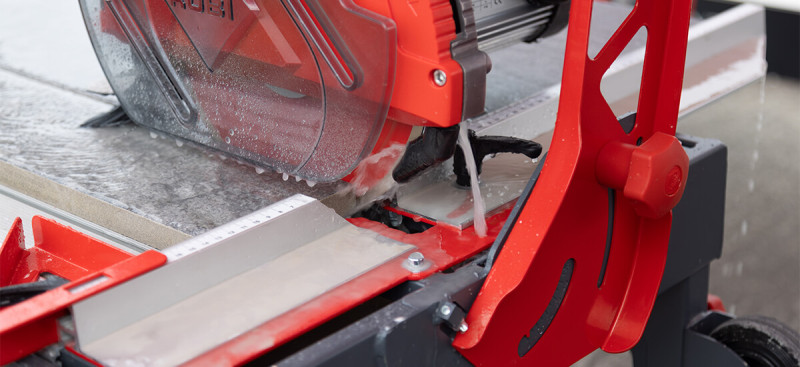
⚡ Electric cutters or wet saws are best for thick, full-body porcelain and 20mm outdoor tiles. They use a water-cooled diamond blade to reduce friction and prevent chipping.
The Montolit Masterpiuma Power 5 is a pro-level manual cutter that handles anything from thin glass mosaics to 22mm thick porcelain. Its adjustable incision handle gives you full control over cutting depth and pressure, perfect for when you want clean cuts without cracks. If you’re cutting large-format tiles, its strong aluminium frame and lateral supports keep everything stable and accurate.
How to Cut Porcelain Tiles
Porcelain tiles are beautiful but dense. They’re harder than ceramic tiles, which means you’ll need a bit more patience and the right tools.
Porcelain tiles are fired at temperatures above 1200°C, which is significantly hotter than standard ceramic, closing the tile's pores and making it denser and harder to cut cleanly than ceramic.
Here’s how to cut them:
- Use a manual tile cutter with a tungsten carbide scoring wheel.
- Apply firm, even pressure while scoring, once only.
- Snap the tile cleanly using the cutter’s handle.
- For edges or corners, use an angle grinder or wet saw.
Remember to check out our selection of porcelain tiles for more information about their characteristics and recommended tools.
Do you live in Ireland? Visit a Tile Merchant store today and explore our stunning range of wall and floor tiles. Whether you're looking for porcelain tiles, ceramic tiles or wall panels, we have it all!
How to Cut Ceramic Tiles
Ceramic tiles are slightly softer and easier to work with, making them ideal for beginners. You can use either a manual tile cutter or a glass cutter method for simple cuts.
After snapping the tile, use fine sandpaper, a tile file, or a rubbing stone to smooth the edges. For a full range of ceramic tiles, visit our collection and match the right style to your project


How to Cut Mosaic Tiles Without a Tile Cutter
Mosaic tiles are usually too small for a standard tile cutter's scoring wheel and snapping mechanism to work reliably, so tile nippers are the standard tool instead, even for people who own a full-size cutter for other tiles.
To cut a mosaic tile: mark your line, then use tile nippers to take small, controlled bites along the line rather than trying to snap the whole piece in one go. Working from the edge inward in small nips gives a far cleaner result than attempting one large bite, which tends to shatter the small tile unpredictably. For mosaic sheets (multiple tiles mounted on a mesh backing), cut through the mesh with a utility knife first to separate the section you need before nipping individual tiles to fit.
How to Use an Angle Grinder Safely
An angle grinder is your go-to tool for curved cuts, trimming edges, or shaping around obstacles. Always use a diamond-tipped blade and wear gloves, goggles, and a dust mask.
To cut safely:
- Secure the tile on a stable surface.
- Mark your line clearly.
- Hold the grinder with both hands and guide it slowly along the line.
- Let the blade do the work — don’t force it.
- Smooth the cut edge with a rubbing stone.
This method is perfect for tough cuts or when you’re working with thicker outdoor tiles that a manual cutter might struggle with.

Pro Tips for a Clean Finish
For better results:
- Mark tiles carefully before cutting and double-check your measurements.
- Keep the cutter wheel clean and sharp for smooth scoring.
- Support large-format tiles fully to avoid cracking.
- For porcelain and outdoor tiles, go slow and steady.
- Always wear eye protection and gloves when cutting or drilling tiles.
If you’re still deciding what material to use, explore all types of tiles to see which ones best suit your space and your tools.
Conclusion
Cutting tiles isn’t just a job for professionals. With the right approach and the right tools, anyone can achieve clean, accurate results. Whether you’re trimming ceramic, shaping porcelain, or tackling outdoor 20mm tiles, a quality cutter like the Rubi Speed-62 Magnet or Montolit Masterpiuma Power 5 can make all the difference.
Ready to start your project? Explore Tile Merchant’s full range of tile tools and accessories and make your next tiling job your best one yet.
Ready to Get Started?
At Tile Merchant, we stock a huge range of tile accessories you need for the job. From Alpha Tools to Rubi, we’ve got professional solutions trusted by tilers across Ireland.
Don’t let the fear of cracking a tile stop your project. Get the right tools, follow our guide, and drill with confidence.

FAQs: How to Cut Tiles
How do you cut tiles?
Mark your cut line, score the tile once firmly along that line using a glass cutter or a tile cutter, then snap the tile cleanly along the score and smooth the edge with a tile file or fine sandpaper.
How do you cut porcelain tiles?
Porcelain tiles need a manual cutter with a tungsten carbide scoring wheel, or an electric wet saw for thicker or outdoor porcelain. Score once with firm, even pressure, then snap cleanly along the line.
Can you cut tiles without a tile cutter?
Yes, for ceramic and thin indoor tiles, using a glass cutter or sharp utility knife to score the surface, then snapping the tile along the scored line. This method isn't suitable for dense porcelain or thicker outdoor tiles.
Can you cut tiles without any tools at all?
This isn't recommended. Attempting to break a tile without first scoring it with even a basic glass cutter or utility knife produces an unpredictable, uneven break and a real risk of injury from sharp, jagged edges.
How do you cut mosaic tiles without a tile cutter?
Use tile nippers to take small, controlled bites along your marked line rather than a full-size cutter, since mosaic pieces are usually too small for a standard scoring and snapping mechanism to work reliably.
What's the best way to cut floor tiles?
A manual tile cutter suits most ceramic and porcelain floor tiles. For thick porcelain or 20mm outdoor floor tiles, an electric wet saw with a diamond blade gives a cleaner, more controlled cut.
Do you need a wet saw to cut porcelain tile?
Not always. A manual cutter with a tungsten carbide wheel handles most standard porcelain tiles. A wet saw becomes necessary for thicker, full-body porcelain or 20mm+ outdoor tiles, where a manual cutter is more likely to chip the edge.
How do you cut a curved edge in a tile?
Trace the curve using the object it needs to fit around, score the outline with a tile scribe or glass cutter, then remove the waste gradually with tile nippers, or use an angle grinder with a diamond blade for tougher materials.
Why Choose Tile Merchant?
We offer extremely competitive pricing on our entire range of tiles and likewise. We stock a huge range of wall and floor tiles, and our prices are competitive for retail and trade. Our stock is widely available in our tile stores in Ireland, which are open 7 days a week.
Alternatively, if you’d prefer to shop our tiles online, we can supply you with free samples delivered for free.

Article written by Tile Merchant