Introduction
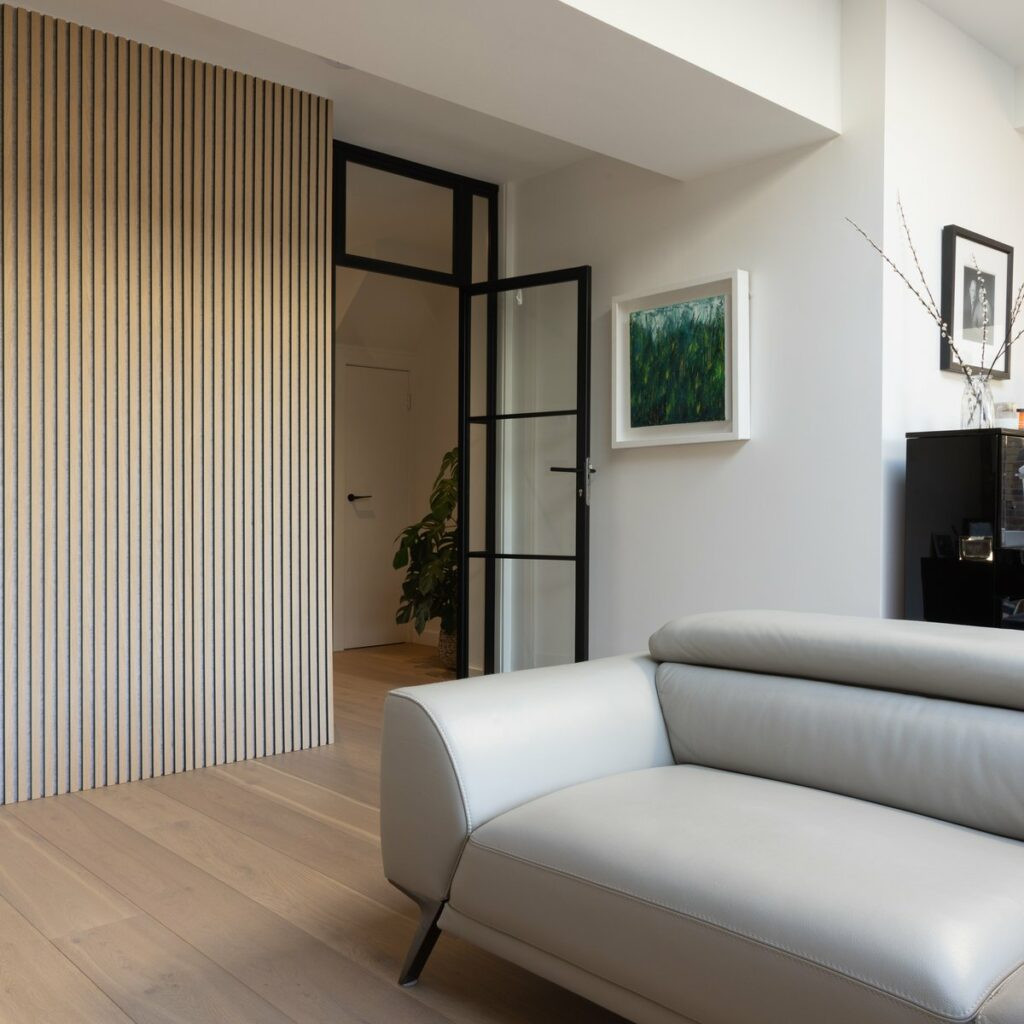
A Dublin-based customer of ours recently invited us round to see the incredible transformative effect our stunning range of silver acoustic panels had on their interior design.
Elevating the look and feel of the house, they’d installed acoustic wall panels in different rooms. Using sound-absorbing wall panelling with a striking aesthetic design they created a richer acoustic and a warm minimalist Scandi vibe.
Acoustic Wall Panels Ideas for Every Room
Beyond the Dublin project below, acoustic wall panels work well in a few specific settings: behind a piano or sound system to improve room acoustics, in corners where soundwaves bounce and echo, as a framed feature wall around artwork or a TV, in a home office to reduce Zoom-call echo, and in hallways or stairwells to dampen sound between floors.The finish you choose changes the effect as much as the placement. Charcoal or dark walnut panels read as bold and grounding in a living room; a lighter oak-effect suits a Scandi or minimalist scheme; silver or grey works well as a neutral frame around art or a media wall.
acoustic slat panels
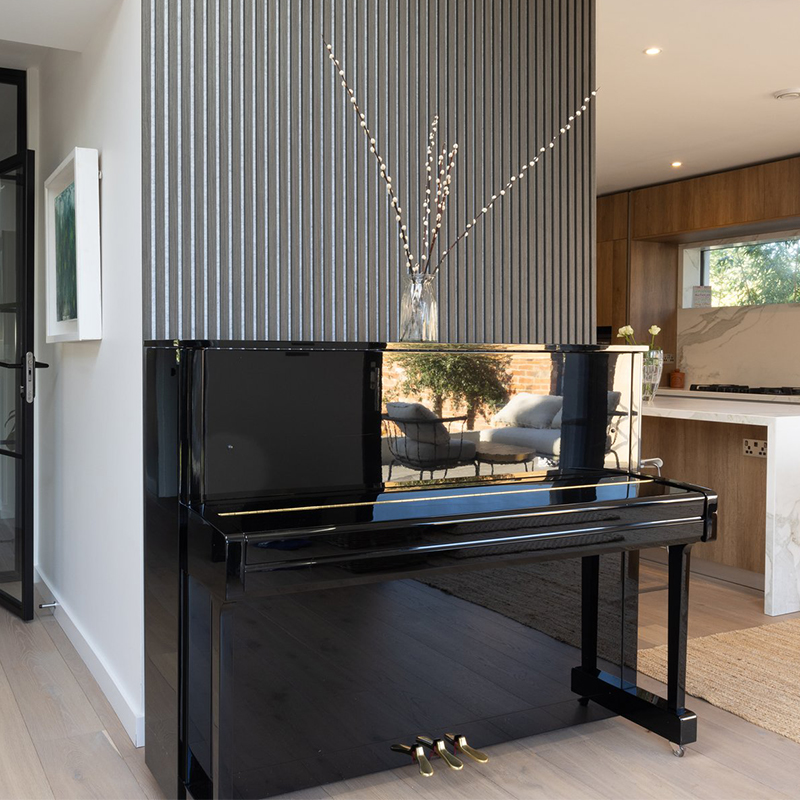
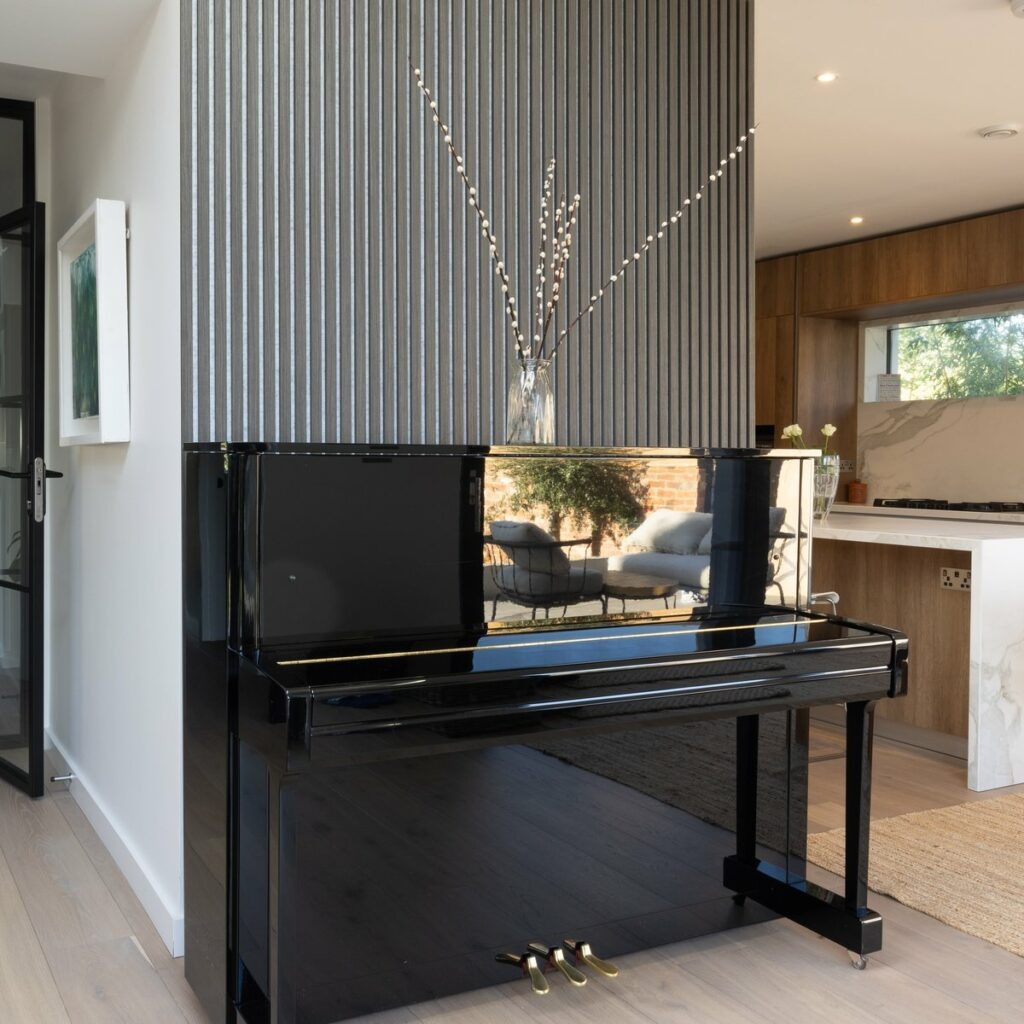
Behind the piano neatly tucked up against one of the walls in their living space, our customer installed charcoal acoustic slat panels from floor to ceiling.
Placed here, the panels help to capture and enhance the harmonious sounds emanating from the piano, making their interior space a more pleasant place to play their favourite melodies.
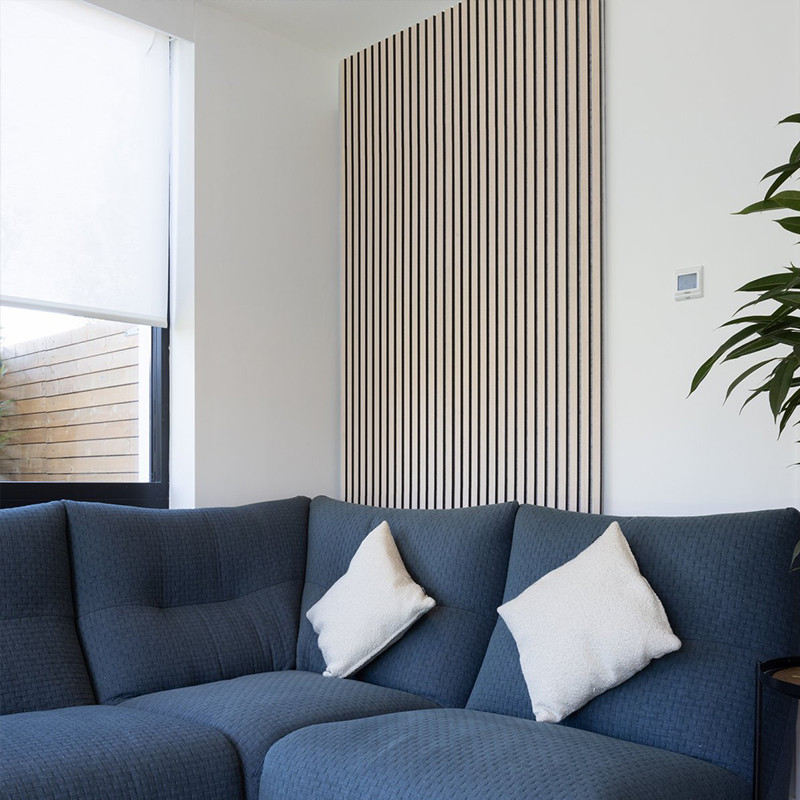
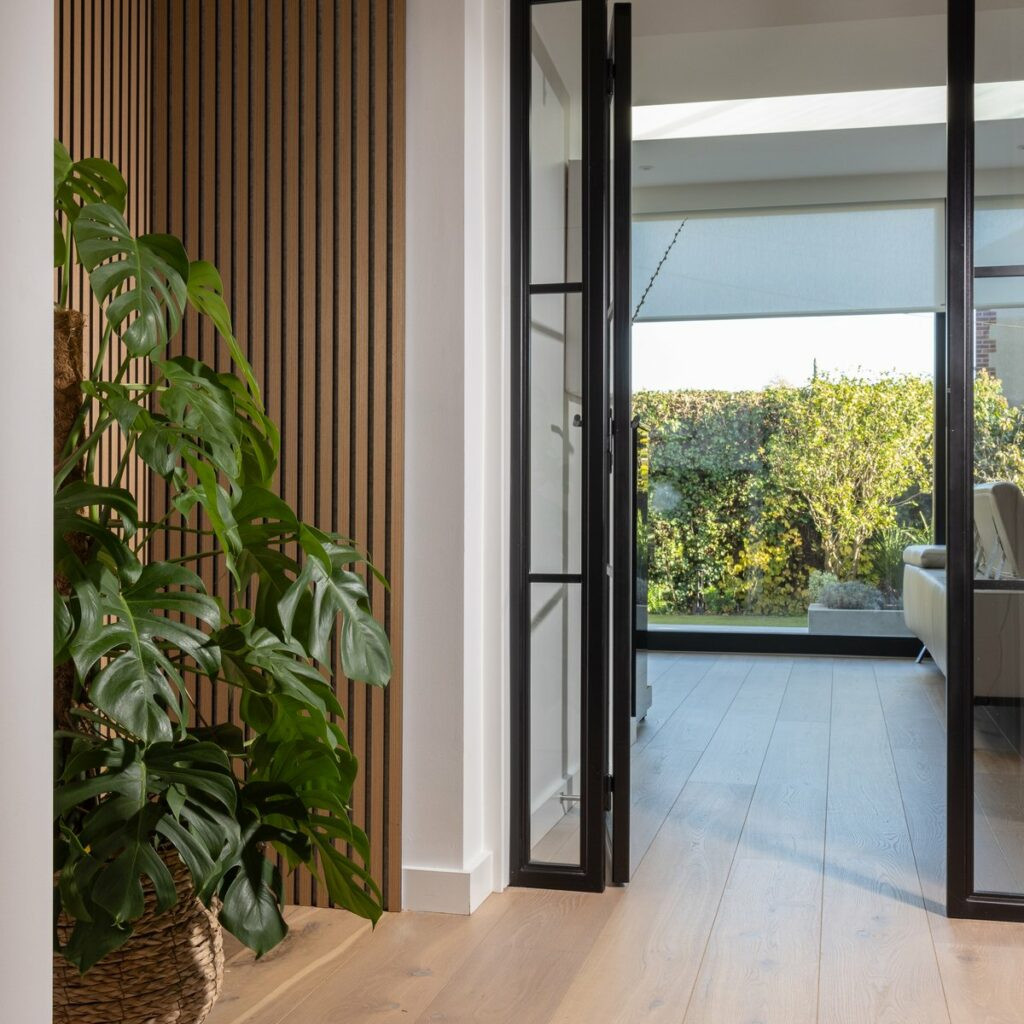
In the corners of the same room, this Dublin family used a lighter oak-effect wall panel to great effect. Corners are where soundwaves bounce and return as tinny vibrations or discordant echoes.
By shoring-up the corners of their living room with our acoustic wall panels, the customer has ensured a richer, higher quality of sound as it travels from their piano, TV, and sound system throughout the house.
Why Corners and Flat Walls Benefit Most
Acoustic panels work by absorbing sound energy rather than reflecting it, using a felt or foam backing behind the slatted front. Flat, hard walls and corners are where untreated rooms suffer most, since sound reflects off them and returns as echo rather than being absorbed. This is why panelling corners, as in the living room above, has a disproportionate effect on a room's overall sound quality compared to panelling a single flat wall.
Independent testing to ISO 354:2003 puts our acoustic panels at an NRC (Noise Reduction Coefficient) of 0.75, with peak absorption above 1.0 in the 800Hz–1250Hz range — the frequency band that covers most speech and mid-range instrumental sound. For comparison, a bare plasterboard wall typically sits below NRC 0.1, so even a partial installation makes a measurable difference to how a room sounds.
Create stunning feature walls
Of course, acoustic wall panels offer much more than a reliable soundproofing solution.
With striking vertical lines and textured grooves, in addition to a photorealistic wood-effect, wall panels can also be used to create stunning feature walls in a variety of styles.
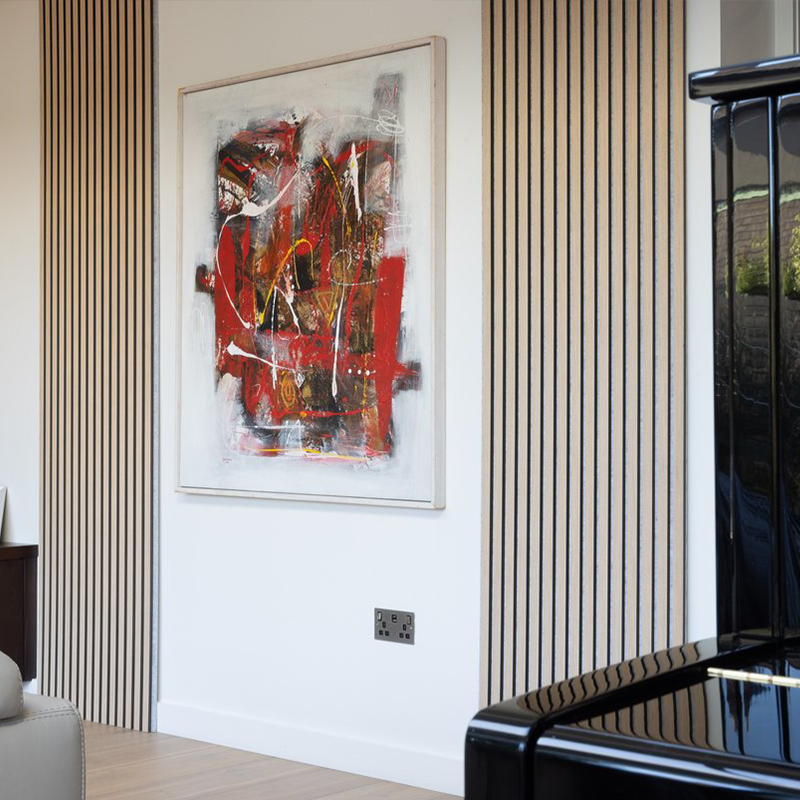
Here, you can take inspiration from how the customer has utilised our silver acoustic panels to frame a large painting hung on the wall, drawing the eye to the art and making the piece a particular highlight of their interior space.
Elsewhere in the house, the Dubliners have showcased the extraordinary versatility of these panels.
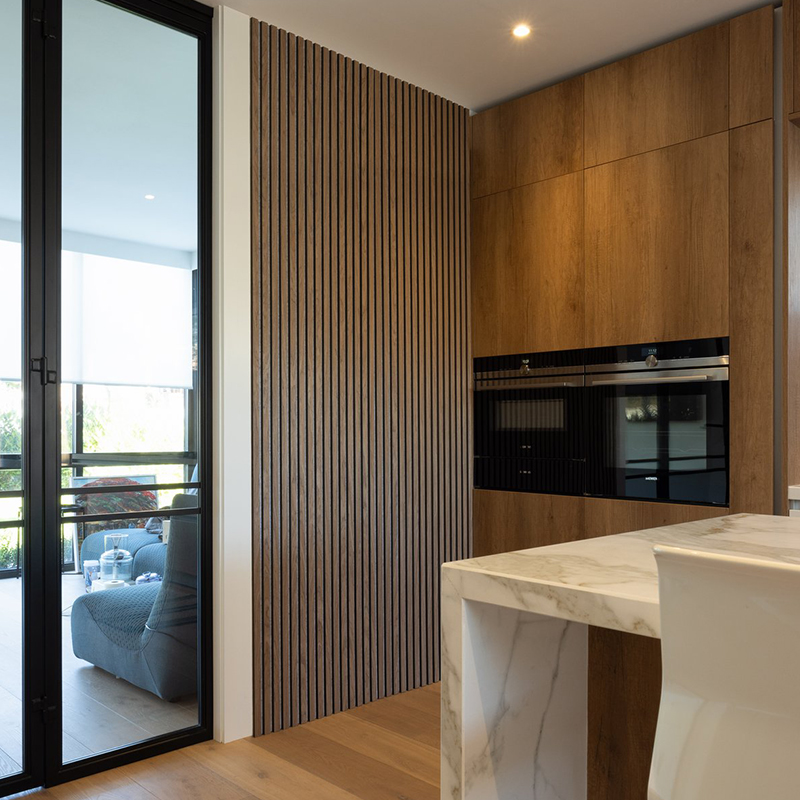
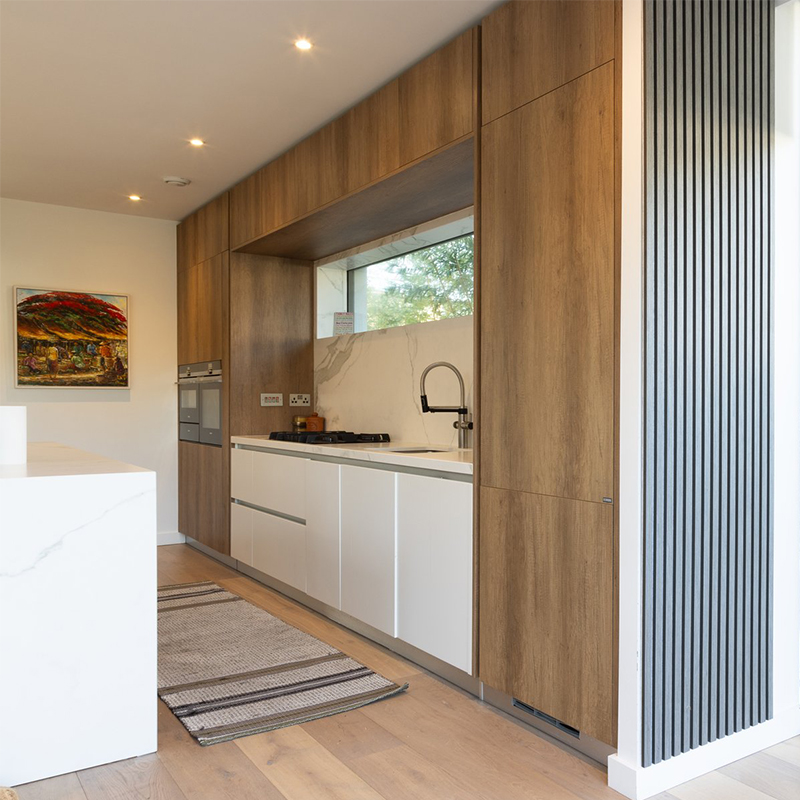
In the kitchen, you can see that they’ve opted for a darker panel finish in walnut, to compliment the rich flooring and walls, also of a warm, deep brown wood.
Living Room and Acoustic Wall Panels
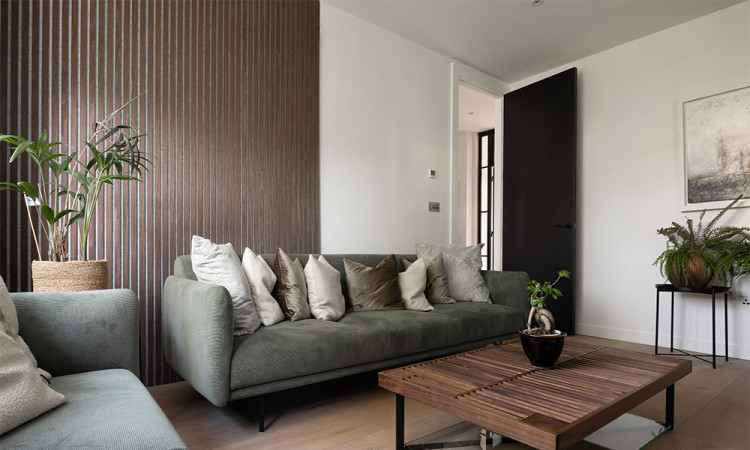
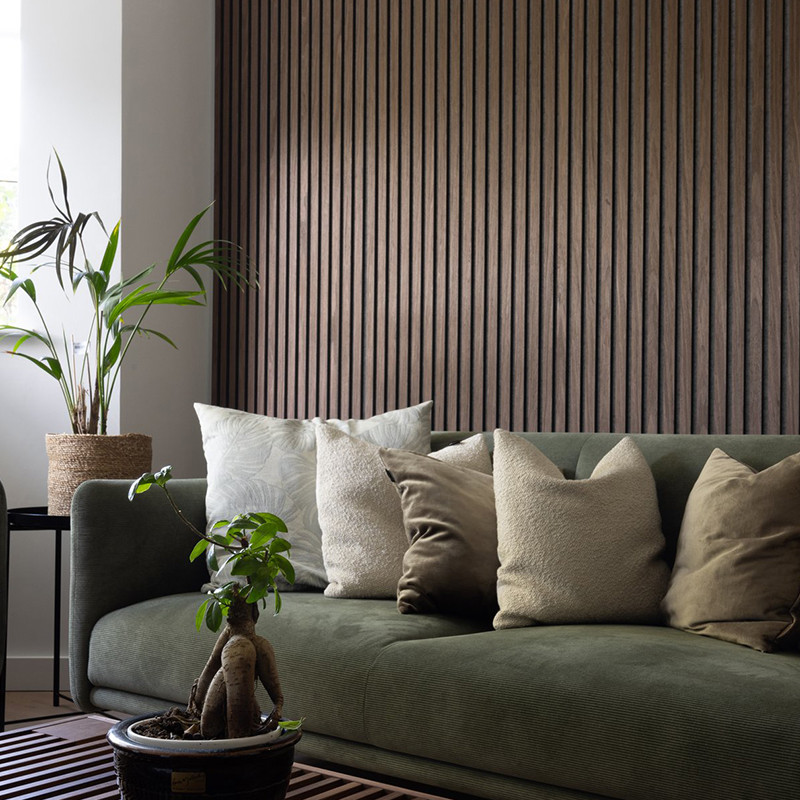
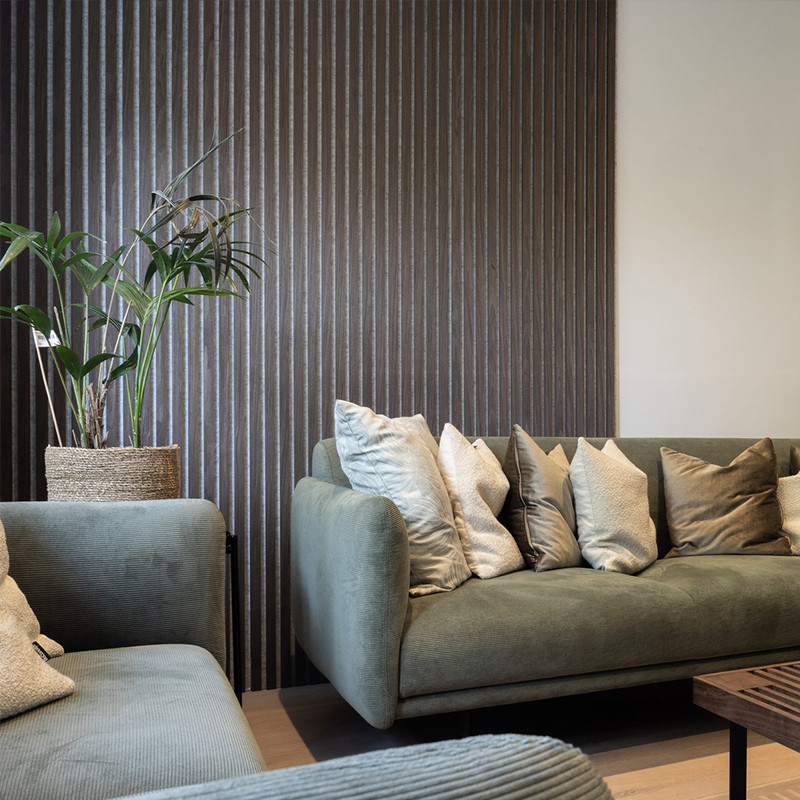
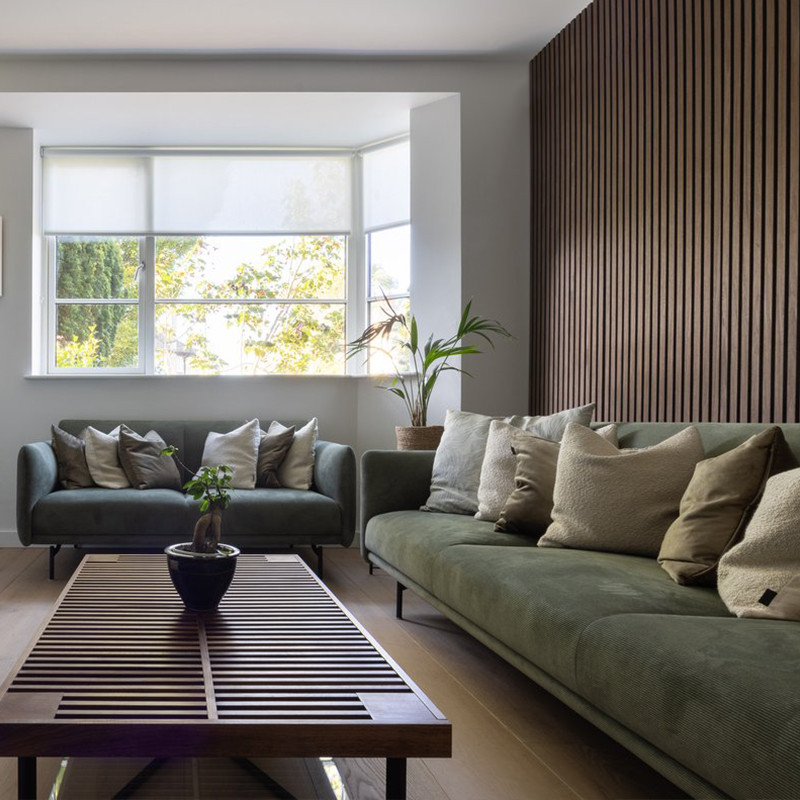
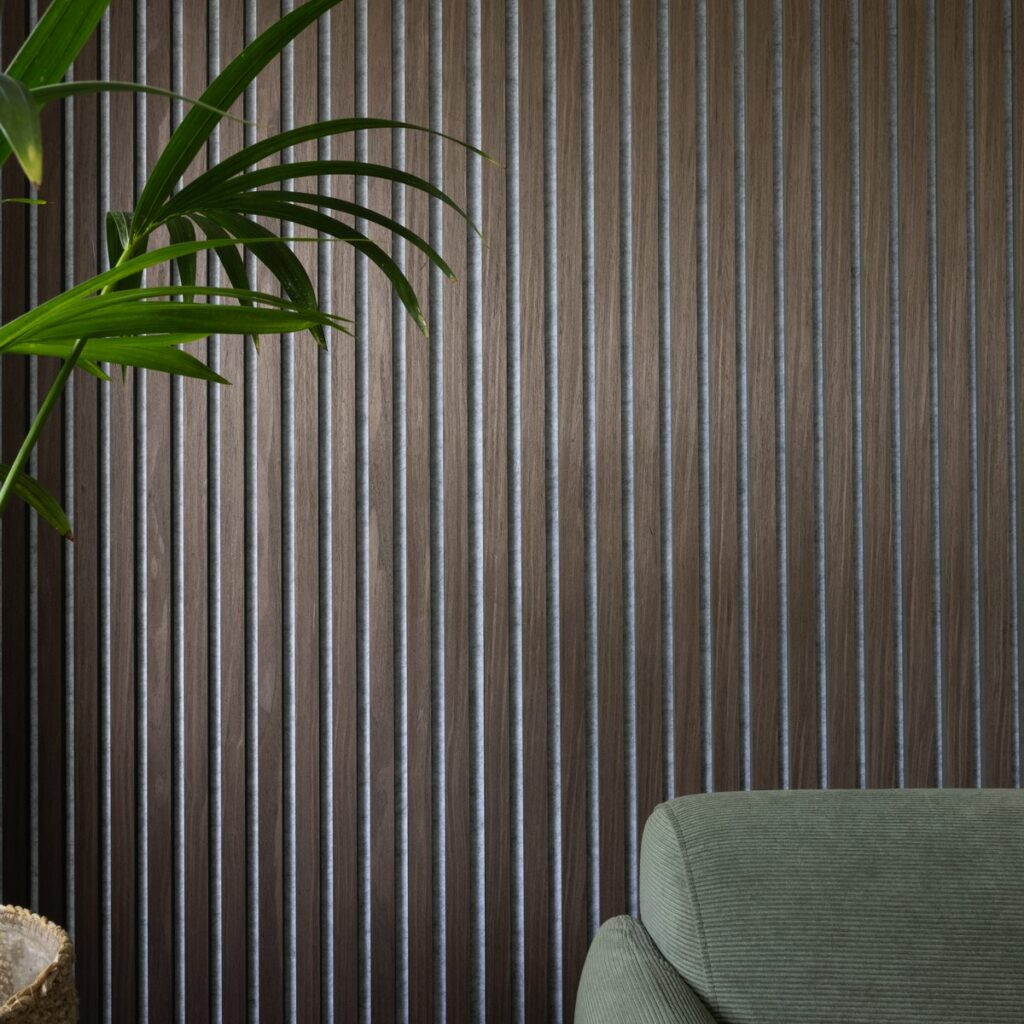
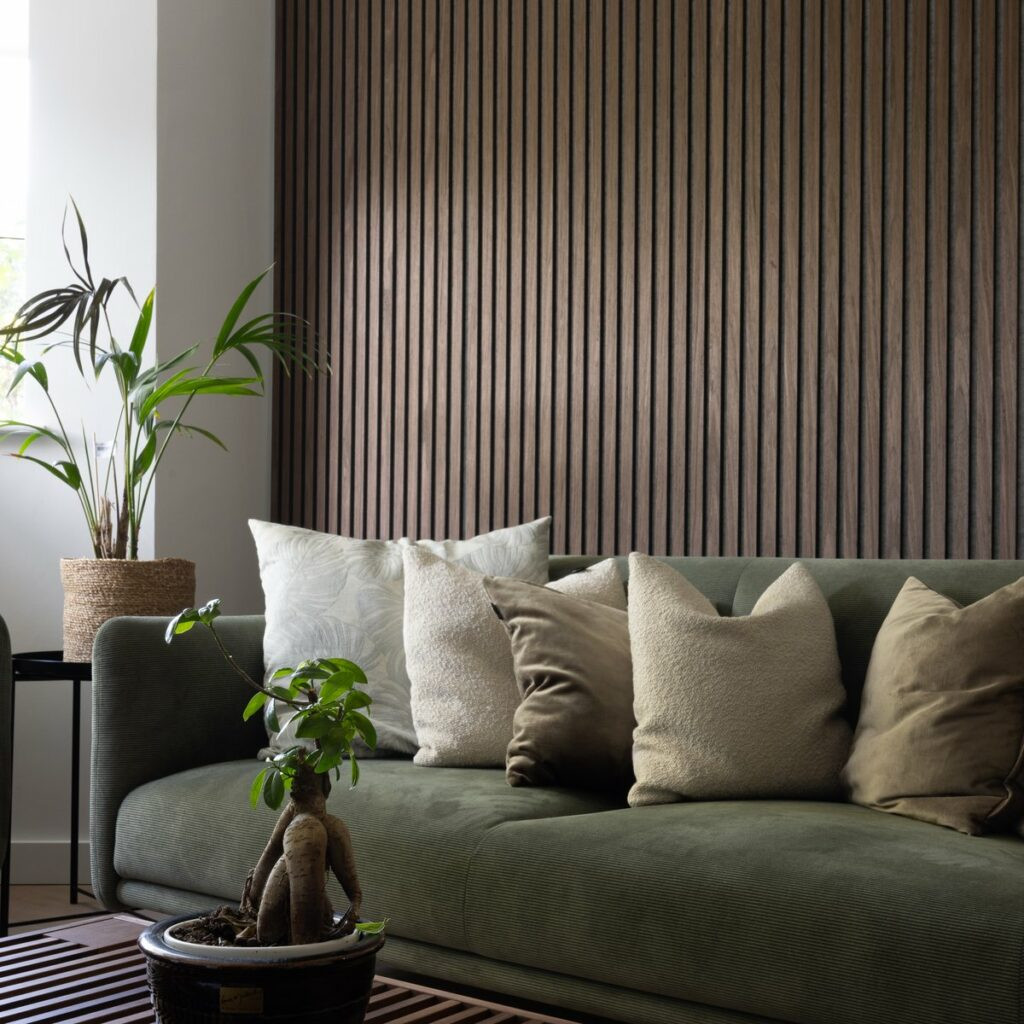
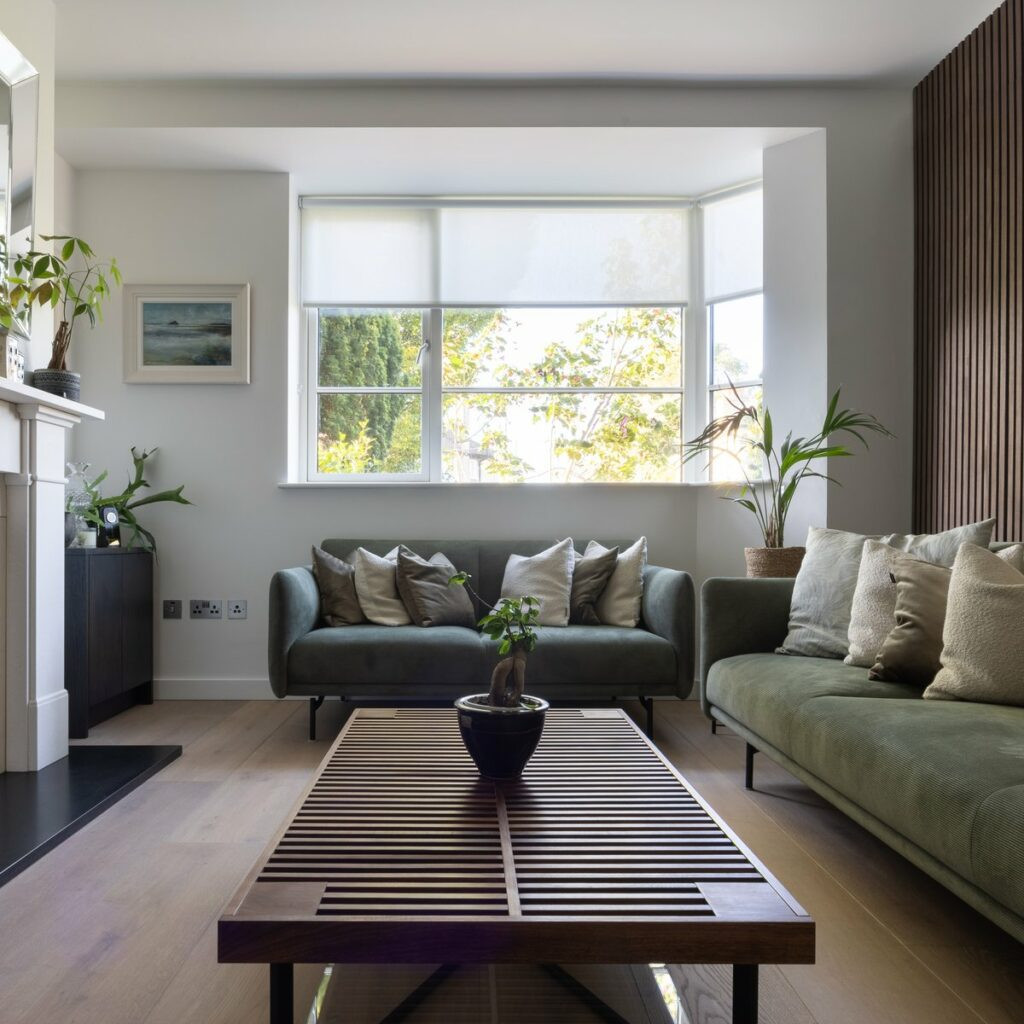
In another sitting room, dark brown acoustic panels are used to create a beautiful contrast against the white of the painted walls.
Acoustic panels make for a simple and easy addition to any room – designed to be easily installed, even DIY, with tongue and groove design – and yet the impact they have is undeniably huge.
This sitting room is completely transformed by the installation of a few well-chosen panels.
Note also how the long vertical lines of the panels, which help to create the illusion of taller ceilings, are matched by the wooden-slat coffee table in the centre of the room.
Acoustic Wall Panels for Kitchens, Hallways, and Home Offices
In kitchens, hard surfaces like tile, worktop, and glass splashbacks mean sound reflects more than it would in a carpeted living room, so a darker acoustic panel finish (as used in the walnut kitchen above) does double duty as both a design feature and light sound treatment.
Hallways and stairwells are one of the most effective places to use acoustic panelling in a multi-storey home, since sound travels easily along a hard-floored, hard-walled corridor. See our guide to wall panelling for hallways and stairs for installation specifics in these narrower spaces.
Home offices benefit from acoustic panelling behind the desk or on the wall facing a webcam, reducing the echo that's noticeable on video calls in a room with bare walls and a hard floor.
FAQs: Acoustic Wall Panels
What are acoustic wall panels ideas for a living room?
Behind a piano or sound system, in room corners where echo is worst, or as a framed feature wall around art or a media wall are the most effective placements in a living room.
Do acoustic wall panels actually work for soundproofing?
They absorb sound within a room and reduce echo, rather than blocking sound from passing through a wall to another room. For blocking noise between rooms or from neighbours, see our guide on soundproofing walls from noisy neighbours.
Where should acoustic panels be placed in a room?
Corners and flat, hard walls benefit most, since these are where sound reflects and creates echo. Behind speakers, pianos, or TVs is also effective, since panels there absorb sound at the source.
Can acoustic wall panels be installed DIY?
Yes. They use a tongue and groove design that allows for straightforward DIY installation without specialist tools.
What colour acoustic panels suit a modern living room?
Charcoal or dark walnut for a bold, grounding look; lighter oak-effect for a Scandi or minimalist scheme; silver or grey as a neutral option that works well framing art or a media wall.
Do acoustic panels work in a kitchen?
Yes, and they're particularly useful there since hard surfaces like tile and worktops reflect more sound than softer-furnished rooms. A darker finish also complements typical kitchen material palettes.
Are acoustic wall panels good for a home office?
Yes. Placed behind the desk or on the wall facing a webcam, they reduce the echo that's common in home offices with bare walls and hard flooring, which is particularly noticeable on video calls.
Do acoustic panels help with mental health or focus?
Reduced echo and background noise in a room has been linked to lower stress and better focus. See our full breakdown in How Acoustic Wall Panels Can Boost Your Mental Health and Productivity.
Conclusion
Overall, we were blown away by the tremendous difference which our felt-lined acoustic wall panels made to this Irish interior. A relatively monotone, minimalist home had been transformed into a warm, rich, Scandi-inspired wooden haven of deep sound and high harmony.
Feeling inspired? Take a gander at our full acoustic slatted wall panelling range today, and begin planning your own soundproof aesthetic with confidence.

Why Tile Merchant?
We offer extremely competitive pricing on our entire range of tiles and likewise. We stock a huge range of wall and floor tiles and our prices are competitive for retail and trade. Our stock is widely available in our tile stores in Ireland, which are open 7 days a week.
Alternatively, if you’d prefer to shop our tiles online, we can supply you with samples delivered for free.

Article written by Calum
Cal Bannerman is a freelance writer, editor, podcaster and voice actor from the Scottish Borders. He runs the storytelling podcast "Stories from the Hearth" and lives in a wee Glasgow Flat with his partner and their cat".