

Introduction
Ireland was once covered, like much of Europe, in swathes of ancient forest. It seems logical then that we have such a fondness for real wood in the construction of our homes. Real hardwood is, however, expensive, un-environmentally friendly, and difficult to maintain.
Thankfully, there are two excellent alternatives to real hardwood flooring available on the Irish market. Tile Merchant stocks a range of laminate and engineered wood flooring options, both of which can give your home the same warmth, style and sophistication of hardwood, but without incurring the same cost.
The question remains, however: what are the differences between laminate wood and engineered wood? Is laminate as good as engineered wood? Which is cheaper? How long does laminate last compared to engineered wood? And, most importantly, where should you buy laminate wood and engineered wood flooring?
At a Glance: Technical Comparison
For those comparing technical specifications, here is how laminate and engineered wood stack up regarding industry standards:
- Durability Rating: Laminate typically carries an AC (Abrasion Class) rating from AC3 to AC5, whereas Engineered Wood durability is determined by the hardwood veneer thickness (typically 2mm to 6mm) and Janka hardness scale.
- Core Density: Laminate utilizes HDF (High-Density Fiberboard); Engineered Wood features multi-layer plywood or high-density composite cores.
- Sound Insulation: Laminate (especially 8mm boards) often requires a high STC (Sound Transmission Class) underlay, while the density of 15mm+ Engineered Wood provides natural acoustic dampening.
Composition and Appearance
First things first, what is laminate wood? And what is engineered wood? The difference is stark.
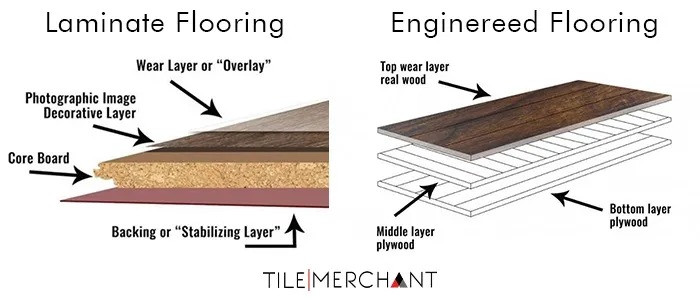
Laminate wood flooring is almost entirely synthetic. Its base layer is made of a composite material, typically fiberboard, on top of which is laid a photo-realistic image layer which mimics the appearance of hardwood. Laminate wood flooring is finished with a final “wear layer” of hyper-durable, transparent material.
On the other hand, engineered wood flooring is made entirely of real wood. It also comprises a composite base layer, except this composite tends to be plywood (a composite made from recycled and by-product wood).
On top of the plywood base, a veneer of real hardwood finishes the material. Whilst for a realistic appearance, nothing beats engineered wood flooring, if you’re more concerned with the number of style options available to you, then laminate may be your best bet. Laminate wood flooring tends to come in a much wider variety of colours and textures.
Durability
Cared for correctly, engineered wood flooring can easily last Irish homeowners for over 30 years. Laminate flooring has, in contrast, a lifespan of 10-20 years.
Engineered wood can also be “refinished” a few times, too (i.e. sanded and re-varnished to your liking) since its veneer is made of genuine hardwood. Laminate flooring cannot be refinished at all.
The one aspect in which laminate trumps engineered wood is when it comes to scratches and scrapes.
A lot of our Irish customers, especially those with young children or dogs, ask: Do engineered wood floors scratch easily? Whilst they are typically protected by a durable varnish atop the veneer, they are still made of wood, which does scratch quite easily. Laminate flooring, on the other hand, is very difficult to scratch, making it a wise choice for those whose homes are often subjected to wear and tear.
Water and Heat Resistance
The problem with pure hardwood flooring – no matter how beautiful it looks – is that it tends to warp with humidity. Whilst Ireland isn’t a historically humid country, we do have our share of dramatic temperature changes, all of which contribute to stress on natural woods.
Luckily for us, both laminate and engineered wood are designed to be much more resistant to these temperature fluctuations. Due to their composite base layers, they are unlikely to warp in humidity like hardwood. Heat, therefore, is not much of an issue for either laminate or engineered wood flooring. Water, on the other hand, is no friend to either.
Good to know: Did you know that wood effect porcelain tiles are entirely waterproof? Ideal for those who are looking for a wood floor but need a more practical solution. Check out our wood effect porcelain tiles.
Care and Cleaning
Speaking of spillages, one of the questions Tile Merchant customers ask most frequently is: which is easier to maintain, laminate or engineered wood flooring?
The answer is laminate. Laminate is made of synthetic materials which can be cleaned quickly and efficiently with a simple sweep, wipe, and mop.
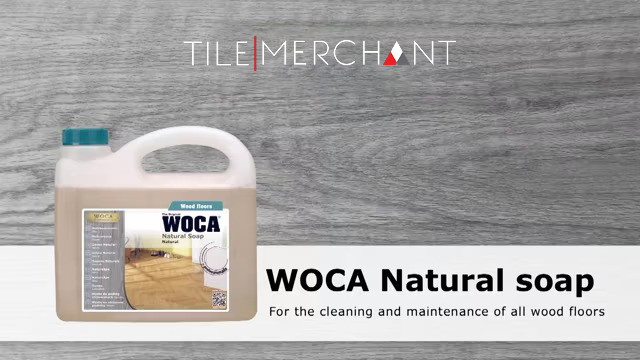
Engineered Wood Cleaning Tip #1 Avoid steamers and wet mops.
Engineered Wood Cleaning Tip #2 Instead, use an approved, specially-designed cleaning product for engineered hardwood.
Size
Typically speaking, laminate wood planks are about 19-20cm wide and about 140cm long. In contrast, engineered hardwood boards tend to be much thicker, at about 13-21mm, and are sold at Tile Merchant in widths up to 26cm.
Installation
Both laminate and engineered wood flooring tend to come in planks with a “click-lock” design. Laminate wood flooring is best installed as a “floating floor” over a soundproof and fireproof underlay, whereas engineered wood can be glued down directly onto concrete.
Cost
Laminate flooring can cost as little as €12.99 per square meter, while engineered wood starts around €37.99 per m2. Is laminate cheaper than engineered hardwood? Most certainly.
Common Flooring Questions for Irish Homeowners
Which size should I pick for a small room?
For smaller spaces, planks under 25cm in width are generally preferred to create an illusion of space. The wider 26cm engineered planks we stock are specifically designed to provide a seamless, premium look in large, open-plan living areas.
Is it energy efficient for underfloor heating (UFH)?
Engineered wood is a superior thermal conductor. It allows for efficient heat transfer while maintaining structural integrity during thermal expansion, making it highly compatible with modern Irish heating systems.
What is the "sound rating" difference?
Laminate can produce a "hollow" sound; we recommend a 3mm acoustic underlay to lower decibel levels. Engineered wood offers a solid, dampened sound profile similar to traditional hardwood.
Conclusion - which is the best wood flooring for you?
There are countless advantages to both laminate and engineered wood flooring. When deciding which is best, consider your budget, whether you want a DIY installation, and your specific requirements for durability and maintenance.
Take a look through our laminate wood options and engineered wood options online.
Why Tile Merchant?
We offer extremely competitive pricing on our entire range of tiles and flooring. Our stock is widely available in our tile stores in Dublin and Ashbourne (Co. Meath) which are open 7 days a week.
Our Expertise in the Irish Market: With over a decade of experience supplying flooring across Ireland, our team monitors product performance to ensure materials withstand the unique Irish climate (where average indoor humidity fluctuates between 40-60%). We prioritize sourcing engineered wood from FSC-certified forests to ensure environmental accountability alongside premium, long-lasting quality.