
Introduction
Many people decide to choose large format tiles for their living space. We get them. The reason is simple. The right tiles can make all the difference.
Large-format tiles have become increasingly popular due to their ability to make small rooms appear bigger. But how does it work, and what should you consider when choosing tiles?
Large Format Tiles and Big Tiles
A large format tile is when at least one of the edges is greater than 15 inches. This has been a very popular tile in recent years. The most common size format in a large tile is 60x120cm. Some big tiles can go up to 160x80cm or even 240X120cm.
As a general rule, cost per m² rises with tile size. Larger tiles cost more to manufacture without defects, are more expensive to transport safely, and require more careful handling on-site, all of which adds to the price compared to a standard 30x30cm or 60x60cm tile. Installation labour is typically higher too, for the reasons covered in the "Expert Installation Matters" section below.
That higher upfront cost is usually offset over time by lower maintenance: fewer grout lines mean less grout to clean and reseal over the tile's lifetime, which is worth factoring in alongside the initial price when comparing big tiles vs small tiles for a renovation budget.
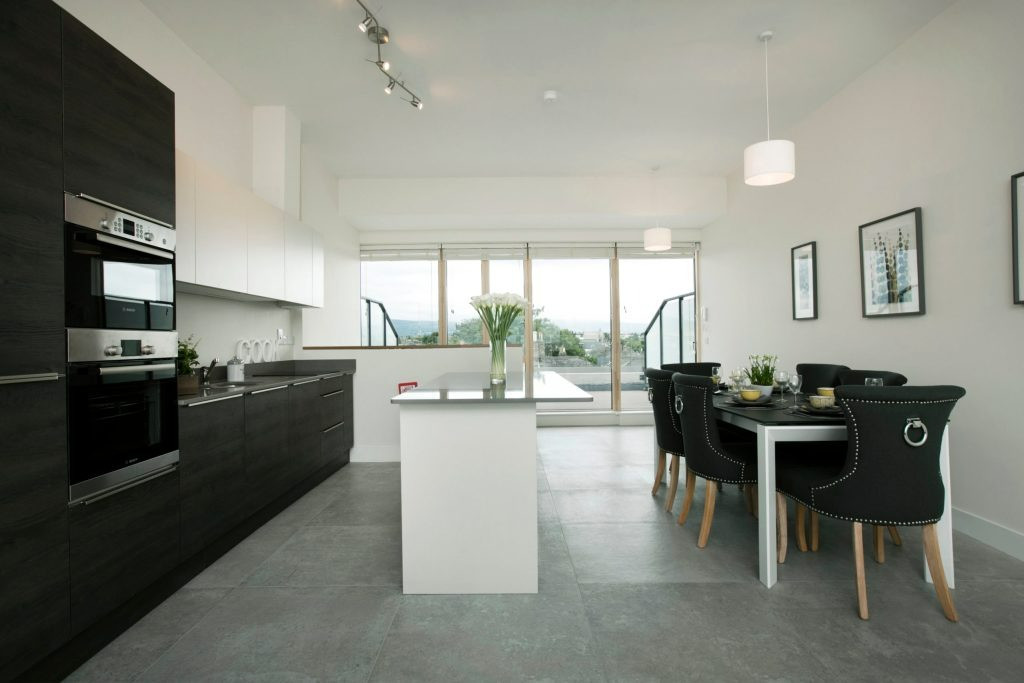
Benefits of large-format tiles
There are many benefits in using large format tiles.
Firstly, it automatically makes the room seem more spacious. Larger tiles tend to give the perception that your room is bigger in size than it actually is. Another great aspect of larger tiles to take into consideration is their style and many functional benefits. They create an open, transitional space, giving more room for innovative ideas regarding design.
Do you live in Ireland? Order free samples of large-format tiles today!
Why Large Tiles Work
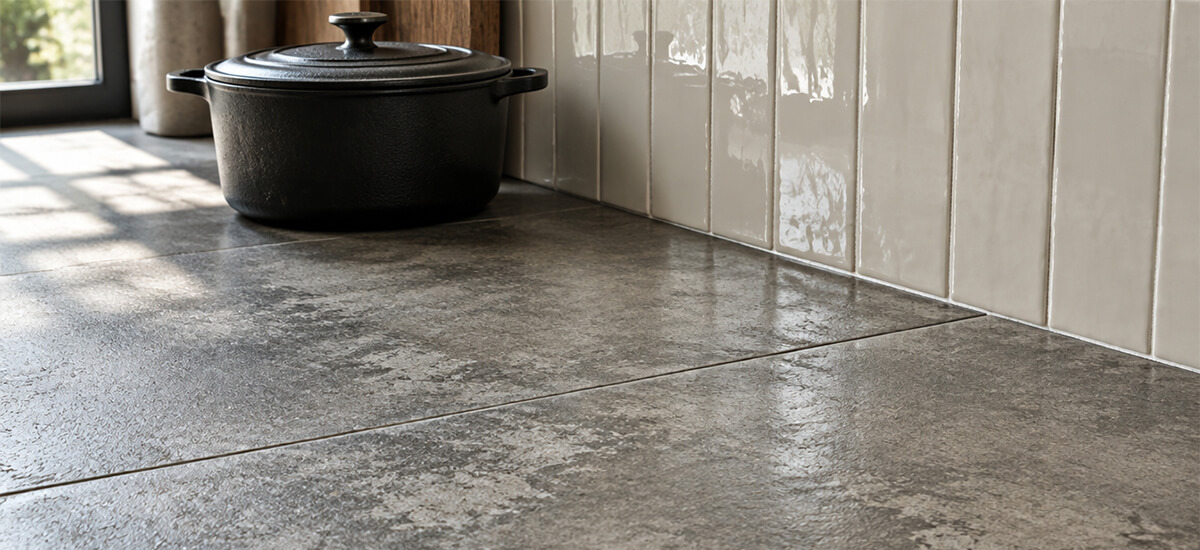
Large tiles reduce the number of grout lines, creating a seamless and open look. This visual trickery makes rooms feel larger and less cluttered. Additionally, lighter shades and reflective tiles can bounce light, further enhancing the sense of space.
Do Large Format Tiles Really Make a Room Look Bigger?
Yes, and the effect comes down to two specific things: fewer grout lines and fewer visual interruptions for the eye to stop on. A small tile creates a dense grid of grout lines across a floor or wall, and each line acts as a small visual break. The eye reads a surface covered in frequent breaks as busier and, subconsciously, as having more "edges" to process, which makes a space feel more compact than it is.
A large format tile removes most of those breaks. Fewer grout lines mean the eye travels further across the surface before hitting an interruption, which reads as a longer, more continuous sightline, and a longer sightline is what actually creates the sense of a bigger room. This is the same principle behind why a single large rug reads as more spacious than several smaller rugs covering the same floor area.
It's worth being precise about what this effect does and doesn't do: large format tiles don't change the room's actual square footage, and they won't fix a genuinely awkward layout on their own. What they do reliably improve is the perceived openness of a room, which is why the effect is most noticeable in smaller spaces like ensuites, cloakrooms, and narrow hallways, where every visual break matters more.
Do Large Format Tiles Really Make a Room Look Bigger?
Yes, and the effect comes down to two specific things: fewer grout lines and fewer visual interruptions for the eye to stop on. A small tile creates a dense grid of grout lines across a floor or wall, and each line acts as a small visual break. The eye reads a surface covered in frequent breaks as busier and, subconsciously, as having more "edges" to process, which makes a space feel more compact than it is.
A large format tile removes most of those breaks. Fewer grout lines mean the eye travels further across the surface before hitting an interruption, which reads as a longer, more continuous sightline, and a longer sightline is what actually creates the sense of a bigger room. This is the same principle behind why a single large rug reads as more spacious than several smaller rugs covering the same floor area.
It's worth being precise about what this effect does and doesn't do: large format tiles don't change the room's actual square footage, and they won't fix a genuinely awkward layout on their own. What they do reliably improve is the perceived openness of a room, which is why the effect is most noticeable in smaller spaces like ensuites, cloakrooms, and narrow hallways, where every visual break matters more.
Choosing the Right Tile for Your Space
The layout is key! Experts suggest that large tiles should ideally be used in areas that are rectangular, as this creates continuity. Always measure carefully to ensure tiles align well with the room’s proportions.
Consider using neutral colours or tiles with subtle patterns, as these add depth without overwhelming the room. Porcelain or ceramic tiles are excellent options for durability.
Expert Installation Matters
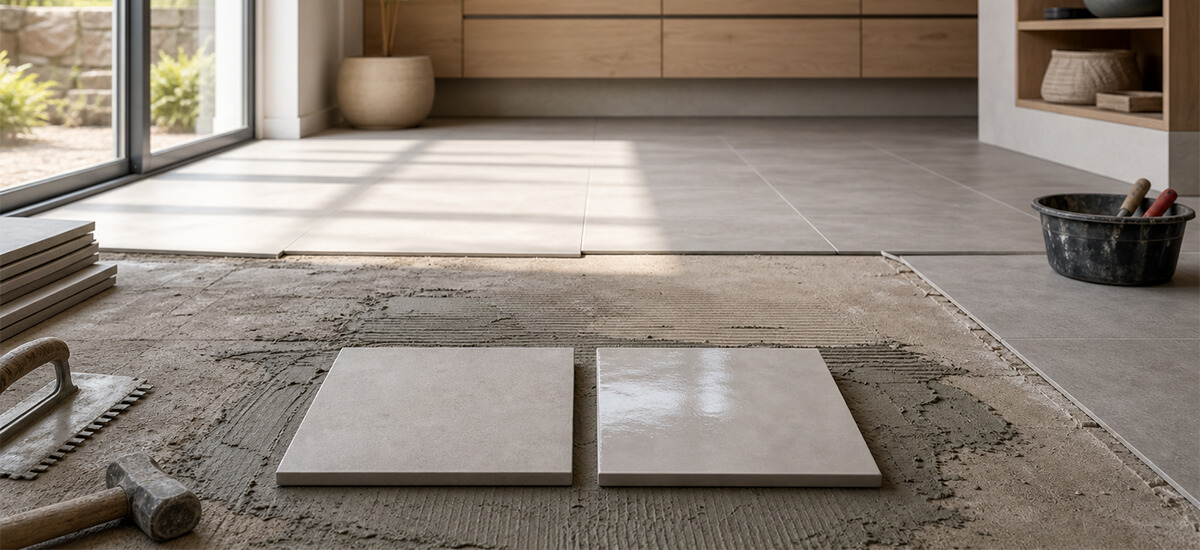
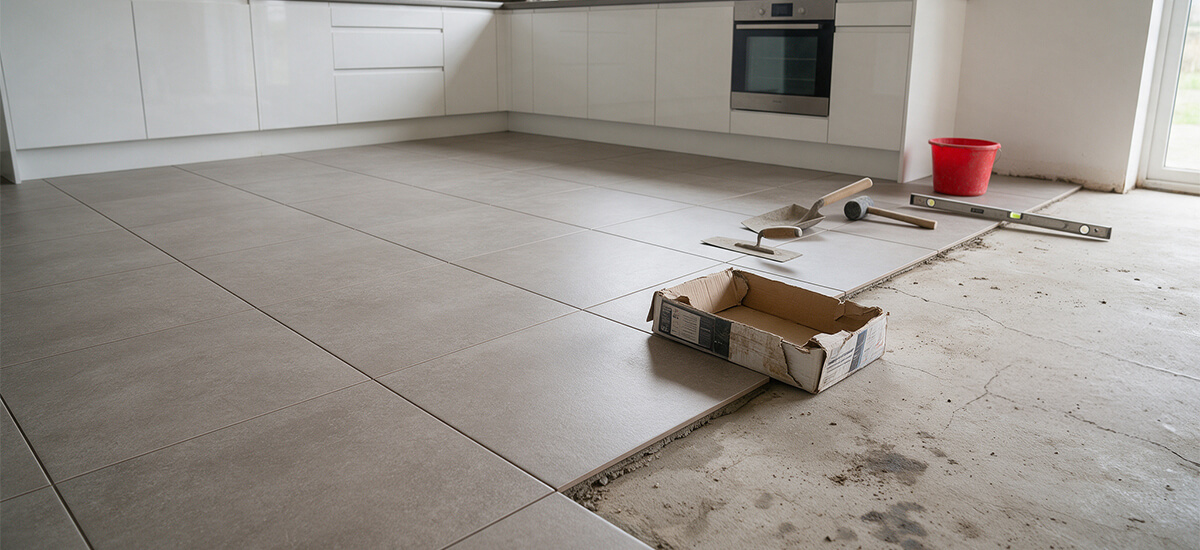
Customers tend to be conscious that large format tiles are more prone to cracking, we can guarantee you that this is not the case, once they are laid correctly in the proper professional way. We do strongly advise that you make sure you have a trusted professional tiler to do the work. You or your chosen tiler must make sure that your surface is flat before you begin the project.
You might need to level your surface, the flatter your surface the easier the job will be. Make sure the tiler is using the correct adhesives. Adhesive manufacturers will provide these things, like the necessary cements, mortars and epoxy’s designed for specific uses.
The truth is larger tiles are in fact harder to install than most other tiles. In saying this, an established and good tiler shouldn’t have any issues doing this project. Large format tiles are becoming quite the trend and tilers are being asked to install them much more frequently, so it shouldn’t be a problem trying to find somebody to complete the job.
In other words, laying large tiles requires precision. Professionals ensure tiles are spaced correctly and leveled to prevent a "warped" effect. Additionally, a well-installed tile floor or wall can enhance the home’s resale value.
Big Tiles vs Small Tiles: Which Should You Choose?
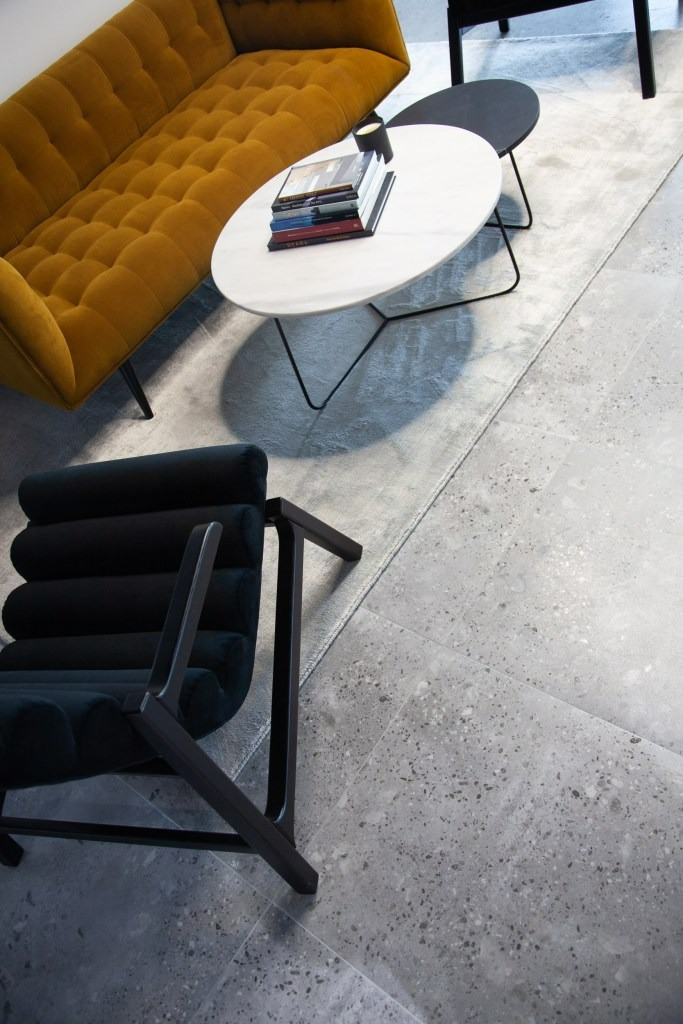
Large format tiles suit rectangular or open-plan rooms, wall applications where you want a seamless look, and any space where making the room feel bigger is a priority. They also generally cost more per m² and require a more experienced installer.
Smaller tiles suit spaces with a lot of cuts, corners, or curves, such as bathrooms with awkward pipework, since less material is wasted on offcuts. They're also easier and generally cheaper to install, and are the standard choice for shower floors specifically, since small tiles or mosaic can follow the gentle slope needed for drainage in a way large tiles can't.
In practice, many bathroom renovations use both: large format tiles on the main floor and walls for the space-enhancing effect, paired with a smaller tile or mosaic on the shower floor itself.
Real-World Examples
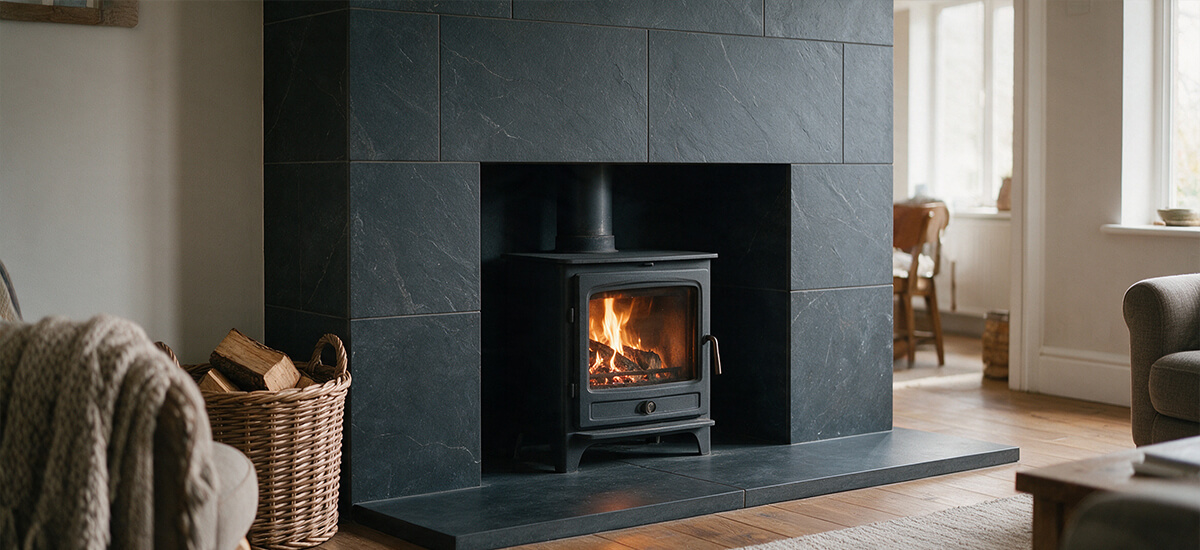
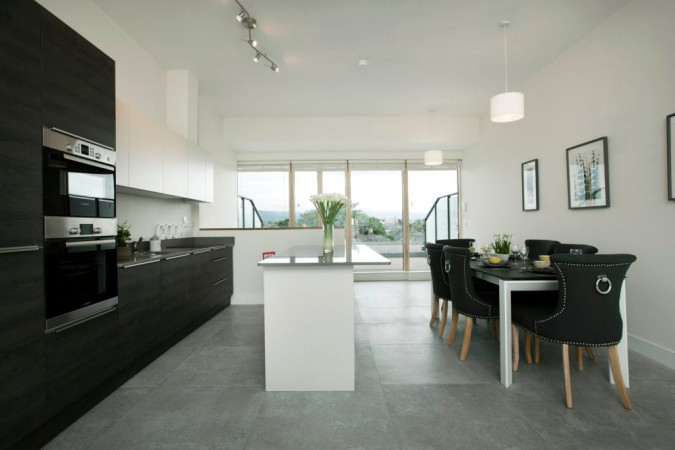
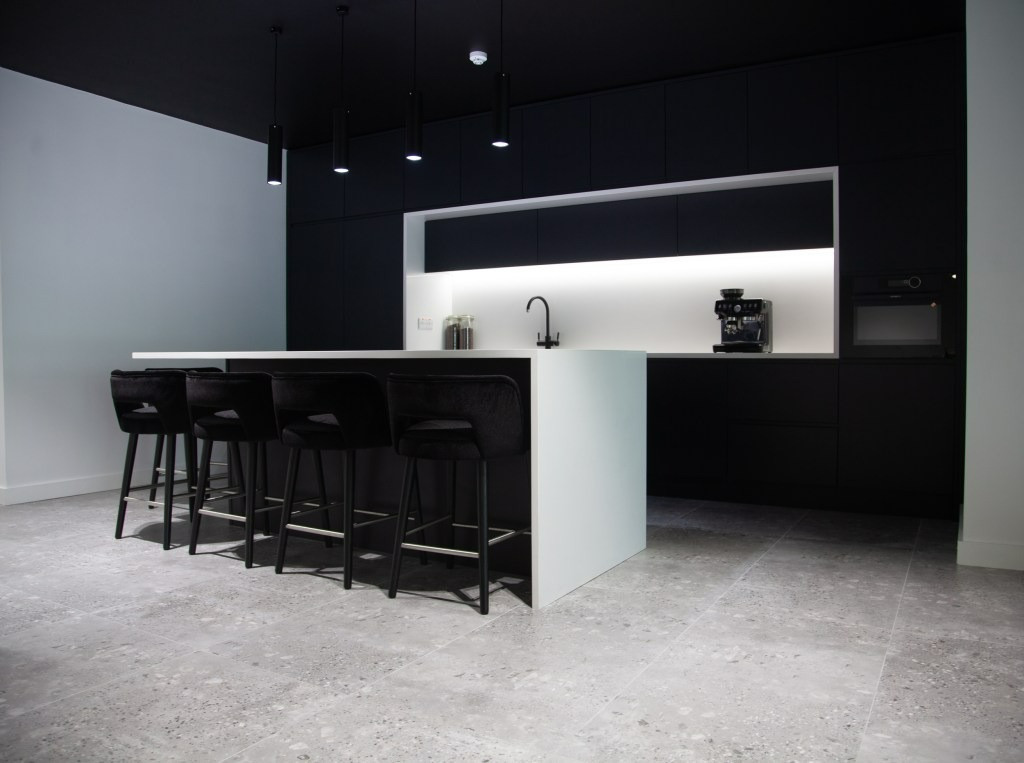
At Tile Merchant, we've worked with homeowners who used large tiles to successfully transform their kitchens, bathrooms, and living areas. In one project, oversized marble tiles turned a narrow hallway into a grand, open space, showing just how transformative these designs can be.
Where to install large-format tiles?
Where in your home are large format tiles suited for? In our opinion, large-format tiles are perfect for bathrooms.
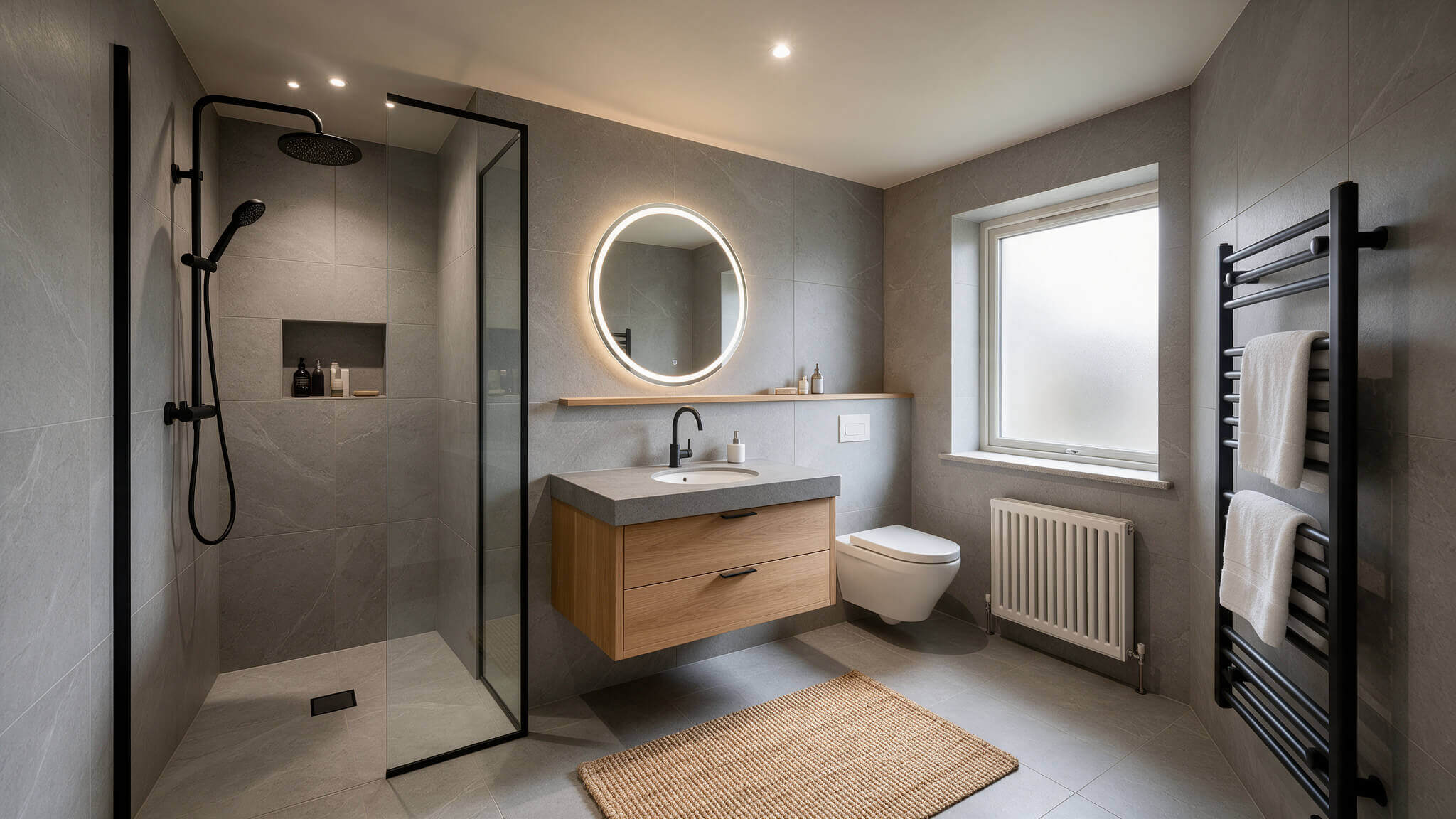
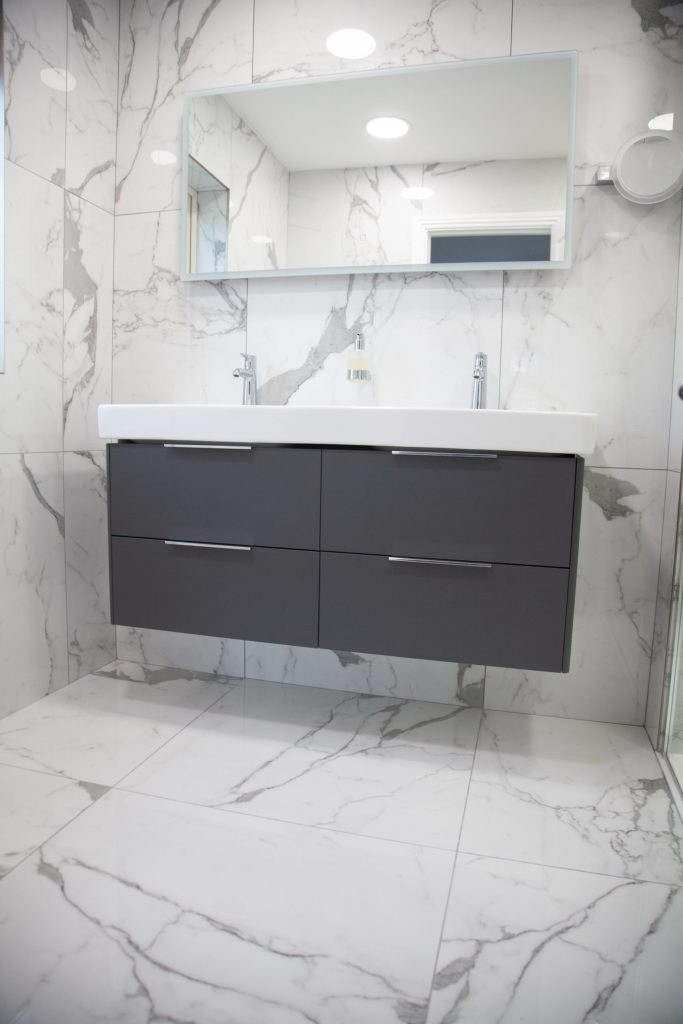
Many customers ask the question, Would large format tiles suit a small bathroom? The answer to this question is, yes they would be perfect for a small bathroom. It will give your bathroom a lovely finish with less grout lines, which means it gets less grubby and dirty in the long run.
These tiles can also be used on shower floors. Porcelain tiles are perfect for shower floors, they are very easy to maintain, they contain anti-slip properties, meaning they’d be well able to deal with and withstand wet conditions so they would help to prevent a person from slipping.
Porcelain is denser, less porous. It offers a more stain and water resistance option than a ceramic tile.
Porcelain tiles are extremely hard wearing and even though they are more expensive than other tiles on the market we can guarantee you will get value for money if you decide to go with porcelain tiles for your bathroom.
The lack of grout lines and the grandiosity of the tile creates an illusion of space in the smallest of bathrooms. It will be a bathroom that will last you a lifetime. Porcelain also appeals to customers because it is available to purchase in many different styles, meaning that you can really put your own design twist on your bathroom.
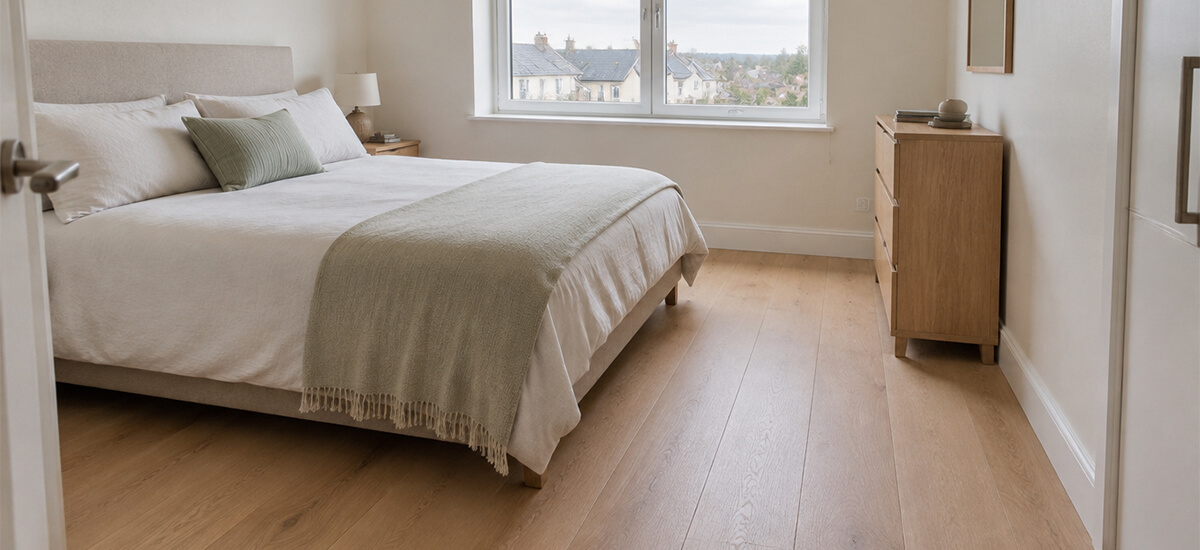
Beyond plain porcelain, large format tiles are also available in wood-effect finishes and marble-effect finishes, both commonly supplied in 120x60cm and similar large formats. Wood-effect large tiles are a popular choice for kitchens and living areas where a warm, natural look is wanted without the maintenance of real timber, while marble-effect large tiles suit bathrooms and hallways where a more luxurious, uniform finish is the goal.
Expert Advice and Recommendations
- Tile Size: Opt for at least 600x600mm tiles for small spaces.
- Grout Color: Match grout to the tile colour for a seamless look
- Finish: Choose matte for less light reflection in high-traffic areas or polished for adding brightness.
FAQs: Large Format Tiles
Do large format tiles make a room look bigger?
Yes. Fewer grout lines mean fewer visual breaks for the eye, creating a longer, more continuous sightline that reads as a more open, spacious room, even though the room's actual size hasn't changed.
What size counts as a large format tile?
Any tile with at least one edge longer than 15 inches (around 381mm). The most common large format size is 60x120cm, with some formats going up to 160x80cm or larger.
Are large tiles more expensive than small tiles?
Generally yes, both in material cost per m² and installation labour, since larger tiles require more careful handling and a more experienced installer. This is usually offset over time by lower maintenance costs, given the reduced grout area.
Are large tiles harder to install than small tiles?
Yes, they require more precision and a flatter subfloor, and are more prone to cracking if handled or installed incorrectly. Provided they're laid by an experienced professional tiler, they're just as durable as smaller tiles once installed.
Are large format tiles good for a small bathroom?
Yes. Fewer grout lines create a cleaner, less broken-up surface, which makes a small bathroom feel larger and also means less grout to clean over time.
Can large tiles be used on shower floors?
Porcelain tiles work well on shower walls, but shower floors typically need a smaller tile or mosaic instead, since large tiles can't follow the slight slope a shower floor needs for proper drainage.
What's the difference between big tiles and small tiles for a renovation?
Big tiles suit rectangular or open-plan spaces and create a more spacious look, but cost more and need an experienced installer. Small tiles suit rooms with lots of cuts or corners, waste less material, and are generally cheaper to fit.
What grout colour works best with large format tiles?
Matching the grout colour closely to the tile creates the most seamless look and reinforces the space-enhancing effect, since it minimises the visual contrast of the grout lines that remain.
Why Tile Merchant?
We offer extremely competitive pricing on our entire range of tiles and likewise.
We stock a huge range of wall and floor tiles and our prices are competitive for retail and trade. Our stock is widely available in our tile stores in Ireland, which are open 7 days a week.
Alternatively, if you’d prefer to shop our tiles online, we can supply you with samples delivered for free.

Article written by Tile Merchant