Introduction
Wioleta Kelly, one of Ireland’s top interior designers from Abbeyfeale Interiors, popped into our Ashbourne showroom for a look around. We decided to interview her to discover her thoughts on wall panelling materials, as well as her top 4 favourite interior wall panelling ideas!
Wioleta is proud to have helped elevate the look and feel of hundreds of household and commercial interiors all across Ireland—which is why we thought she’d be the perfect person to help give our Tile Merchant customers some top quality wall panelling ideas and inspiration, as well as some thoughts on what wall panelling materials are best suited to your project!
Let’s find out what Wioleta’s favourite panelling designs are for Ireland’s homes and businesses, and how you can apply these trends to your own interior spaces—whatever the size or shape.
Our expert shares 2 feature wall Panelling ideas!
We had the pleasure of interviewing superstar home stylist Wioleta Kelly about her top panelling wall choices and inspirations for Irish homes.
Below are 2 top tips for transforming your interiors with wall panelling materials whilst sticking to a budget, from bathrooms to kitchens, living rooms and bedrooms, to hallways, dining rooms and beyond.
TM = Tile Merchant | WK = Wioleta Kelly
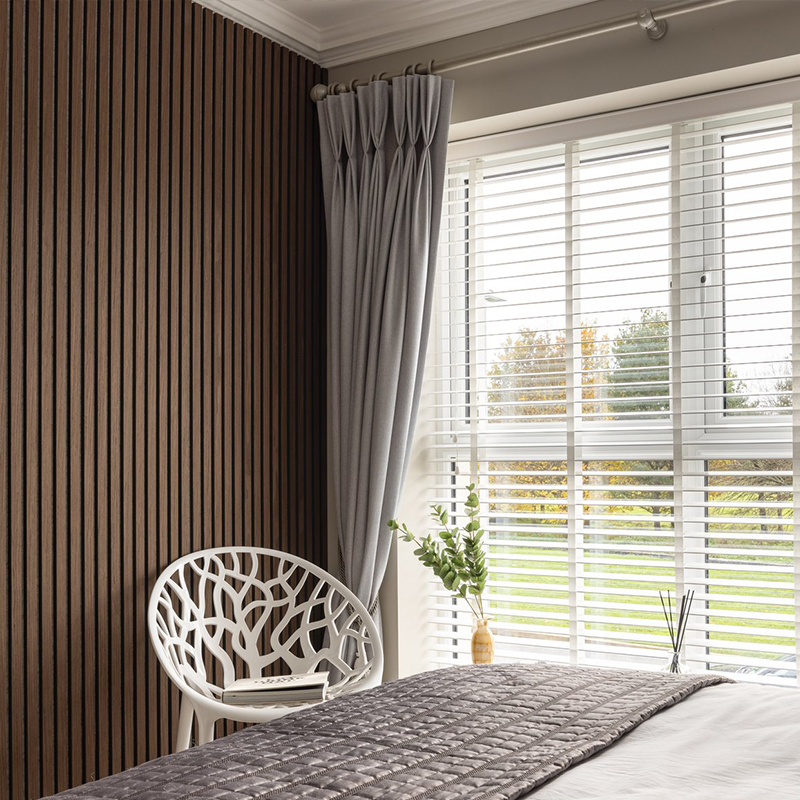
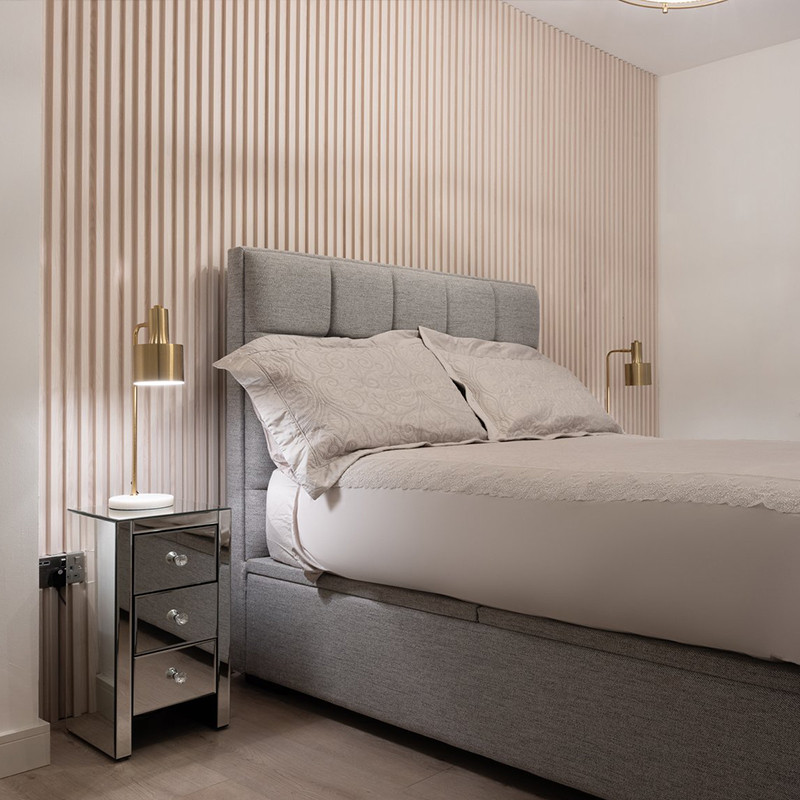
Tip #1) Where and how to use different types of panelling
TM: Welcome back Wioleta! Now, I have to say, you are very good at ordering samples online. We see samples going out to you regularly of all our wall panels. Which, of course, our customers can order, too, through our free cut sample service! You love wall panelling, right Wioleta?
WK: I love wall panelling, what can I do!
TM: Where are you using it? Tell us!
WK: Everywhere, everywhere. The texture you can get from wall panelling is just gorgeous. Now, I’ll tell you the biggest secret —Irish interiors are quite dark, and we don’t get enough light, so every time you add texture into your space it feels like a spa; it feels like creating a warm retreat full of light! That’s why I love using wall panels, and you have such an amazing range of wall panelling!
TM: Yeah, I know! So, we have three ranges of wall panels—which can be a bit confusing for people sometimes—so I’ll give folks at home a quick rundown of what they are, and you can tell us where you recommend using them.
We have our Woodlux Panelling, with a solid MDF profile. This range includes Bamboo-Effect Wall Panels.
We then have our WPC Panels, which are a hollow product.
And finally we have our Acoustic Wall Panelling, which has acoustic properties.
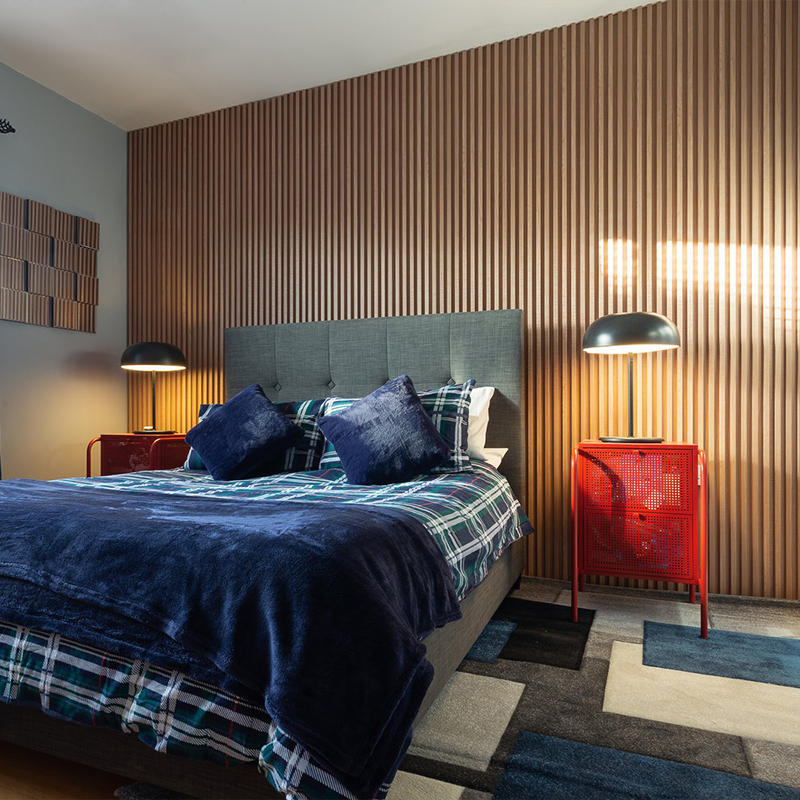
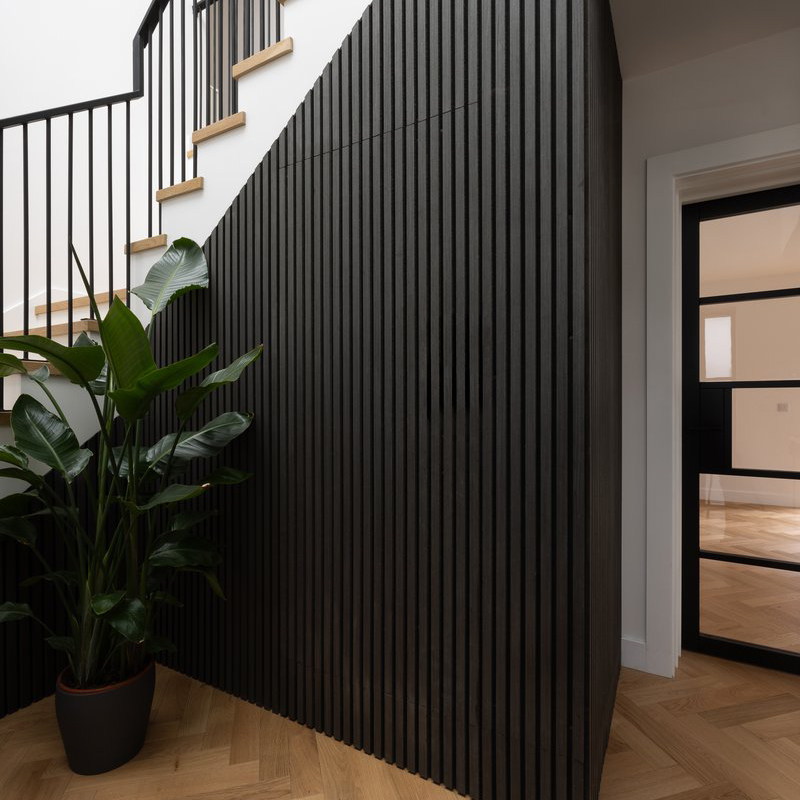
Now, where have you used these?
WK: I’ve used them everywhere! Okay, so:
The Acoustic Panels are amazing to install in commercial spaces. They soundproof the space really well. So, for example, recently I’ve used them in a busy hostel because they’re perfect for busy corridors, making the bedrooms inside quieter and calmer because of it.
Moving onto your stunning Woodlux Panels, these are particularly amazing in children’s spaces, such as in children’s bedrooms. This one, your navy blue wall panelling, I used recently — a gorgeous wall panelling which we paired with a colourful hot air balloon design, making it the perfect addition to the little boy’s bedroom. Of course, it would look just as good in adult bedrooms, too.
Finally, your third type of panelling, WPC Slat Panelling, I use all the time actually. In sitting rooms and living rooms particularly. These panels are lightweight and super easy to install, as well as being super cool!
TM: Yeah, and they’re so easy for the DIYer, too, to throw their hand at as well. Thank you so much Wioleta.
Woodlux vs WPC vs Acoustic Panelling: Which Is Right for You?
As Wioleta mentioned above, Tile Merchant stocks three panelling ranges, and each suits a different job:
Woodlux (solid MDF) is the heaviest and most rigid of the three, foil-wrapped for moisture resistance, and best suited to bedrooms, hallways, and half-height bathroom walls where a solid, traditional finish matters more than lightweight installation.
WPC Slat Panelling is a hollow, lightweight profile, which is why Wioleta reaches for it in living rooms and bathrooms where DIY installation and a slatted, modern texture are the priority over maximum rigidity.
Acoustic Panelling is built with sound-absorbing properties, making it the only one of the three suited to noise reduction — corridors, home offices, media rooms, or any space where echo is a problem rather than just aesthetics.
If you're deciding between them, the order to think in is: do you need soundproofing (Acoustic), do you want the lightest and easiest DIY install (WPC), or do you want the most solid, traditional wall feel (Woodlux).
Tip #2) Bathroom panelling ideas
TM: Wioleta, bathroom panelling ideas offers a quick and affordable way to transform bathrooms. When it comes to decorating your bathroom, traditional wood panelling is rarely a good idea. It’s expensive, difficult to install, and can quickly be damaged by exposure to damp and moisture. You’ve said before that you much prefer to use wood-effect panelling, such as our Woodlux Bathroom Panels, or lightweight and even more affordable WPC Slat Panels in bathroom design. Could you walk us through your reasons for this?
WK: I’d love to! Well, here we are in this traditional looking bathroom. Now, the reason that it looks so traditional lies mostly in the wall panelling. Here we have tongue-and-groove panelling in an olive grey, finished with a gorgeous dado rail running along the top. Below that, we’ve paired a marble-effect-topped vanity unit, which is made ultimately luxurious by pairing everything in this bathroom with a gorgeous pattern-effect tile on the floor. Everything in this bathroom, thanks to the panelling, is very cohesive. The colours are all well-matched and compliment each other.
TM: Right! And the panelling here, being installed at half-height between the floor and ceiling, helps to elevate the sense of size in this small bathroom, wouldn’t you say?
WK: Exactly! It’s waterproof, super easy to install, and grounds the bolder shapes and textures of the bathroom in a strong, traditional finish.
TM: If you were to create something a bit more modern and minimalist, how would you recommend incorporating slat wall panelling into your design? A feature wall perhaps?
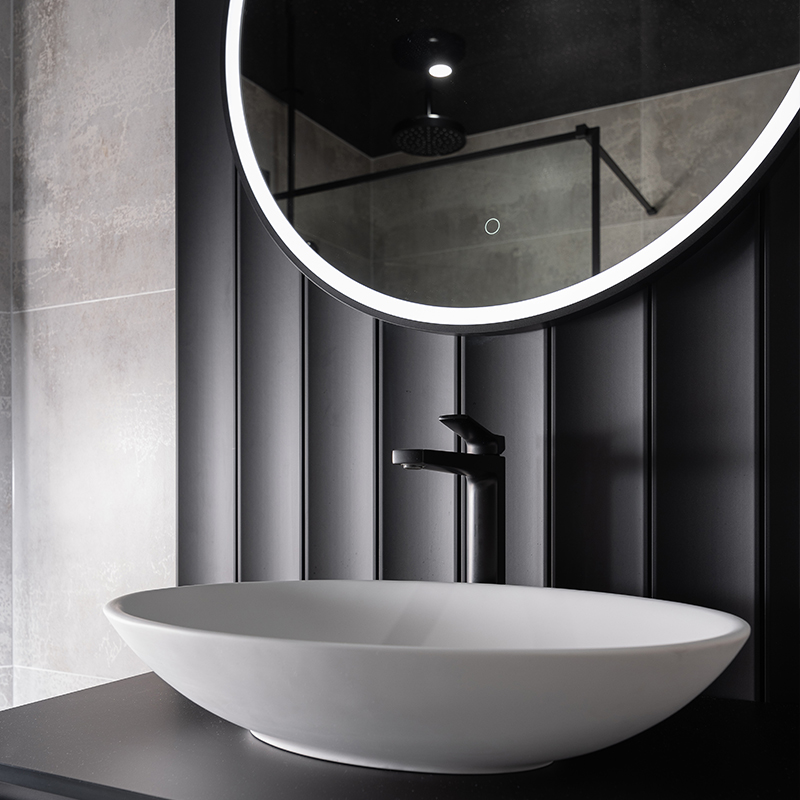
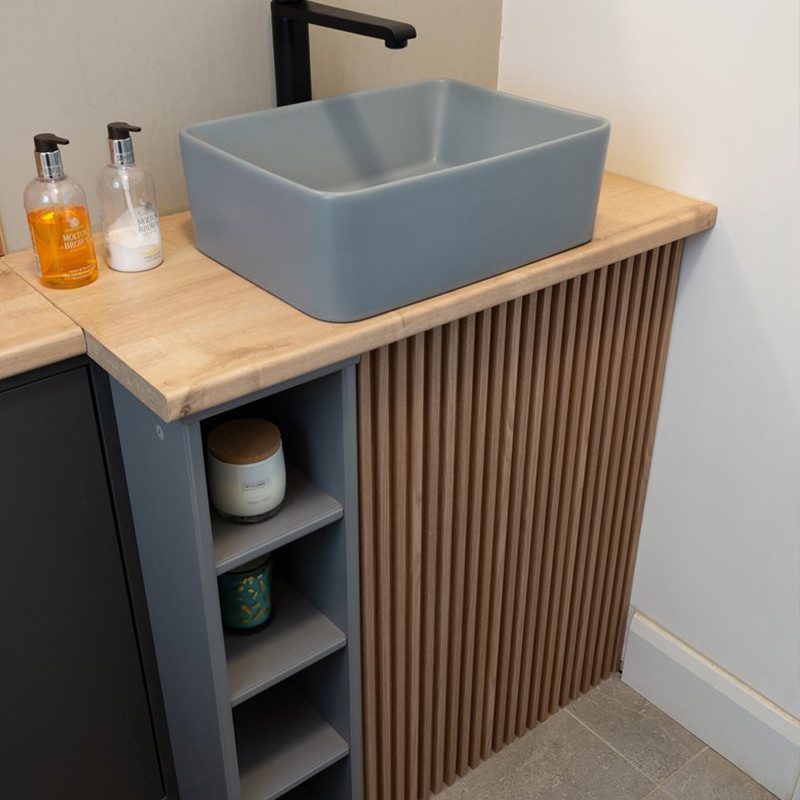
WK: Absolutely, you got it in one! An amazing way of creating a unique and eye-catching modern bathroom is to not settle for using just one tile, but instead to use one or two different tiles, with a wall panelling feature wall on top of that. The reason this bathroom looks so amazing is all down to the feature wall. The feature is made of wood-effect panelling, which helps to add loads of texture and warmth to the space. On top of this, the tiles we’ve chosen to use help to balance the warmth of the wood panelling—marble-effect on the walls for a bright white finish, and concrete-effect tiles on the floor for a more modern industrialist finish.
TM: Okay, fabulous! What about your choice to work with these wall panelling materials, combined with the tiles? Why do they look so good together?
WK: The reason everything looks so amazing in here is because we’ve used a lot of different textures. So we’ve balanced the slatted, ribbed texture and matt warmth of the wood panelling with highly glossy tiles and finally a dusty grey floor with a third, complimentary texture. Another reason this bathroom this bathroom looks so amazing is because we’ve added a pop of colour and light in here.
We’ve added a navy vanity unit with lovely navy detailing around the mirror—a pop of colour is equally important in the bathroom as it is important in your sitting room or kitchen. Now, if you really want your wall panel focal wall to look amazing, then ensure there’s some kind of light on it. In the case of this particular bathroom design, we’ve added this gorgeous large round LED-lit mirror, which adds a feminine balancing touch to the more masculine lines of the bathroom.
TM: Amazing, thank you so much for coming in today to talk to us about wall panelling, Wioleta!
WK: Thank you for having me!
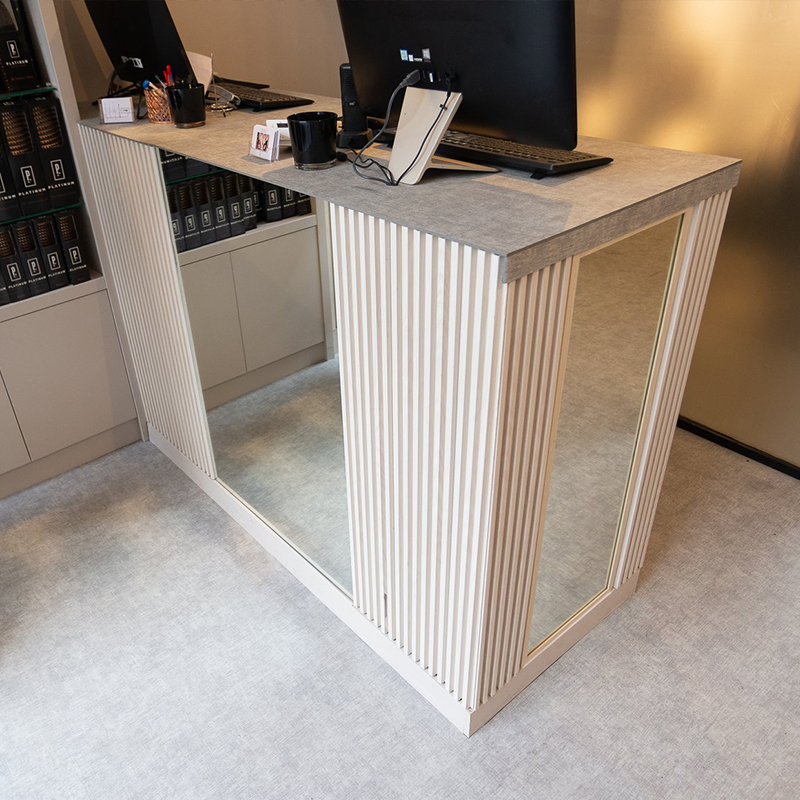
Expanding Wioleta’s top tips for using wall panelling in your interior design
With years of experience working at Abbeyfeale Interiors, Wioleta dispensed some invaluable insight into how to decorate your home with wall panelling materials.
But what about other ways to use those panels which Wioleta might not have touched on?
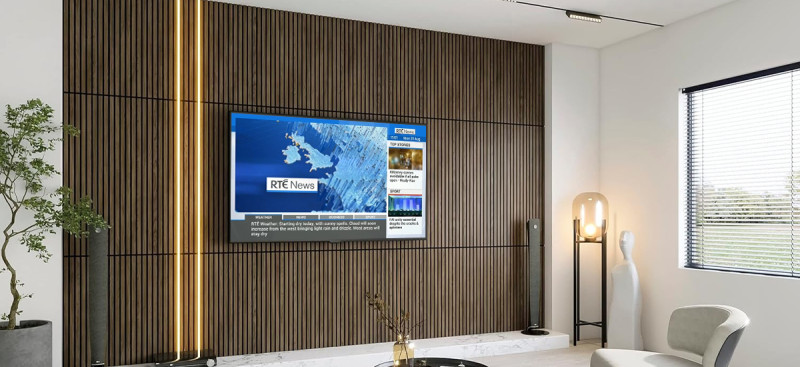
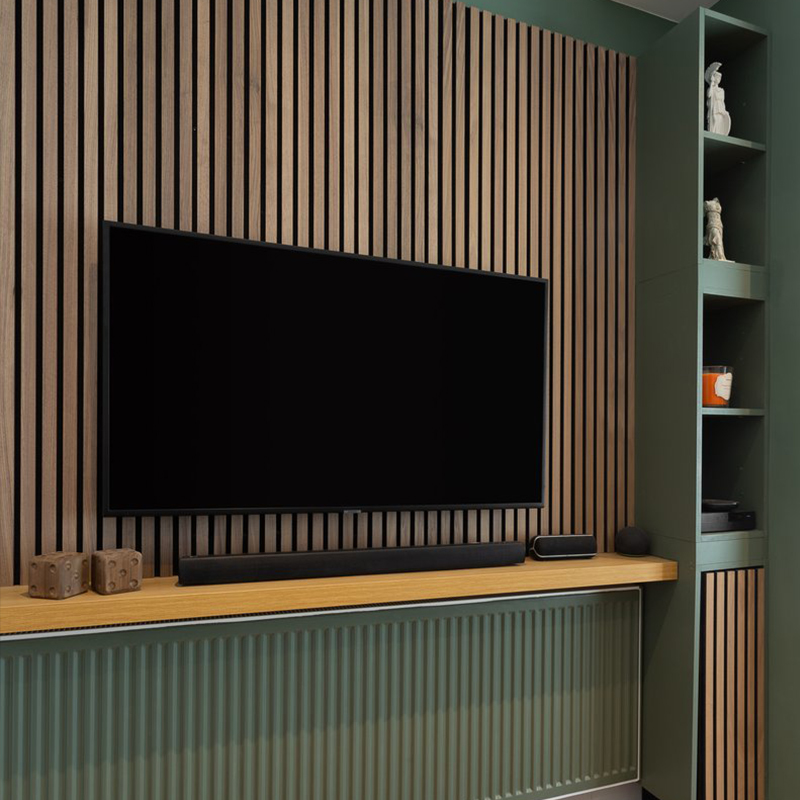
For example, one of the most popular ways to create feature walls from slat panelling in Ireland today is to create a media wall.
For those of you who haven’t heard of wood panel TV wall ideas like this before, a media wall is essentially a feature wall made from the wood-effect wall panelling of your choice, which has been cut to leave room for things like TVs, record players, speakers, and gaming consoles.
[Read the article TV Feature Wall Design Ideas, Considerations & Installation Tips]
It’s a quick and nifty way to create the ultimate party space or family living room in Ireland, all whilst sticking to your budget!
There are literally infinite ways to use wall panelling in your home, some of which have been demonstrated above. If you’re curious about learning more, why not explore our blog posts on wall panelling, here, or give us a call to discuss your interior wall cladding ideas!
You can browse our Woodlux Panels, WPC Slat Wall Panelling, and Acoustic Wall Panels online now, to discover the perfect wall panelling material to suit your unique taste, style, colour scheme and budget. Thanks for reading!
Where to Use Wall Panelling, Room by Room
Living rooms: WPC slat panelling, either as a full feature wall or built into a media wall around the TV, for a lightweight DIY-friendly install with a modern, textured finish.
Bedrooms: Woodlux MDF panelling for a solid, traditional feel, painted or in a bold colour as a headboard-height feature wall — works equally well in children's and adult bedrooms.
Bathrooms: Woodlux or WPC at half-height with a dado rail, kept out of direct splash zones and shower enclosures, as covered above.
Hallways and corridors: Acoustic panelling where noise reduction matters (multi-occupancy or commercial settings), or Woodlux/WPC where the goal is purely visual.
Home offices and media rooms: Acoustic panelling first, since sound absorption is usually the primary reason for panelling a home office wall.
FAQs: Wall Panelling Ideas
What's the difference between Woodlux, WPC, and Acoustic wall panelling?
Woodlux is solid MDF, foil-wrapped and best for a traditional, rigid finish. WPC is a lightweight, hollow slat profile suited to DIY installs. Acoustic panelling is the only range built with sound-absorbing properties, for noise reduction rather than looks alone.
Can you install wall panelling in a bathroom?
Yes, both Woodlux and WPC panelling work in bathrooms, typically installed at half-height with a dado rail and kept away from direct water contact inside shower enclosures.
What is a media wall?
A media wall is a feature wall made from wood-effect wall panelling, cut to fit around a TV, speakers, or gaming consoles, giving a finished look to a living room's entertainment area.
Is wall panelling easy to install yourself?
WPC slat panelling is the easiest of the three ranges for DIY installation, being lightweight and designed to cut and fit without specialist tools. Woodlux MDF is heavier and slightly more involved to handle solo.
Which wall panelling is best for reducing noise?
Acoustic panelling, which is built specifically with sound-absorbing properties, unlike Woodlux or WPC, which are chosen mainly for appearance and texture.
What room is best suited to slat wall panelling?
Living rooms and bathrooms are the most common choices, since WPC slat panelling is lightweight, moisture-tolerant, and suited to both a relaxed living space and a half-height bathroom wall.
Can wall panelling be painted?
Woodlux MDF panelling can be painted to suit any colour scheme. WPC panelling typically comes pre-finished in a set colour range rather than being intended for painting.
How high should bathroom wall panelling be installed?
Half-height, typically around 1m–1.2m from the floor finished with a dado rail, is the standard approach, balancing splashback protection with cost.
Why Tile Merchant?
Tile Merchant Ireland offers extremely competitive pricing on our entire range of tiles and likewise.
Tile Merchant stocks a huge range of wall and floor tiles and our prices are competitive for retail and trade. Our stock is widely available in our tile stores Ireland, which are open 7 days a week.
Alternatively, if you’d prefer to shop our tiles online, we can supply you with samples delivered for free.
Read Tile Merchant Reviews on Trustpilot

Article written by Calum
Cal Bannerman is a freelance writer, editor, podcaster and voice actor from the Scottish Borders. He runs the storytelling podcast "Stories from the Hearth" and lives in a wee Glasgow Flat with his partner and their cat".