
Introduction
Ireland has always been a country with a deep connection to nature. From ancient times ‘till now, we’ve cherished our emerald grasses, roving forests, and glassy loughs. But did you know that there’s a new trend sweeping the nation? A trend toward biophilic design. Biophilic (love of the living world) design is all about bringing the outdoors inside.
Of course, we all know that wooden interiors look simply drop dead gorgeous, both in a modern and a more traditional setting; but that’s actually not the only reason biophilic interior design is catching on amongst Irish homeowners.
With more and more of us working from home, the atmosphere we create in our living spaces is more important than ever, and biophilic design has been suggested to have a calming effect on us, as well as to promote our physical and mental health, our cognitive function, and to increase productivity.
Today, we’re looking at two alternative ways to bring the natural splendour and health benefits of real wood into your home, without shelling out a fortune or having to worry about the upkeep.
We’re talking WPC wall panels and Wooden Wall Panelling (MDF wooden wall panels) – let’s take a look!
What is WPC?
WPC stands for “wood plastic composite”. They are created through a fusion process between wood fibres and thermoplastics, making them lightweight and extra durable.
In Ireland, WPC is often used to make outdoor decking, owing to its natural water-resistance, but more and more commonly it can be found in the feature walls and wainscot panelling of Irish interior design projects.
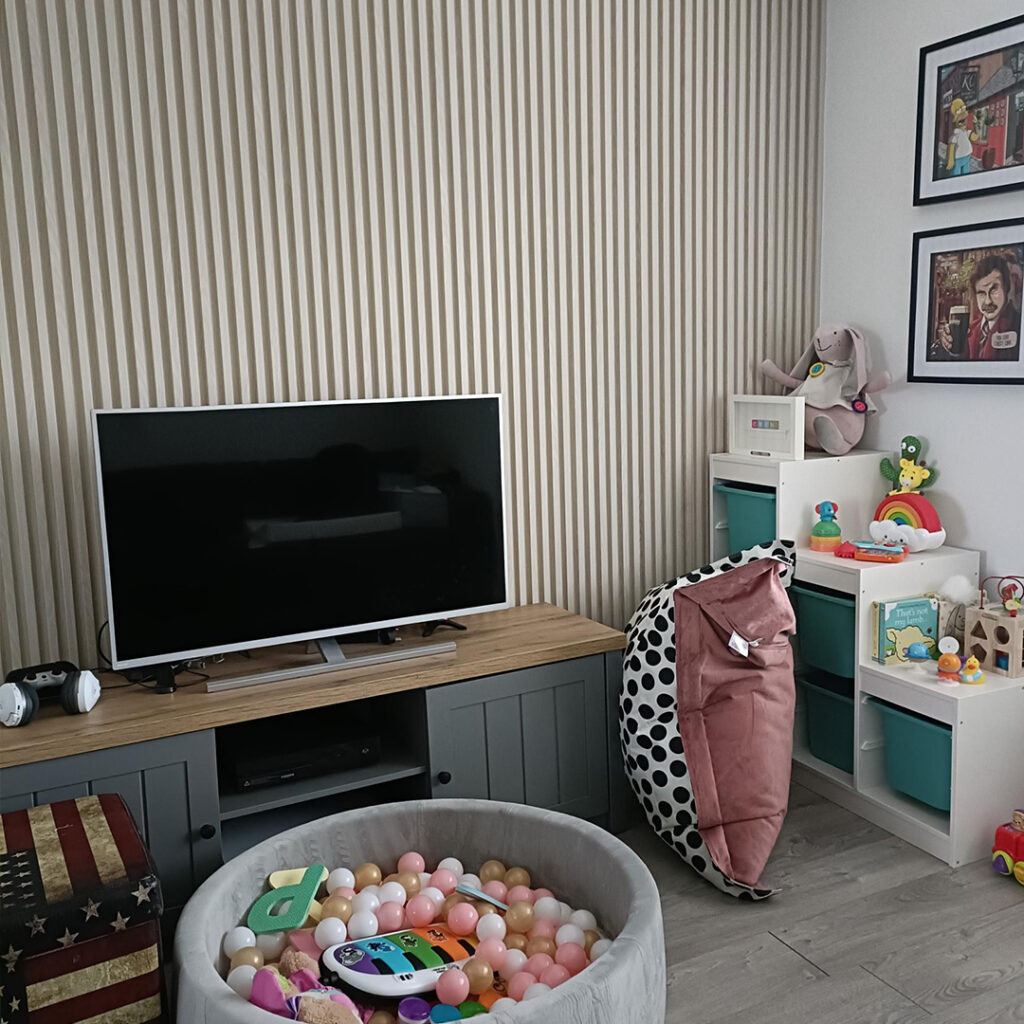
We stock an extensive and diverse range of WPC tongue and groove panelling – sometimes also called PVC cladding – available in different colours, from pale and dark oak, to anthracite and walnut.
Put simply, WPC wall panels are boards made from wood fibre bonded with a thermoplastic (usually PVC or PE), pressed into a tongue-and-groove slat or fluted profile. The plastic content is what makes the panel resistant to moisture; the wood fibre content is what lets it hold a routed groove without cracking.
Because the core is plastic-based rather than compressed wood fibre, WPC won't absorb water through the board itself the way MDF can. That's why installers reach for WPC in bathrooms, utility rooms, and behind kitchen sinks, and keep MDF for drier rooms like bedrooms, hallways, and living rooms.
WPC panels from Tile Merchant are supplied in standard slat widths and board lengths of 2900mm, so most rooms can run floor-to-ceiling without a horizontal joint.
What is MDF?
MDF stands for “medium density fibreboard”. MDF is composed of numerous hardwood and softwood fibres, compressed tightly together and sometimes reinforced with wax. MDF has been in use for decades as a sustainable, heavy duty yet affordable alternative to natural wood panels, and can be found in most homes: usually in the form of wardrobes, desks, and other affordable furniture.
In the case of Tile Merchant’s Wooden Wall Panelling (MDF slatted wall panels), the wood fibre structure is further reinforced with a foil wrap, and finished in either matt or gloss. We stock a curated range of MDF wooden wall cladding panels, selected for the designer and DIYer with an eye for contemporary style.
MDF Wall Panels vs Wood Slat Panels: What's the Difference
This is a common point of confusion, because "wood slat panel" describes a design (evenly spaced vertical grooves or ridges), not a material. Slat panelling can be made from MDF, WPC, or solid timber — so the real question is usually MDF vs WPC vs solid wood, not MDF vs "slat panels."
MDF slat panels are cut from a single board of medium density fibreboard, foil-wrapped, then routed with the slat pattern. Solid timber slat panels are made from individual lengths of real wood fixed to a batten. WPC slat panels are moulded from the wood-plastic composite described above, with the slat profile built into the extrusion rather than routed afterwards.
In practice, when Irish customers ask "what's the difference between MDF and wood slat panels," they're usually comparing Tile Merchant's foil-wrapped MDF range against either our WPC slat range or a solid timber product from elsewhere. The three differ mainly on water resistance (WPC and foil-wrapped MDF both hold up in humid rooms; raw solid timber doesn't without sealing), weight (MDF is heaviest), and price (solid timber is typically the most expensive of the three).
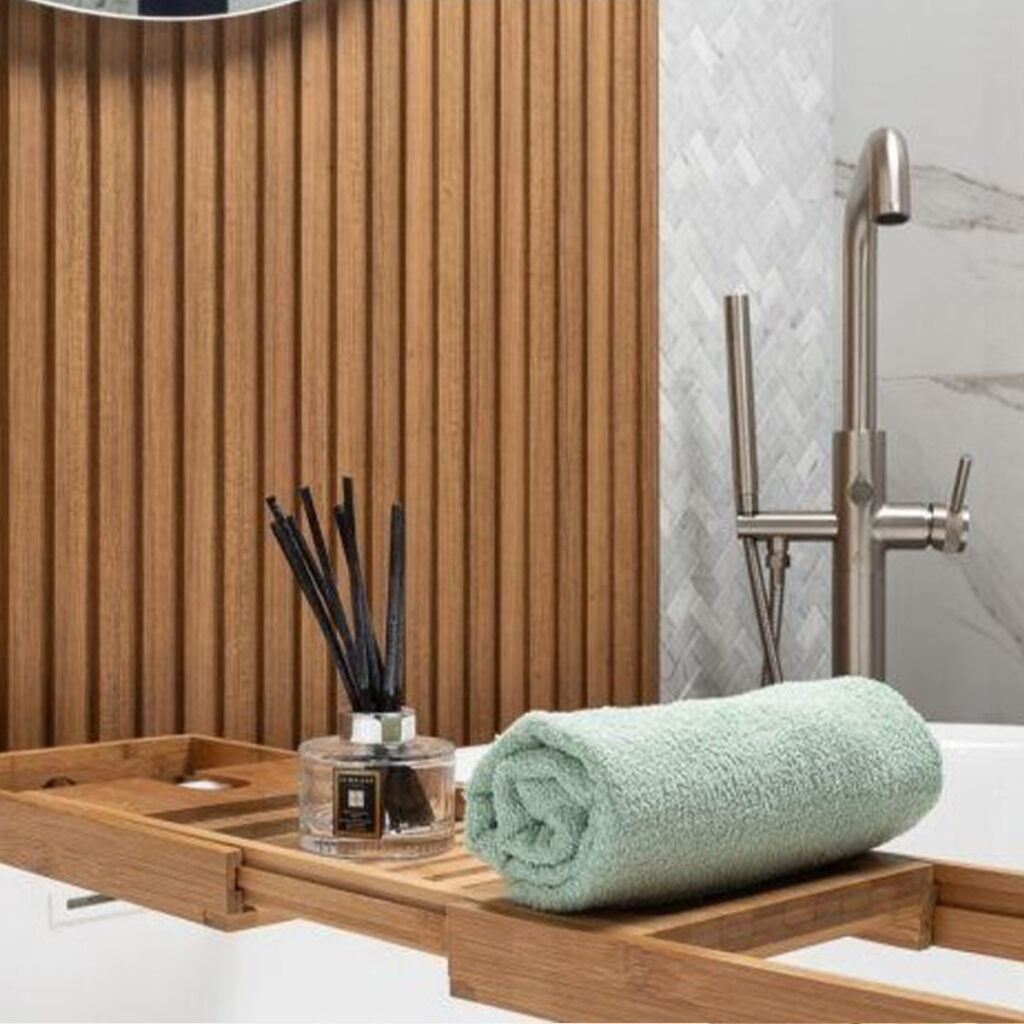
Pros and Cons of WPC Wall Panelling
Helping our customers find the perfect materials and products for their home renovations is what drives us, at Tile Merchant. That’s why we want to walk you through the pros and cons of both WPC wall slats and MDF wall panelling in Ireland – so that you are armed with all the info you need to make an informed decision. First, we’ll start with the pros and cons of wood-plastic composite (WPC) cladding sheets.
Pros
WPC is naturally waterproof, and thus won’t warp or swell with exposure to moisture.
● WPC can last up to 50 years, making investment in this type of wall panel long-term.
● WPC is cost-effective, with prices at Tile Merchant starting at just €50 per m2.
● WPC wall panels are super easy to install.
Cons
● Certain toxic gases can sometimes be released during the manufacturing of WPC wall panelling kits, such as chlorine.
● You can’t paint directly onto WPC slat wall panelling; instead you have to apply a putty to the material first.
● WPC wall panels don’t have the natural texture of real wood
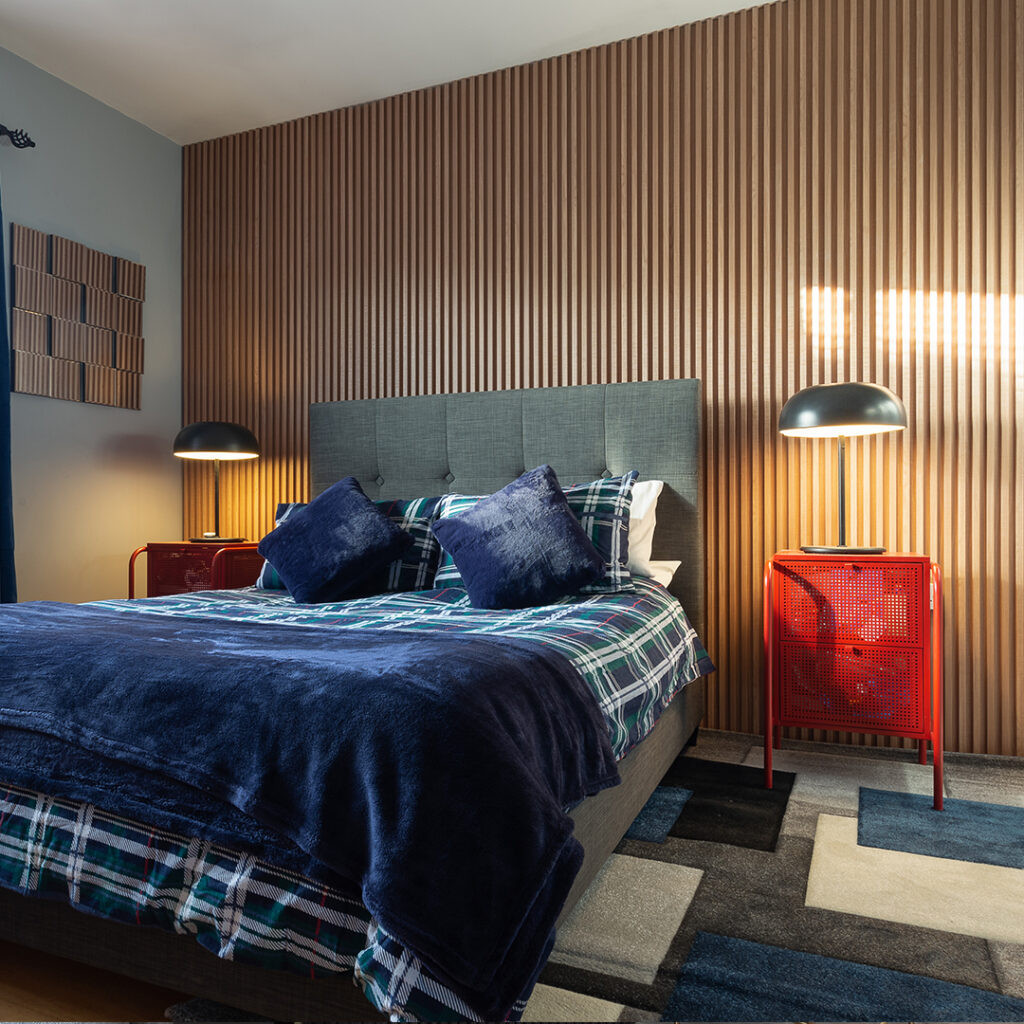
Pros and Cons of MDF Wooden Wall Panelling
Now let’s take a whistle stop tour of the pros and cons associated with WPC panelling’s older brother: Wooden Wall Panelling (MDF wall panels).
Pros
● MDF is tougher and more resilient than WPC, foil-wrapped for added stability and generally more heavyweight owing to its composition.
● MDF is an environmentally-friendly alternative to using real wood in your house.
● MDF boards can be painted without a primary application of putty or any other primer.
● MDF wooden wall panels are super easy to install.
● MDF wooden wall panelling is available from Tile Merchant in an even more diverse range of colours than WPC.
● MDF slatted wall panels are complemented by matching dado rails and end pieces.
Cons
● MDF is not naturally waterproof, and will swell and warp if water gets into the fibreboard. Tile Merchant MDF wall panels are foil-wrapped to counteract this failing.
● MDF wall panels tend to last around 10 years, which is still a long time! Just not quite as long as our WPC cladding.
● MDF is a more expensive option when compared to WPC wall panelling in Ireland.
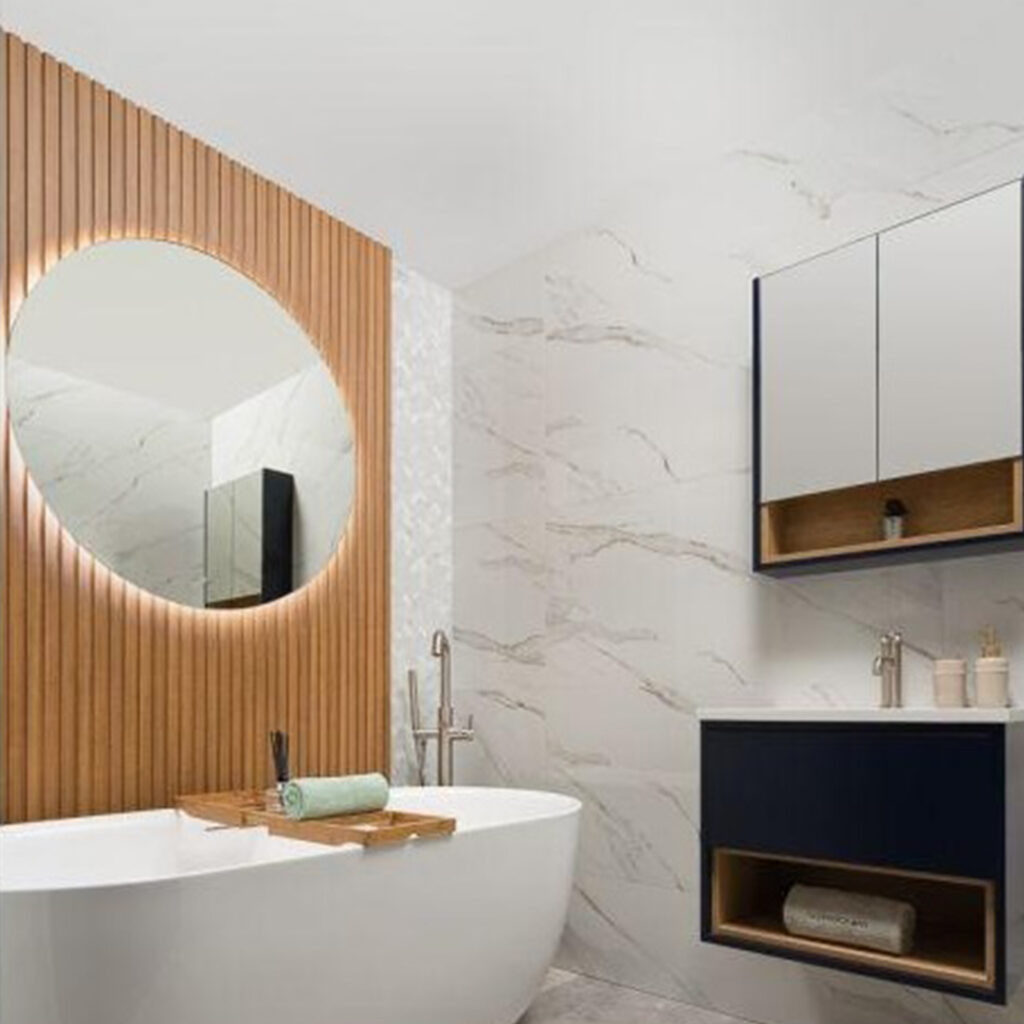
Comparing MDF Slatted Wall Panels to WPC Wall Panelling: 8 Key Observations
Let’s clear one thing up: whatever you ultimately choose – MDF or WPC – if you shop with Tile Merchant you’re guaranteed top-quality, easy-to-install, supremely attractive wall panels for your home. However, that doesn’t necessarily help you make your decision – for that, let’s take one last comparative look at the two wall panel materials, through the lens of 8 key determiners.
Texture
MDF, being made of real wood fibres, has a more natural textured feel to its surface. On the other hand, WPC, being a plastic composite, is smoother to the touch. Because of this difference, you may find that Wooden Wall Panelling (MDF wooden wall panelling) lends itself ever so slightly more to the traditional, classic wooden aesthetic, whereas WPC is better fitted to a minimalist and modernist approach to Irish interior design.
Durability
MDF is undeniably stronger than WPC, and by a long shot at that. It’s thicker, heavier, and ultimately more robust, meaning that depending on the nature of your project (whether you’re building for a family with dogs and kids, or a single person, for example) you may wish to opt for MDF vertical wall panelling. WPC, by contrast, is less strong, but more durable in the long run: this owing to the fact that it is a plastic composite and thus – unlike MDF – is impervious to mould, warping, and staining.
Waterproof
WPC is naturally waterproof, making it incredibly easy to clean free of spillages, splashes and potential stains. This resistance to water also means it won’t warp or distort over time and exposure to moisture in wet rooms like the kitchen and bathroom. Typically, MDF is not waterproof, and would have to be sealed in order to be used in certain rooms in the house. Tile Merchant Woodlux Wooden Wall Panelling (decorative wall panels), however, are foil-wrapped, and so have already been waterproof-treated.
Maintenance
Both WPC and MDF wall panels are incredibly easy to keep clean and well maintained. Neither needs more than a quick wipe down with a wet cloth and some standard household cleaning spray to be kept in “fresh from the shop” condition. Even better, because wall panels clip together via an innovative tongue-and-groove system, if in the unlikely incident that one panel does get damaged beyond repair, it can be easily replaced without having to touch the rest of the installation.
Insulation
An unsung shining feature of both our MDF and WPC panelling is their insulatory characteristics. Owing both to the nature of the materials, and their distinctive vertical-striped and grooved design, they absorb echoes and unwanted reverberations wherever they’re installed – and no matter how big the space! Moreover, they can provide excellent additional heat insulation, in addition to soundproofing the rooms in your home.
Environment
Both Wooden wall panelling and WPC slat wall panell is more environmentally-friendly than using real wood, since they use less wood per square metre. Having said that, if eco-friendliness is of utmost importance to you, then we do suggest opting for MDF rather than WPC, to avoid introducing more plastics into your home
Installation
It is purposely easy to install both of the wall panelling kits we offer: both MDF and WPC. They are designed with an innovative tongue-and-groove system which allows them to be slotted together to fill whichever space you choose. Both can easily be cut to size and length, and then installed against any interior wall surface with nothing more than some Bostik adhesive.
Price
There’s not a huge difference in price between our WPC and MDF wooden slatted wall panels, but nevertheless if budget is of concern, you’ll want to look at our wood-plastic composite range of panelling. Nevertheless, we’re confident that both MDF and WPC are cost-effective options, especially when you take into account their durability, and the fact that they’ll last you between 10 and 50 years.
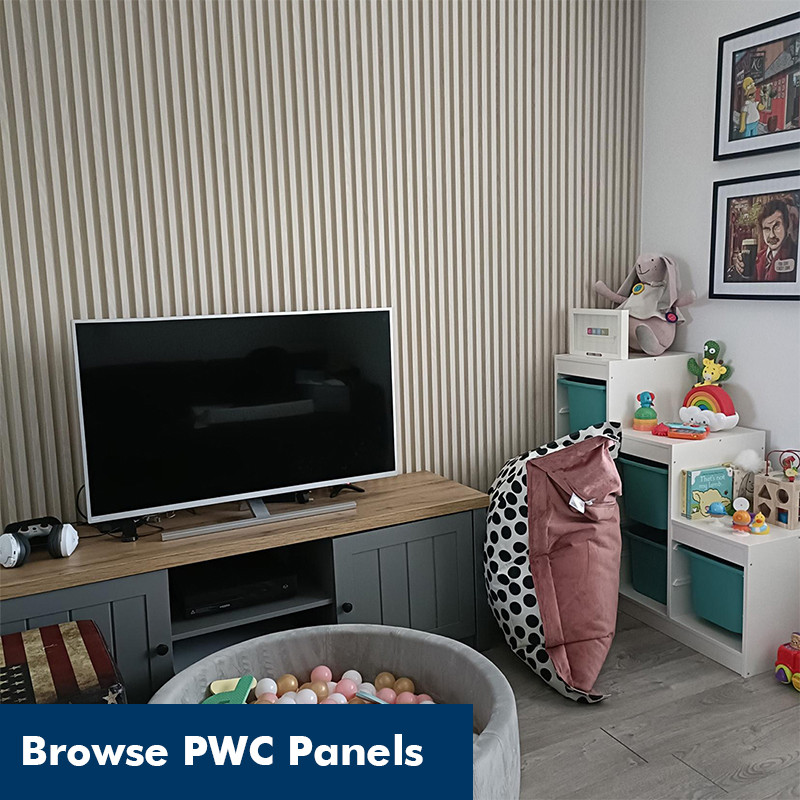
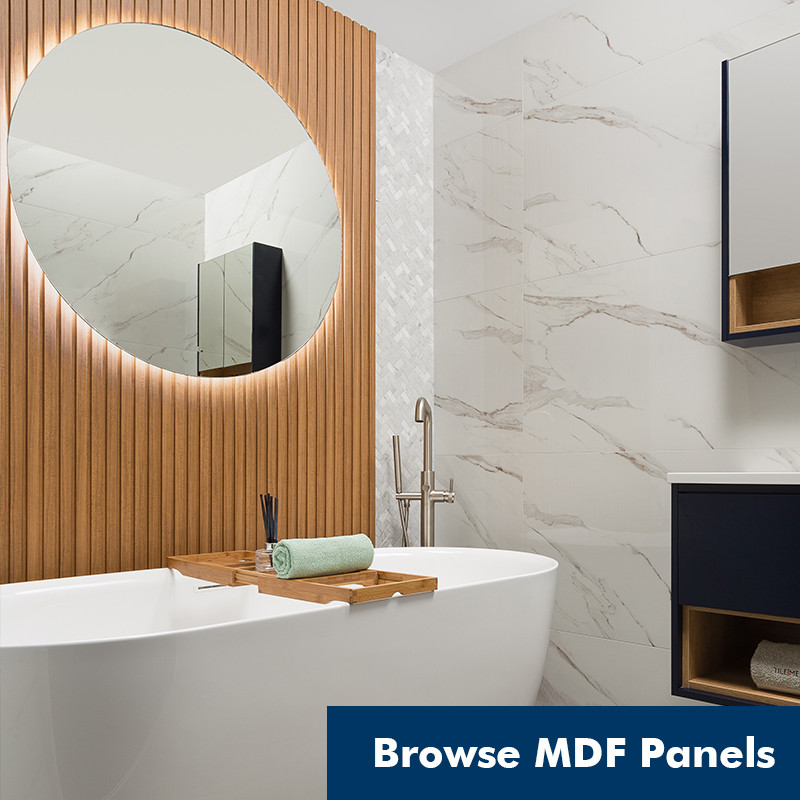
Types of Wall Panelling for Your Home
MDF and WPC slat panels are two options among several. The main types used in Irish homes are: slat/fluted panels (MDF or WPC, the focus of this article), tongue-and-groove wet wall panels (PVC, used in bathrooms and showers), shiplap and V-groove timber panelling (painted or stained, common in hallways and stairs), acoustic panels (fabric or felt-wrapped, used in home offices and media rooms), and 3D textured or geometric panels (also knows as PU Panels(used for feature walls).
For a full breakdown of each type with room-by-room recommendations, see our guide: 8 Popular Types of Wall Panelling and How to Choose the Right One for Your Interior Design.
3 Slatted Wall Design Ideas to Get You Inspired
The Swedish Sauna Bathroom Effect
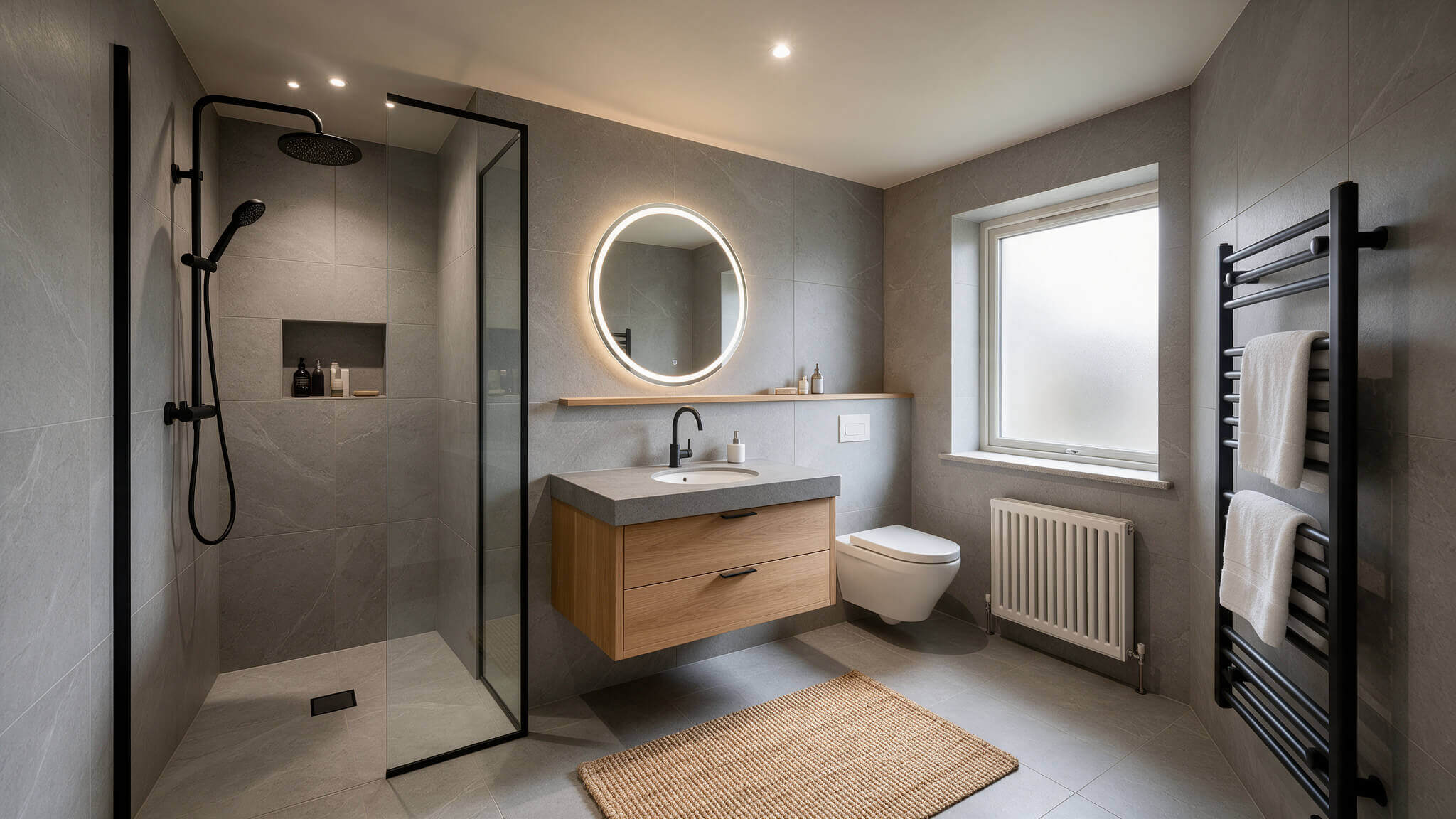
Is there anything quite as wholesome and restorative as a half hour spent sweating it out in a Swedish-style steam room? Turn any bathroom – be it tiled, stone, wallpapered or painted – into a relaxing Scandinavian with some warm oak WPC slat panels.
The Dado Rail Staircase
The beauty of Tile Merchant wall panelling is that it can have just as powerful a visual impact when used to cover a whole room as it can when added as a finishing touch. Elevate the staircase(s) in your ome by running a hip-height MDF wall panel and dado rail installation on the wall(s) running up the stairs. Why not try our light safari grey panels for something airy and bright?
The Interior Designer’s Feature Wall
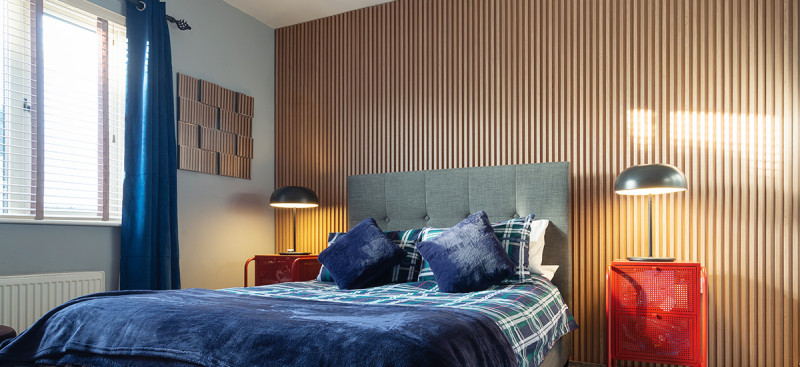
One of the simplest ways to completely transform a room is to add a feature wall. You could even choose to add just one or two standalone panels as statement pieces, giving the eye something extra to enjoy in the room, whilst adding a little texture, sound absorption, and subtle style. I personally think our Anthracite WPC panelling could be perfect for the job!
FAQs: WPC vs MDF Wall Panelling
What are WPC panels?
WPC (wood plastic composite) panels are wall boards made from wood fibre bonded with a thermoplastic, pressed into a tongue-and-groove slat or fluted profile. The plastic content makes them naturally water-resistant, unlike MDF.
What is the difference between MDF wall panels and wood slat panels?
"Wood slat panel" refers to the grooved slat design, not the material—it can be made from MDF, WPC, or solid timber. MDF slat panels are foil-wrapped fibreboard; WPC slat panels are a wood-plastic composite moulded with the slat profile built in.
Are WPC wall panels waterproof?
Yes. WPC is naturally waterproof due to its plastic content, so it won't warp or swell in bathrooms, kitchens, or other humid rooms without additional sealing.
Is MDF wall panelling waterproof?
Not on its own. Standard MDF will swell if water penetrates the fibreboard. Tile Merchant's Woodlux MDF panels are foil-wrapped specifically to counter this, but they're still better suited to drier rooms than a wet room or shower wall.
Which lasts longer, WPC or MDF wall panelling?
WPC panels typically last up to 50 years. MDF panels last around 10 years. MDF's shorter lifespan is offset by its lower cost and wider colour range.
Can you paint WPC or MDF wall panels?
It's not advisable to paint MDF panels directly. However, here at Tile Merchant, we sell a specific model that is designed to be painted: Woodlux Paintable Wood Wall. It's also not advisable to paint WPC panels. However, if you still want to paint them, you'll need to apply a suitable putty-based primer to the surface first to ensure the paint adheres properly.
Do WPC and MDF wall panels need special tools to install?
No. Both are designed to be cut to length and slotted together via tongue-and-groove, then fixed to the wall with an adhesive such as Bostik. No specialist tools are required beyond a saw and adhesive.
Which is cheaper, WPC or MDF wall panelling?
WPC is generally the more budget-friendly option, with Tile Merchant prices starting from €40 per m². MDF costs slightly more due to the foil-wrap finish and broader colour range, but both remain cost-effective compared to solid timber.
Conclusion: Choosing the Best Wood Wall Panelling for Your Home
So, which is the best wood wall panelling for your home? Ultimately, the choice depends on a number of factors, including budget, space, style and colour – but whichever you choose, you won’t be disappointed.
If you’d like to test the quality of our products for yourself, then make sure to order yourself free samples of both our WPC and MDF wooden wall panelling – we deliver them, for free, to any address in Ireland.
And if you think you’re ready to pick the perfect wood slat panelling for your next home improvement project, then get stuck in! Shop our ranges of Woodlux Wooden Wall Panelling and WPC slat walls today!
Why Tile Merchant?
We offer extremely competitive pricing on our entire range of tiles and likewise. We stock a huge range of wall and floor tiles and our prices are competitive for retail and trade. Our stock is widely available in our tile stores in Ireland, which are open 7 days a week.
Alternatively, if you’d prefer to shop our tiles online, we can supply you with samples delivered for free.

Article written by Calum
Cal Bannerman is a freelance writer, editor, podcaster and voice actor from the Scottish Borders. He runs the storytelling podcast "Stories from the Hearth" and lives in a wee Glasgow Flat with his partner and their cat".