Introduction
First there was grass, but people had to spend a lot of time cutting, watering, and maintaining their lawns. Then we welcomed artificial grass, and garden upkeep got a whole lot easier and less time-consuming.
Nowadays, people are using artificial grass in their back gardens, on their patios and balconies, and in other innovative ways across the country. Let’s take a look at some creative ways to use artificial grass around the place you call home.
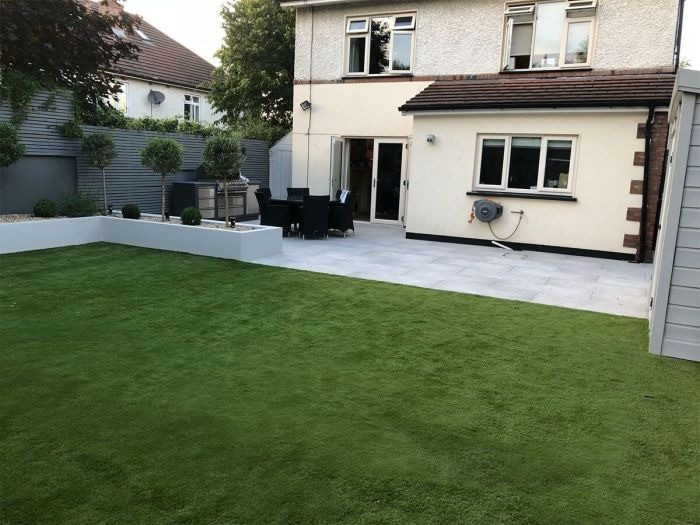
1. Back Garden Lawn Replacement
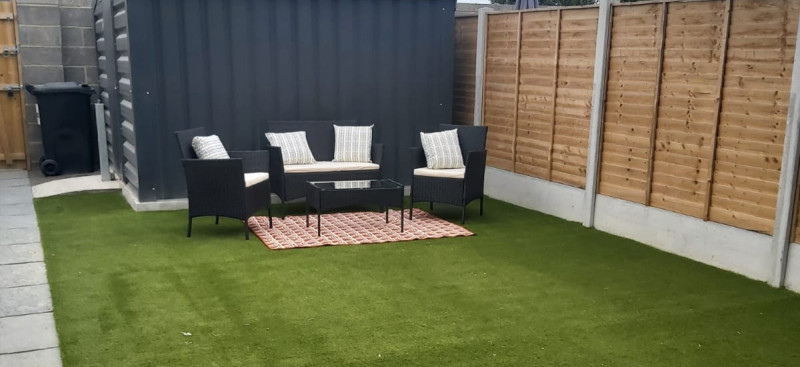
Artificial grass is a very popular option in Irish back gardens, and there are good reasons for this. Artificial grass does not need any mowing or feeding, and it looks great for years. If so many people have put artificial grass in their back gardens, why are we calling it “innovative”?
Because artificial grass manufacturers are breaking new ground to bring innovative grasses to an ever-growing market. You don’t have to settle for hard, plastic-looking grass in your garden.
The new high-quality artificial grasses look alive and a lot like real grass. The blades of these grasses have natural grassy shades blended throughout and are slightly different lengths, to mimic real grass that’s been cut with a mower and dappled by sunshine.
You also get to be creative and innovative with the artificial grass in your back garden by deciding where to put it and what you will use it for. Lay artificial grass anywhere in your back garden where you enjoy relaxing, spend a lot of time, or to cover unsightly areas where real grass just won’t grow.
Cover the entire back garden or only parts of it, the choice is yours. If you’re looking for this innovative artificial grass for your back garden, we highly recommend Phoenix and Powerscourt Artificial Grass because we consistently achieve the best results with it.
Planning a Back Garden Lawn Replacement
A full back garden lawn is the biggest of these 13 projects, and the one most worth planning properly before you start. Unlike a balcony or a shoe tray, a garden lawn needs a proper sub-base, typically a compacted layer of sharp sand and hardcore, to allow rainwater to drain through rather than pool on the surface. Skipping this step is the most common reason a DIY artificial lawn ends up uneven or soggy within a year or two.
It's also worth deciding early whether you want to cover the whole garden or keep a border of real planting around the edges. Many Irish gardens use artificial grass for the main lawn area while keeping flower beds, shrubs, or a vegetable patch around the perimeter, which keeps some of the seasonal interest a fully synthetic garden can lack.
2. Pet-Friendly Play areas
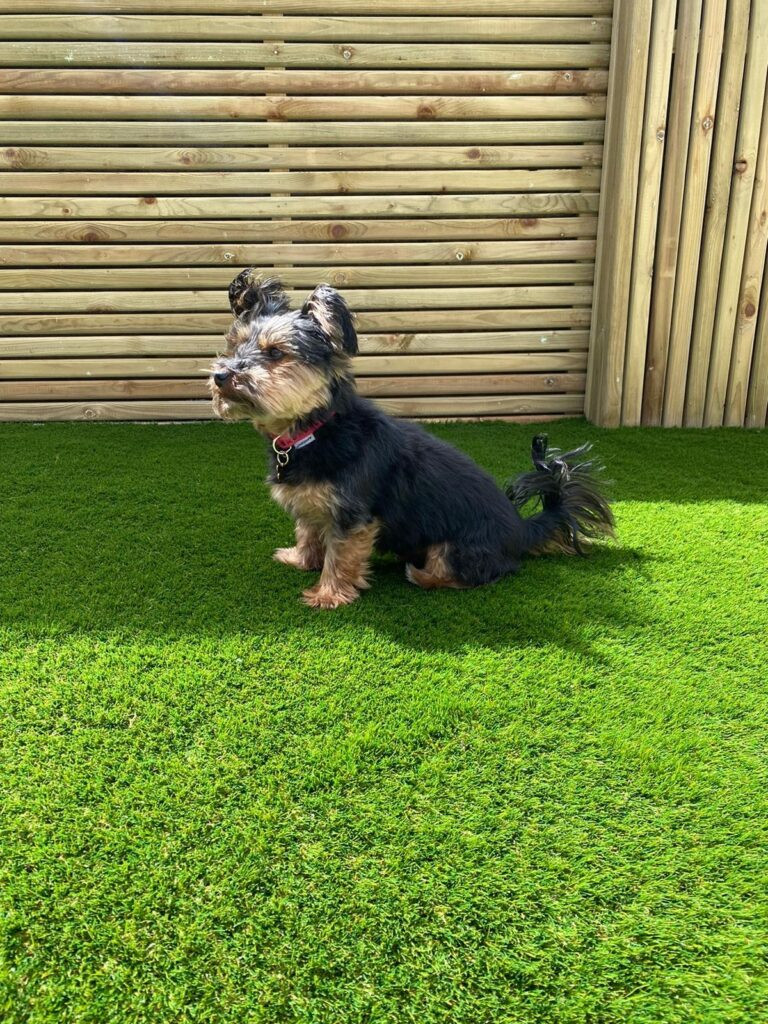
Have a pet? You can lay artificial grass wherever your pet loves to run, play, or lie in the sun outside. Your pet will enjoy the soft feeling of artificial grass and the freedom to roll around on it, and you will have much more time to do other things because you don’t need to spend a lot of time taking care of this area.
What Makes a Pet Area Different From a Standard Lawn
A pet-friendly patch needs stronger drainage than a purely ornamental lawn, since urine needs somewhere to go rather than sitting on the surface. Look for a grass with a permeable backing and drainage holes specifically rated for pet use, rather than a standard decorative grass.
Shorter pile heights also work better for pet areas than a long, lush pile, since they're easier to keep clean and less likely to trap fur, mud, or debris. If the pet area sees heavy digging or running, a slightly denser grass (more stitches per m²) will hold up better over time than a lighter, more decorative option.
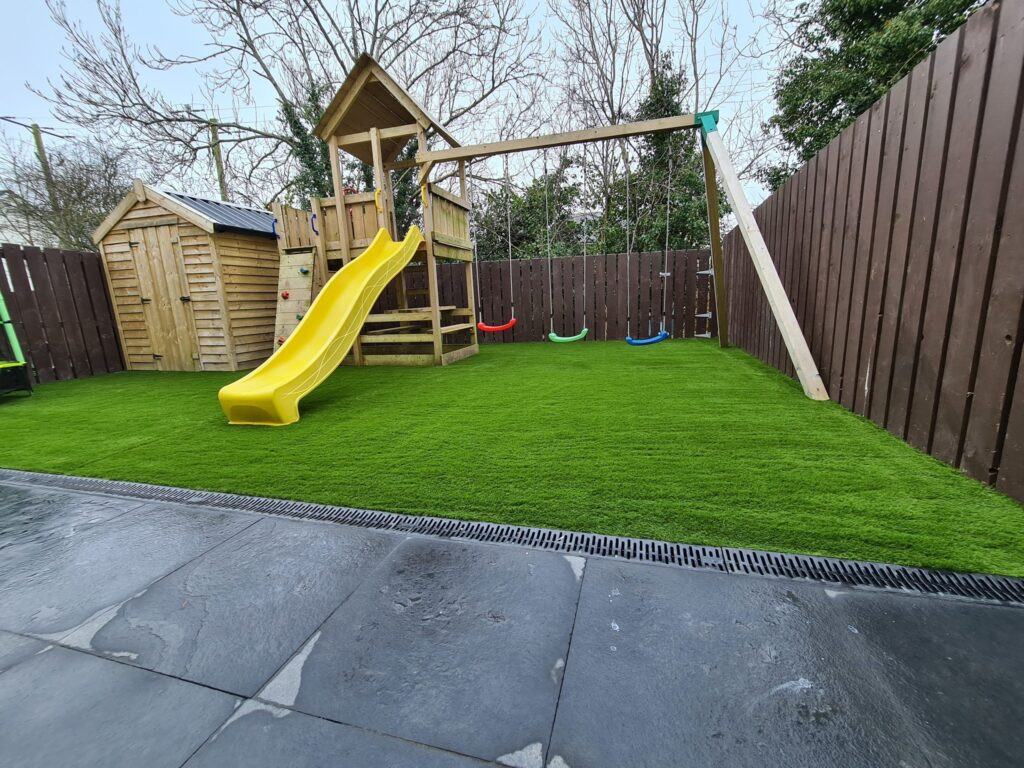
3. Children's Playground Surfacing
If you have children, artificial grass is a wonderful option for a playground area. Kids love to play, and playing is often a lively activity.
All this running, jumping, and sometimes falling means it’s better to have a soft grassy surface that can break falls, but that’s strong enough to handle the wear and tear of busy little feet. Artificial grass works very well in playground areas. Lay it once to enjoy years of a beautiful, grassy wonderland.
Shock Absorption for Play Areas
Standard artificial grass on its own doesn't provide meaningful fall protection, so for a genuine playground area, a shock pad underlay laid beneath the grass is worth the extra cost. These foam underlays are rated by critical fall height, essentially how far a child can fall onto the surface with reduced injury risk, and the right thickness depends on the height of any play equipment being used above the area.
Beyond safety, a shock pad also adds a softer, more cushioned feel underfoot generally, which most children (and parents sitting down to join in) will notice even without any climbing frame involved.
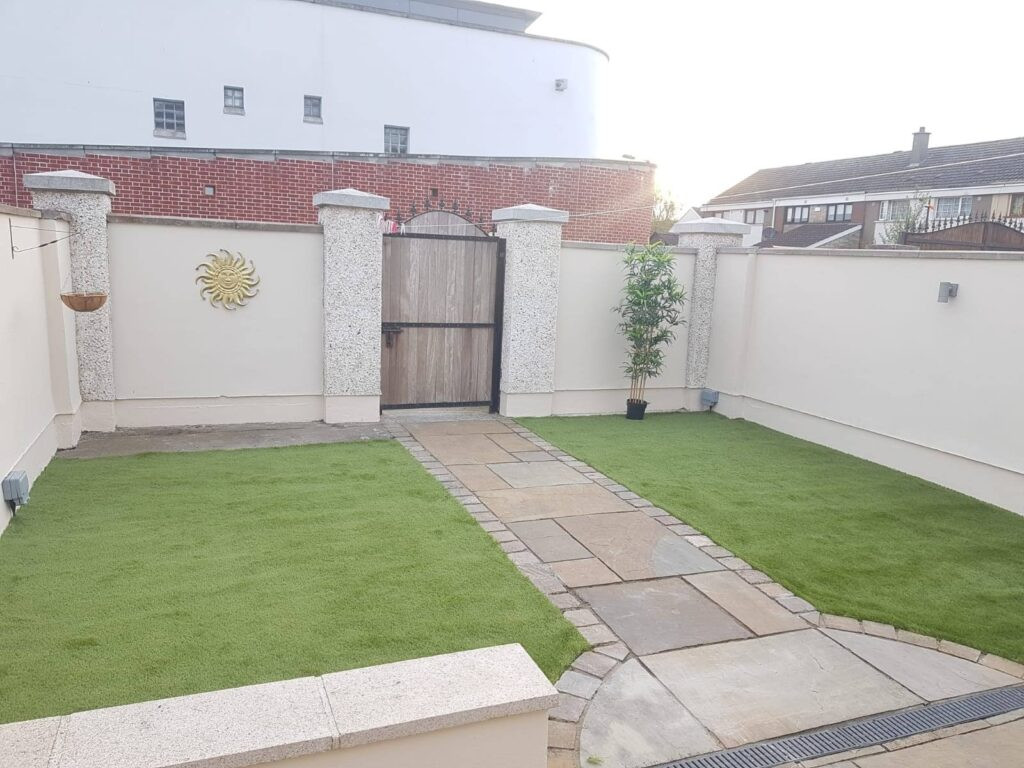
4. Balcony and Patio Flooring
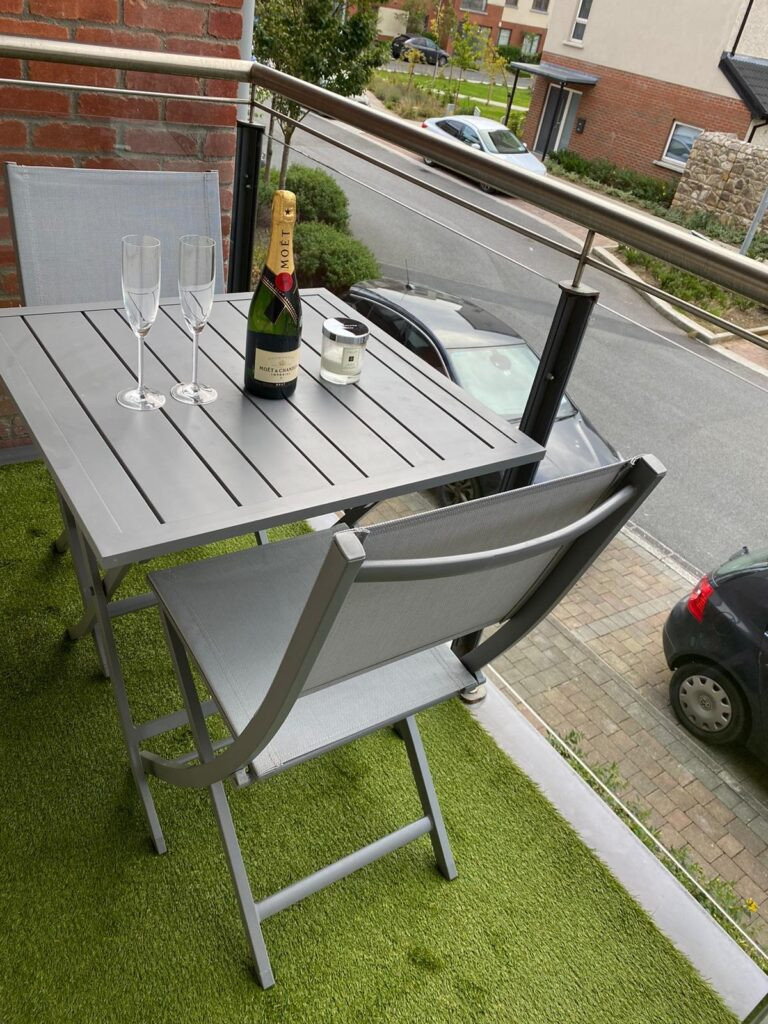
If you have a balcony or a patio then artificial grass is a wonderful floor covering that can be used in many innovative ways, just like a back garden. Think about how much of the area you’d like to cover. You could lay artificial grass across the full length of the patio or balcony, in a smaller area, or in a shape, such as a circle or a square. If there isn’t a lot of traffic on the patio or balcony, any length of artificial grass will work well.
If there is a lot of foot traffic, we recommend a resilient, short artificial grass called Marlay 25mm. Laying artificial grass on a patio or a balcony is very easy because it can be placed directly on the floor. And because artificial grass is made from polyethylene, a durable plastic, the grass protects your patio or balcony from foot traffic and damage from heavy outdoor furniture. Add some pot plants and a wind chime, and your balcony or patio will be transformed into a low-maintenance, little oasis to enjoy.
Patio-Specific Considerations
Unlike a balcony, a patio is usually large enough to combine artificial grass with existing paving rather than replacing the whole surface. A popular approach is framing a section of artificial grass within a paved patio, either as a rug-like feature in the centre or as a border strip, which softens the hard lines of stone or porcelain paving without a full garden renovation.
If furniture will sit directly on the grass, choose a denser pile, since lighter, longer piles can flatten permanently under the constant weight of table and chair legs, whereas a denser grass springs back more reliably.
5. Outdoor Home Gym Flooring
We all know that working out is good for our health, but did you know that artificial grass is becoming more and more popular in gyms? Artificial grass gives you the feeling of real grass and being outside in nature, without all the insects and dirt that come with real grass. It’s also soft enough to lie on to complete all those push-ups and sit-ups that you love to do.
If you want to use artificial grass in your gym, either indoor or outdoor, we recommend our Marlay 25mm, medium-length blade grass for comfort and durability.
Durability for High-Impact Use
An outdoor gym area sees more repetitive, high-impact use in one spot than almost any other application on this list, so pile density matters more here than pile height. A shorter, denser grass will resist matting and wear from repeated use (burpees, weights being set down, mats being dragged) far better than a longer, softer pile designed for a purely ornamental lawn.
If free weights or gym equipment will be used directly on the surface, consider a rubber or foam mat placed on top of the grass in that specific spot, since dropped weights can damage even a durable artificial grass over time.
6. Back Garden Football or Golf Pitches
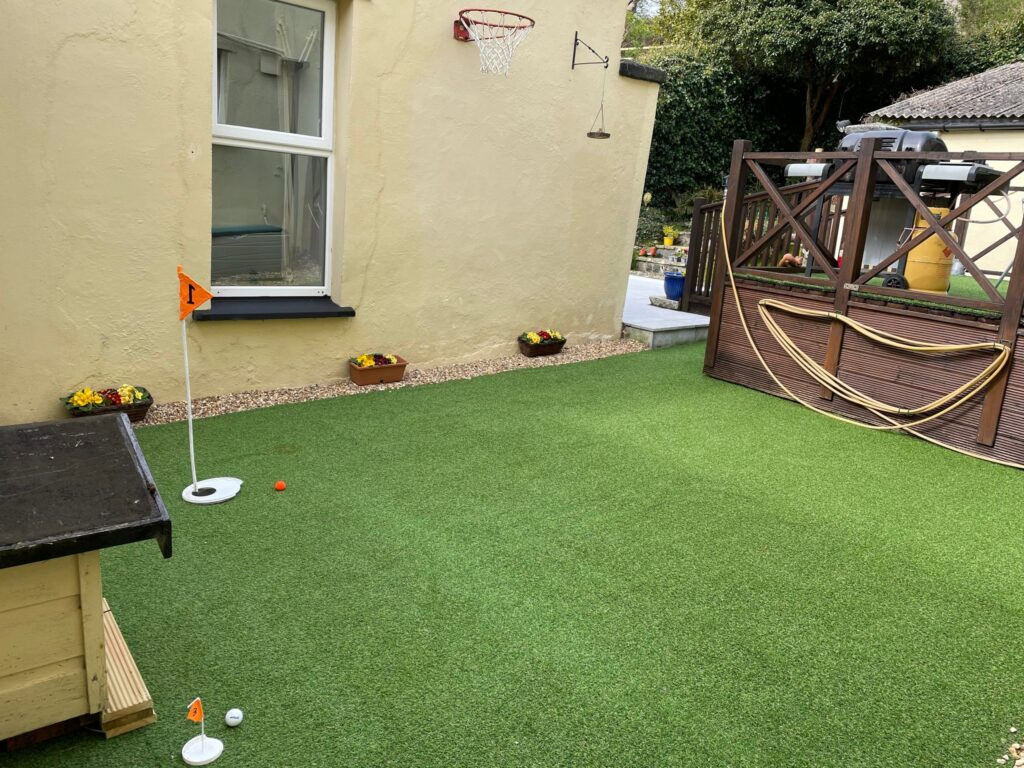
Artificial grass is an excellent alternative to real grass when it comes to the football or golf pitches that back gardens often become. Using artificial grass in your garden allows the footballers or golfers in your family to play year-round without the area becoming a mud bath.
Choosing Grass for Sports Use
A back garden football or golf area takes a different kind of punishment than a lawn used for sitting or relaxing, mainly scuffing, sliding, and repeated directional foot traffic. A shorter pile with a denser stitch count holds its shape better under this kind of use than a longer, softer grass, and is also less likely to cause a ball to sit unpredictably compared to a very long or uneven pile.
For golf specifically, a tightly cut, low-pile grass gives a far more consistent, true roll for putting practice than a standard lawn-style grass, which is why golf practice areas typically use a noticeably shorter pile than the rest of the garden.
7. Pool Surrounds
If you have a pool and swimming area that you enjoy when the sun is out, and you’re looking for a low-maintenance option for the floor, you might want to look into artificial grass.
Artificial grass adds charm to a pool area, much more so than traditional tile or brick. You won’t need to clean the grass like other floor coverings, there will be no mud, and the grass drains away splashes so water isn’t left standing around the pool.
Did you know that fake grass improves the safety of your pool area? The grass gives a firm grip for wet feet, so people are less likely to slip and fall after swimming. If you choose synthetic grass such as Powerscourt 40mm, you know it will always be soft enough to sit on or lie down on after a swim.
Heat and Drainage Around Pools
Pool surrounds see more direct sun exposure and more standing water than most other areas on this list, so both UV resistance and drainage rate matter more here than elsewhere in the garden. A grass without strong UV protection can fade or become brittle faster in a consistently sun-exposed pool area than the same product would in a partially shaded back garden.
It's also worth checking the grass surface doesn't get uncomfortably hot underfoot in direct summer sun, since darker-coloured synthetic surfaces generally absorb more heat than lighter ones. A slightly lighter or more naturally variegated green tends to stay cooler than a very dark, uniform shade.
8. Indoor Rugs And Play Mats
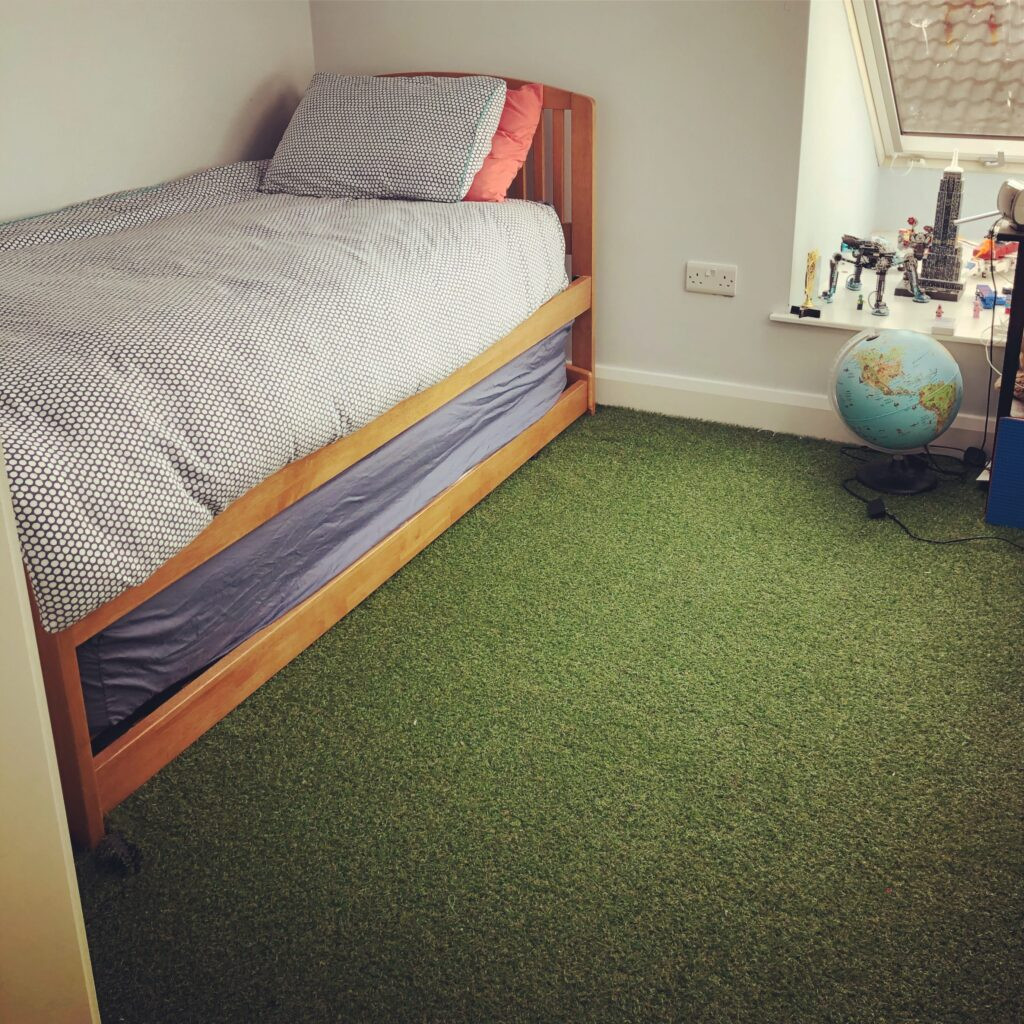
Artificial grass makes a wonderful rug or indoor carpet, and it will never show dirt or stains like traditional carpets and floor coverings.
Cut a piece of artificial grass to the size you need and use it as a rug for the children to play on or for the pets to sleep on. Or try laying artificial grass across the floor of an entire room for a soft, cushy floor covering. Whichever you choose, you have a great talking point when people come to visit.
Choosing Grass for Indoor Use
Indoor use has different priorities to outdoor: drainage doesn't matter indoors, but softness underfoot and a lack of loose infill sand does. Many outdoor grasses use a sand infill between the blades for stability and weight, which isn't practical indoors since it can work loose and end up on flooring. Look specifically for a grass designed or suitable for indoor use, which typically skips the sand infill in favour of a denser backing for stability instead.
Cutting a piece to an exact size for indoor use is straightforward: measure the area, mark the backing with a straight edge, and cut from the backing side with a sharp utility knife rather than cutting through the pile from the top, which gives a cleaner, straighter edge.
9. Steps And Footpath Coverings
Artificial grass makes a great covering for any steps or footpaths leading to your house, by the front door, the back door, or both. Laying artificial grass on steps and footpaths means that the dirt from people’s shoes gets caught by the synthetic grass, and the dirt won’t be carried into your clean house.
Laying artificial grass outside your entry points could save you hours of cleaning time, and all you need to do is hose off the artificial turf every once in a while (or let the rain do it for you).
Fixing Grass Safely to Steps
Steps need the grass secured more firmly than a flat patio or balcony, since loose edges on a step are a genuine trip hazard rather than just a cosmetic issue. Outdoor-rated adhesive or a staple/fixing strip along each step edge, rather than leaving pieces to sit loose, keeps the covering secure underfoot.
It's also worth choosing a shorter, denser pile for steps specifically, both for underfoot stability and because a longer pile can catch on shoes in a way that matters more on a step than on flat ground.
10. Muddy-Shoe Trays By The Door
If you don’t lay artificial grass outside your front door, the last thing you need is for family members to walk in all the dirt from outside. Well, there’s a simple alternative solution to this problem: shoe trays made with artificial grass. To make a shoe tray from synthetic grass, simply measure the space you have available by your door and cut a piece of artificial grass to this size.
Make sure that the tray is big enough to hold the biggest shoes or boots in your house, at least 33 cm deep should be enough. Every now and then, take the shoe tray outside and shake it off. You can wash it down with some fresh water and leave it out to dry before bringing it back inside.
Building a Shoe Tray Properly
Beyond simply cutting a piece to size, a shoe tray works best with a shallow, waterproof base beneath the grass, such as a plastic tray or a simple timber frame lined with a waterproof liner, so that water and mud collected from shoes drains into the tray rather than onto the floor beneath it. Without a base, the grass alone will hold some moisture but won't fully contain it the way a proper tray does.
A denser, shorter pile works better for a shoe tray than a long, soft one, since it's more effective at scraping debris off shoe soles and easier to shake or hose clean.
11. Feature Walls And Privacy Screens
Some people use artificial grass on their walls, either inside or outside their house. If you want to give this a try, use artificial grass to make a wall feature by cutting shapes out of it and attaching these shapes to a wall.
If you want to be big and bold, skip the shapes and cover the entire wall in artificial grass. This technique is popular with people looking to make privacy walls out of fences with gaps in them. If your fence or dividing wall has open spaces in it, simply cover your side of the fence with artificial grass for immediate privacy.
Fixing Grass to a Wall or Fence Securely
Vertical installations need a different fixing approach to a floor, since gravity is working against the material rather than helping hold it in place. Battens or a timber frame fixed to the wall first, with the grass then stapled or glued to that frame, generally holds up far better over time than adhesive directly onto brick or render alone, particularly outdoors where weather adds extra stress on the bond.
For a privacy screen over an open fence, make sure the grass is fixed at multiple points across the panel, not just the top and bottom, so wind doesn't catch and loosen a large unsupported section over time.
12. Shed, Doghouse, Or Playhouse Roofs
Why keep artificial grass on the floors and walls when you can take it all the way up to the roof? Artificial grass can turn the roof of any dog house, shed, or outdoor play house into a fun Hobbit-style structure that beats a normal boring roof.
Practical Notes for Roof Applications
For a small structure like a dog house, shed, or playhouse, artificial grass makes a genuinely low-maintenance roof covering, but it should sit on a solid, sloped, waterproof roof deck underneath, exactly like any other roof covering, rather than being fixed directly to bare timber. The grass itself isn't a waterproofing layer; it's a decorative covering over one.
A slight slope helps rainwater run off rather than pool on top of the grass, which is worth checking on the existing roof structure before attaching the grass on top.
13. Fairy Garden Landscaping
Fairy gardens are little gardens that bring many people a lot of joy. The person building the fairy garden designs the garden, making it as attractive as possible for fairies to arrive and spend time there. A fairy garden can be a little patch out in a real garden, in a tray, or in any container that’s big enough for this purpose, but no fairy garden is complete without a little patch of artificial grass for the fairies to play on.
Scaling Grass Down for Miniature Gardens
For a fairy garden or any miniature landscaping project, a shorter pile height reads as more proportionate at a small scale than a longer, lawn-style pile, which can look oversized and unrealistic against tiny accessories and structures. Offcuts from a larger garden project are usually the perfect source for this kind of small-scale use, so it's worth keeping any leftover pieces from bigger projects on this list rather than discarding them.
FAQs: Creative Uses for Artificial Grass
What are some creative ways to use artificial grass?
Beyond a back garden lawn, artificial grass works well for pet areas, balconies and patios, outdoor gyms, pool surrounds, indoor rugs, feature walls, shoe trays, and even fairy gardens.
Can I install artificial grass myself?
Yes, for most of these projects. A full garden lawn needs a proper sub-base for drainage, while smaller projects like balconies, steps, walls, or shoe trays can usually be laid directly onto an existing solid surface without specialist tools.
Is artificial grass good for balconies?
Yes. It's lightweight, generally needs no fixing, and gives a low-maintenance outdoor feel. Check drainage and any weight limits before adding furniture or pots on top.
Can artificial grass be used indoors?
Yes. It makes a durable, stain-resistant rug or play mat, though indoor grass typically skips the sand infill used outdoors in favour of a denser backing for stability.
What pile height is best for pet areas?
A shorter pile height, paired with strong drainage, works best for pet areas since it's easier to keep clean and less likely to trap fur, mud, or debris than a longer, softer pile.
Is artificial grass safe around a swimming pool?
Yes. It drains well so water doesn't pool at the pool edge, and it provides better grip for wet feet than tile or brick, reducing slip risk. Lighter shades also stay cooler underfoot in direct sun than darker ones.
How do I fix artificial grass to a wall or fence?
Battens or a timber frame fixed to the wall first, with the grass then stapled or glued to that frame, hold up better over time than adhesive applied directly to brick or render, especially outdoors.
Can artificial grass be used on a shed or playhouse roof?
Yes, but it should be laid over a solid, sloped, waterproof roof deck rather than fixed directly to bare timber, since the grass itself isn't a waterproofing layer.
Conclusion
Next time you’re walking around your neighborhood, take a look at the houses and see if you can find any new and innovative ways people are using artificial grass around their home. As you can see, there are endless ideas to use artificial grass, you just need a little creativity, some inspiration, and expert advice, which is why we are here.
Why Tile Merchant?
We offer extremely competitive pricing on our entire range of tiles and likewise. We stock a huge range of wall and floor tiles and our prices are competitive for retail and trade. Our stock is widely available in our tile stores in Ireland, which are open 7 days a week.
Alternatively, if you’d prefer to shop our tiles online, we can supply you with samples delivered for free.

Article written by Calum
Cal Bannerman is a freelance writer, editor, podcaster and voice actor from the Scottish Borders. He runs the storytelling podcast "Stories from the Hearth" and lives in a wee Glasgow Flat with his partner and their cat".