
If you've ever stood in a showroom holding two tiles that look almost identical, with one priced noticeably higher, you already know the problem. One is labelled porcelain. The other is ceramic. Your tiler says "porcelain's better for floors" and moves on to the next job, and you're left wondering whether that's genuinely true or just habit.
I'd like to settle it properly, because choosing between ceramic and porcelain tile for a kitchen or bathroom floor is one of those decisions that's expensive to get wrong and simple to get right once you know what to check.
Quick answer: porcelain vs ceramic floor tiles
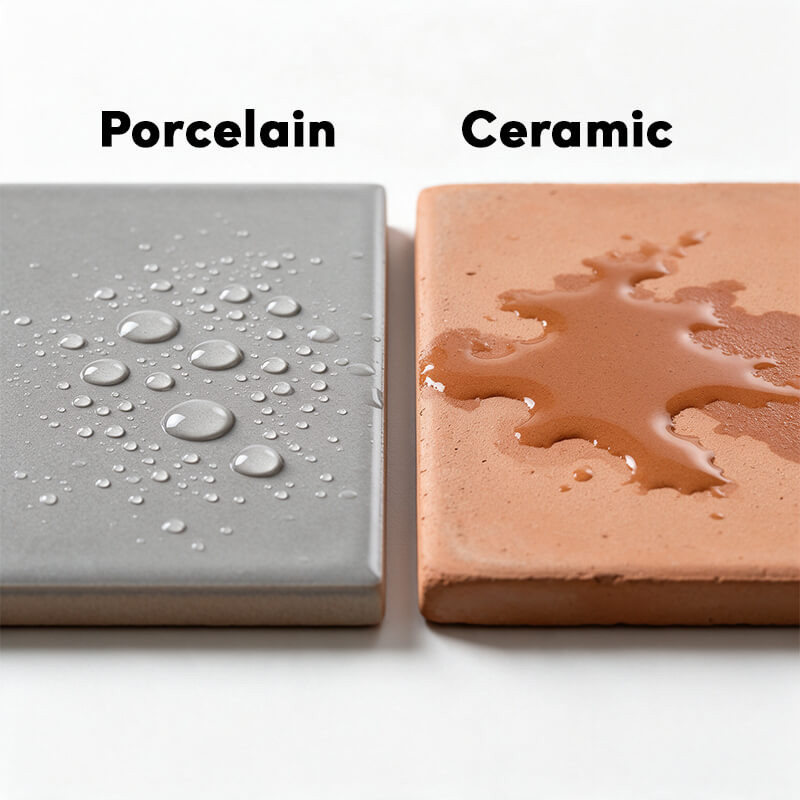
The core difference is water absorption. Porcelain absorbs very little water. Ceramic generally absorbs more.
A rough picture: ceramic behaves a bit like a firm sponge, and porcelain behaves a lot more like glass. Neither is a perfect description, but it gets the idea across.
That one property drives most of what you'll notice day to day:
-
How well the tile copes with spills, wet feet and mopping
-
How easily it picks up stains
-
How it performs in rooms that stay damp
-
How hard it is to cut and fit
For floors in kitchens and bathrooms, porcelain is usually the safer choice. Usually, not always. The spec sheet matters more than the label, and I'll show you exactly what to look for below.
The official definition: what the 0.5% water absorption threshold means
"Porcelain" isn't just a marketing word. It's a performance category with a number attached.
According to the ANSI blog's explanation of ANSI A137.1 and ASTM C373, a tile counts as porcelain when its water absorption is 0.5% or less. ASTM C373 is the test method used to measure it. ANSI A137.1 is the standard that sets out the tile specifications, including that threshold.
In plain English, after the tile is weighed dry, soaked and weighed again, it should have gained no more than half of one percent of its weight in water. That's very dense. Tiles that absorb more than that fall outside the porcelain definition, and most of what we call ceramic sits in that higher-absorption group.
Two practical takeaways:
-
A tile can be sold as "porcelain" in a catalogue, but the number on the technical data sheet is what proves it.
-
Water absorption is a measured value, so you can compare tiles on facts rather than on how a salesperson describes them.
Many guides, including DDL Tiles' breakdown of the topic, use this same low absorption to explain why porcelain is recommended for bathrooms, kitchens and, in frost-prone climates, outdoor areas.
Why porcelain and ceramic perform differently: how they’re made
Both tiles start as clay, but the recipe and firing are different. Porcelain uses finer, more refined clay mixed with feldspar and other minerals. It is pressed under very high pressure and fired at roughly 1,200–1,250°C, which fuses the body into a dense, almost glass-like material. Ceramic uses coarser clay, is pressed less firmly and is fired at a lower temperature, roughly 1,000–1,150°C. That leaves more tiny pores in the body, which is why it absorbs more water and is softer to cut.
What the difference means in real life
Water absorption and staining
A tile that soaks up less water also tends to soak up less of everything else. Red wine, olive oil, muddy footprints and grout haze have less to grab onto when the body of the tile is dense.
Glazed ceramic floor tiles can still resist stains well while the glaze is intact. The risk shows up when the surface is chipped or worn, because the more absorbent body underneath is then exposed. With porcelain, even a chip is far less likely to turn into a long-term stain or a damp spot.
Durability on the floor
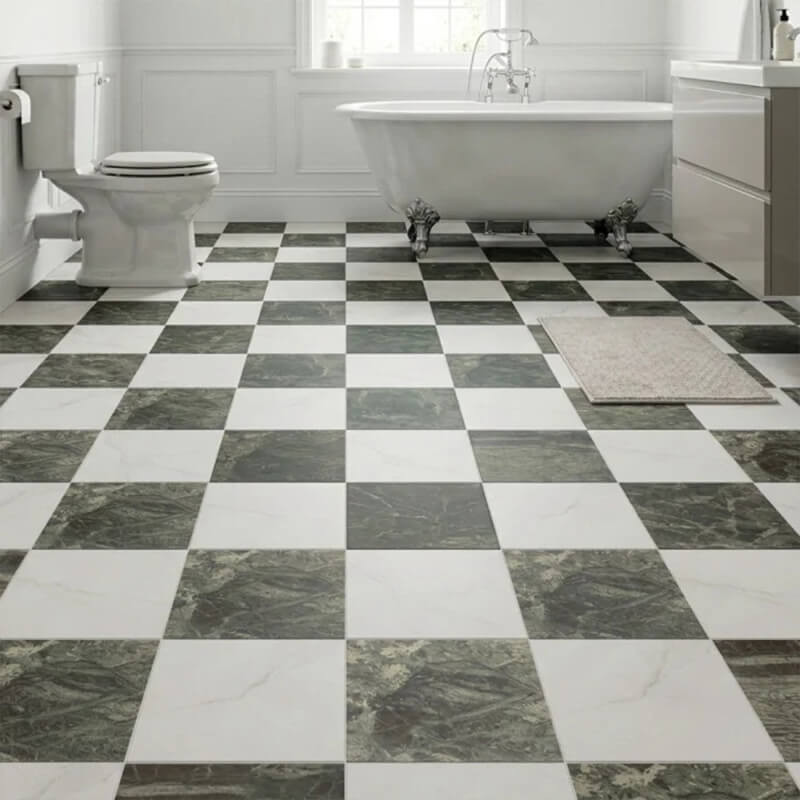
Both are tile, and both can last decades when they're chosen and installed correctly. Porcelain's lower absorption generally makes it the more forgiving option for wet, high-traffic floors, which is why it's the default recommendation for kitchens and hallways.
There's a second rating that matters just as much as the material: the PEI (Porcelain Enamel Institute) wear rating for glazed tiles. It runs from 0 to 5, and it tells you how well the surface glaze stands up to foot traffic and abrasion. A low-PEI porcelain tile isn't automatically tougher than a high-PEI ceramic one. Look at the rating for your room, not just the material name.
Weekly and monthly maintenance
For most households the routine is the same for both:
-
Sweep or vacuum to remove grit (grit does more damage than water)
-
Mop with a neutral cleaner, not harsh acids or bleach-heavy products
-
Wipe up spills when you notice them rather than hours later
-
Keep an eye on grout lines, which are usually the weak point
Porcelain gives you more margin for error. Ceramic asks for a bit more discipline, particularly in rooms that get wet regularly.
Slip resistance still has to be checked
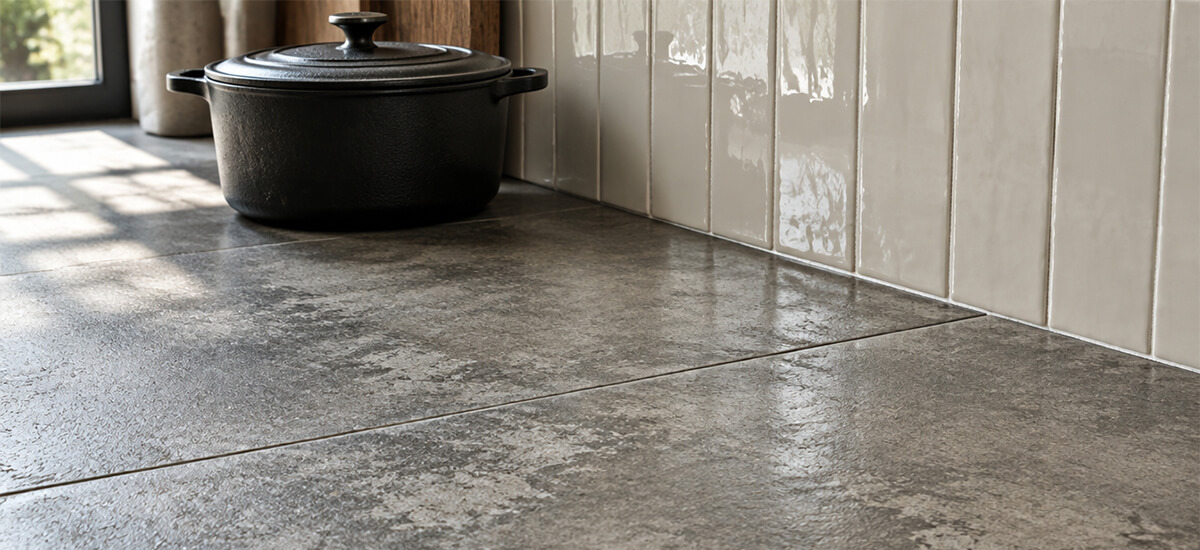
Here's a nuance people miss: porcelain isn't automatically grippy. A polished porcelain floor can be slippery when wet, and a textured ceramic tile can feel safer underfoot. Slip resistance comes from the finish, not the material. Technical guidance from bodies such as the Tile Council of North America refers to measures like COF and DCOF (coefficient of friction values) for this reason. Check the slip rating on the product data and, ideally, feel a sample in person.
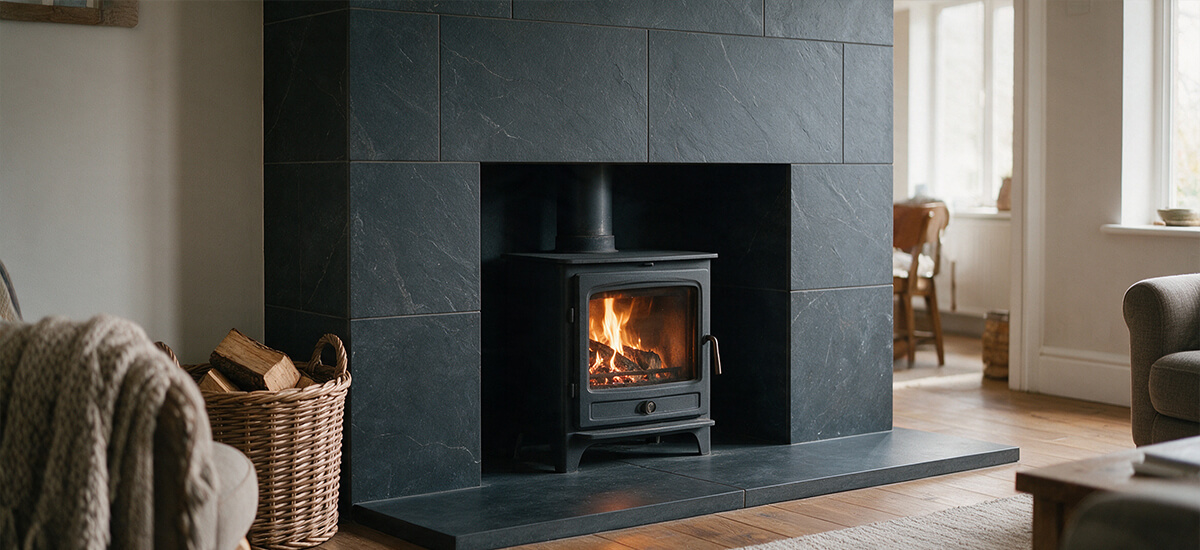
What tile to use on the hearth of a fireplace
The hearth takes more punishment than the surround. It gets foot traffic, dropped logs, hot ash and the heat from the base of a stove. Choose a porcelain floor tile (not a wall-only tile) for the hearth, ideally in a matte or textured finish so it isn't slippery and doesn't show every speck of ash.
A few things to keep in mind:
- The tiles go on top of the constructional hearth. They don't change its required size or thickness, which is set by the building regulations and your stove's instructions.
- Fewer joints are better. A large-format porcelain tile cut to the hearth size means fewer grout lines to keep clean.
- Finish the exposed front edge with a tile trim, or a neatly polished cut edge, so it doesn't chip when it gets knocked.
- Dark hearth tiles hide ash and scorch marks far better than light ones.
Porcelain vs ceramic floor tiles at a glance
| Feature | Porcelain | Ceramic |
|---|---|---|
| Water absorption | 0.5% or less (ANSI A137.1 / ASTM C373 definition) | Generally higher than 0.5% |
| Moisture risk on floors | Low | Higher, depends on glaze and spec |
| Stain resistance | High, including through the body of the tile | Good while the glaze is intact |
| Typical use | Kitchen and bathroom floors, hallways, utility rooms, outdoors (check frost rating) | Wall tiles, lighter-use floors, dry rooms |
| Cutting and fitting | Harder and denser, often needs a good wet saw or diamond blade | Usually easier to cut |
| Maintenance margin | Forgiving | Needs a little more care |
One caution on this table: glaze, finish and the individual product specification shape the final performance. It's a guide to the typical difference, not a replacement for reading the data sheet.
Walls vs Floors
Ceramic: built for walls
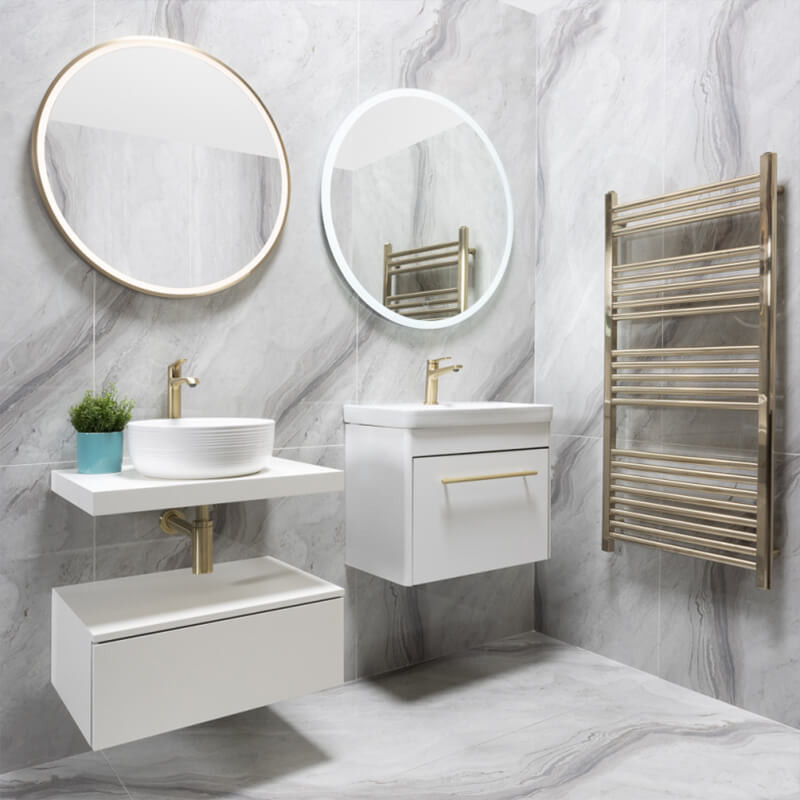
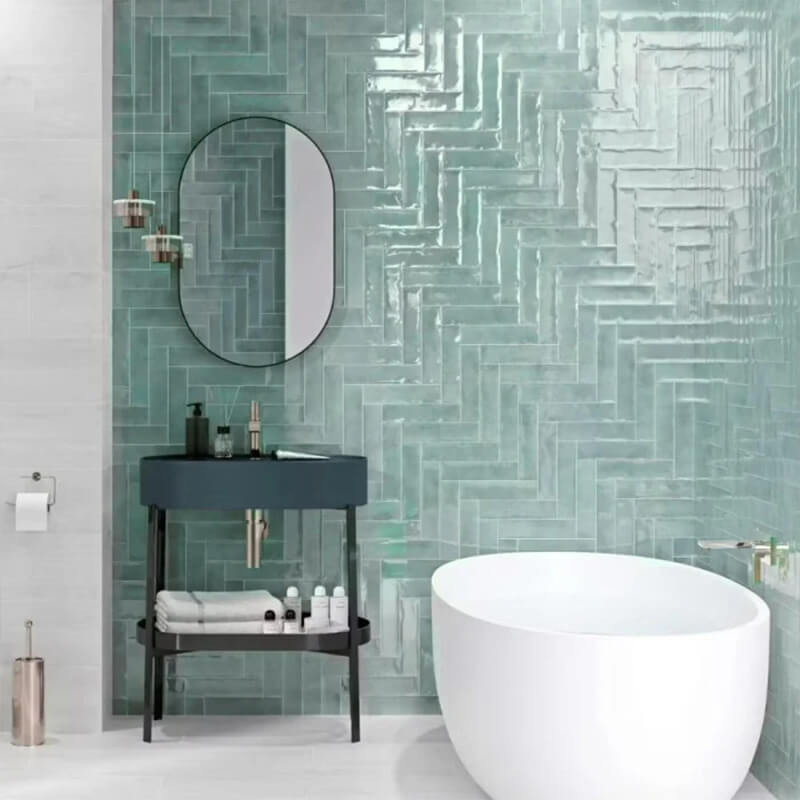
Walls don’t take foot traffic, spills or dragged furniture, so they don’t need porcelain’s density or strength. Ceramic’s advantages suit vertical surfaces well. It is lighter, which puts less load on the wall and the adhesive, especially on plasterboard. Its softer body is easier to cut neatly around sockets, pipes, windows and bathroom fittings. Its slightly porous back gives tile adhesive a good key to grip. Ceramic also takes glazes beautifully, which is why so many high-gloss, brightly coloured and decorative wall tiles are ceramic. It is generally more affordable per square metre and quicker for a tiler to fit, which adds up across a full bathroom or kitchen splashback.
Porcelain: built for floors
Floors take the most punishment in the house. Porcelain’s dense, low-absorption body gives it higher breaking strength, better resistance to wear and chipping, and almost no uptake of water or stains. That makes it the natural choice for kitchens, bathrooms, hallways, utility rooms and anywhere with heavy traffic or regular moisture. Because it is frost resistant, it is also the right choice for patios and outdoor areas in the Irish climate.
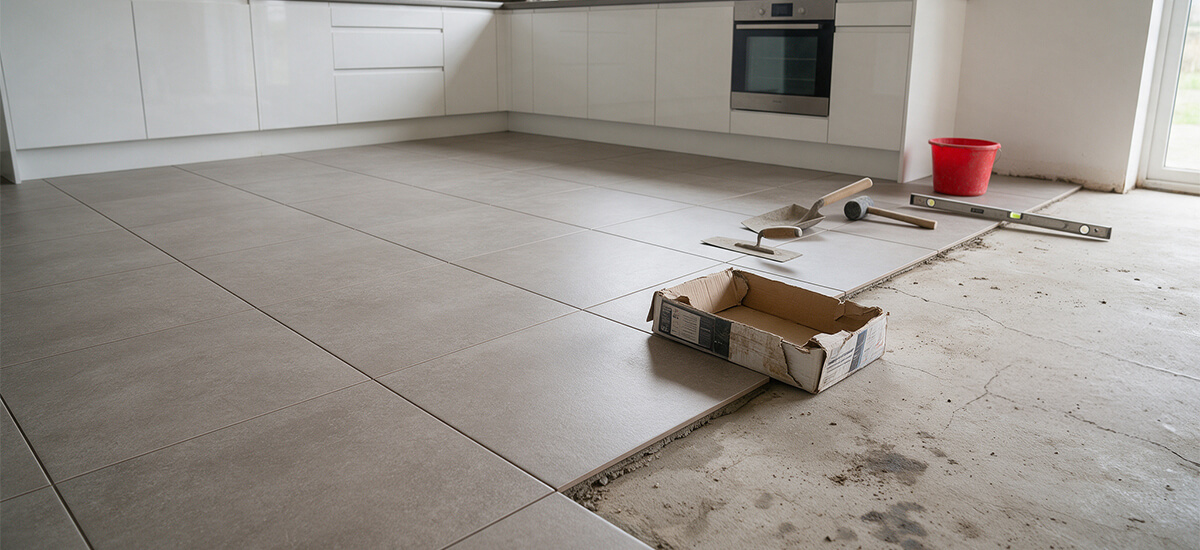
Which should you choose for a kitchen floor?
Kitchens are hard on floors. Spilt drinks, dropped pans, wet boots, pets, kids, chair legs dragged across the surface. All of it lands on a few square metres of tile.
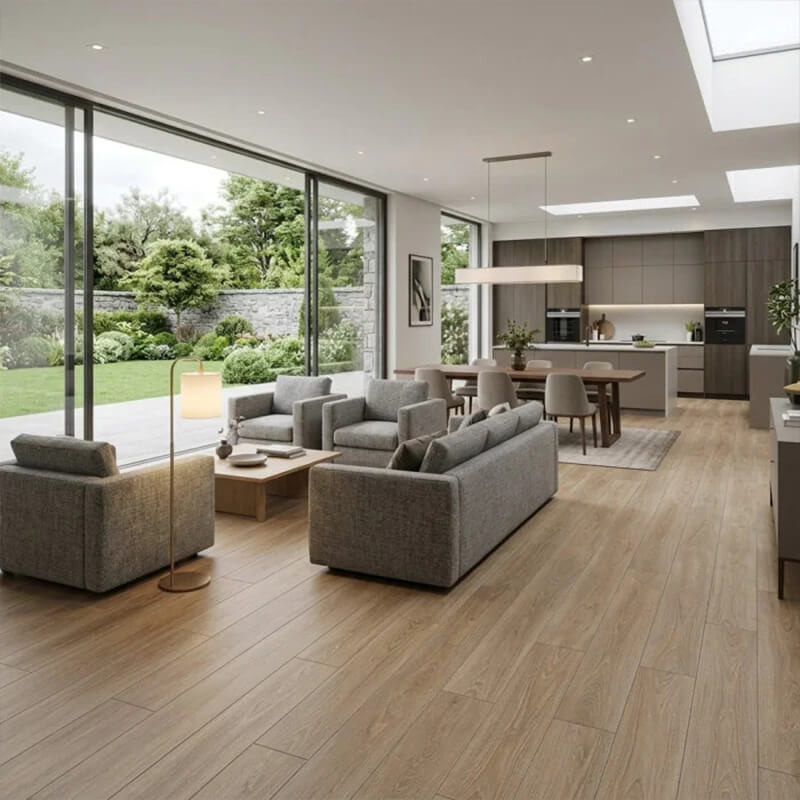
For that kind of daily abuse, I'd go porcelain. The low absorption means spills stay on the surface and wipe away, and if a tile does get chipped, it's less likely to let moisture or stains into the body. It's also the better fit for open-plan layouts where the kitchen floor runs through to hallways and living areas.
Can ceramic work? Yes, in the right circumstances. If it's a lighter-use kitchen, the glaze is rated suitably for floor use, and you're realistic about wiping up quickly, a ceramic floor tile can do a perfectly good job. Just confirm it's actually rated as a floor tile, because many ceramics are made for walls only.
Before you order, run through these with your tiler or builder:
-
Is the tile rated for floor use and the traffic in this room?
-
Does the layout create lots of awkward cuts around islands, units and doorways? Porcelain is harder to cut, so this affects labour.
-
Is underfloor heating going in? Ask about adhesive and suitability before you buy, not after.
-
Where do the units sit? Plan the undercut and waste, especially if the tile will run beneath cabinets.
Which should you choose for a bathroom floor?
A bathroom floor is wet far more often than any other floor in the house. Showers, splashes, damp towels, condensation. Moisture resilience isn't a bonus here, it's the main requirement.
Porcelain typically reduces the risk. Its dense body doesn't take on water, so it copes better in a wet room or shower area.
Can you use ceramic tile in a wet room? You'll find ceramic on plenty of bathroom walls, where water exposure is lighter and the tile isn't being walked on. On the floor, I'd be far more cautious, and in a wet room I'd choose porcelain unless the manufacturer's specification clearly supports the ceramic option.
Then there's grip. People often choose a beautiful polished tile for the bathroom floor and regret it the first time they step out of the shower. Look for a textured or matt finish with a slip rating suited to wet conditions. Order a sample, wet it, and stand on it in bare feet. It's a two-minute test that tells you more than any description.
On sealing, the answer depends on the product and finish. Some porcelain tiles need nothing, while certain unglazed or textured finishes may benefit from a sealer. Follow the manufacturer's guidance for the exact tile you buy, and don't assume either way.
Porcelain or ceramic over underfloor heating?
Both tiles conduct heat well and work with electric and water-based underfloor heating. Porcelain is usually the better choice because its density handles the repeated expansion and contraction of heating cycles with less risk of cracking. Whichever you choose, use a flexible adhesive and grout rated for underfloor heating, and plan movement joints with your installer. For the full guide, see our article on the best floor tiles for underfloor heating.
Common mistakes (and how to avoid them)
Choosing on looks alone. A tile can look identical in a photo whether it's ceramic or porcelain. Check the water absorption figure on the spec sheet before you fall in love.
Assuming porcelain means safe. A polished, low-PEI porcelain can be a poorer choice for a busy, wet floor than a well-chosen matt ceramic. Material is one factor. Finish, slip rating and wear rating are the others.
Ignoring what's under the tile. A great tile won't rescue a poor base. Substrate preparation, movement joints, adhesive and grout choice all affect how the floor looks in ten years. Flooring Institute guidance highlights movement joints and substrate problems as common causes of installation failure, so raise them with your installer early.
Forgetting about the tiler's workload. Porcelain's density makes it harder to cut, and that can affect time and tools. Tell your tiler what you're considering before you order.
Buying blind. This is the big one, and it's the fear behind most of these searches: spending serious money without enough information. Colour changes with light. Finish changes with texture. A sample solves most of that. At Tile Merchant, free tile samples are part of the buying journey, and customers regularly mention how quickly they arrive, often in around two days.
What I'd do if I were buying today
If this were my own kitchen or bathroom floor, here's the order I'd work in:
-
Start with the room. Kitchen or bathroom floor? Prioritise low water absorption.
-
Read the spec. Look for a water absorption figure of 0.5% or less if you want true porcelain.
-
Check the finish. For bathrooms especially, confirm the slip rating suits wet use, and check the PEI rating for traffic levels.
-
Talk to your tiler. Ask what they recommend for adhesive, grout and substrate, and whether underfloor heating changes anything.
-
Order samples. Look at them in your own lighting, next to your units, worktops and walls.
-
Measure and add waste. Work out your square metres carefully and allow for cuts, so you don't run short halfway through or buy far too much.
Get samples and ask us before you commit
You don't need to guess. Order free samples from Tile Merchant, lay them on the floor in the room they'll live in, and see how they look at breakfast and at night. If you'd rather see them in person, our showrooms in Ballymount, Coolock, Deansgrange and Ashbourne are open seven days a week, and Click & Collect is free. Delivery across Ireland is typically 2 to 4 days.
If you're weighing up a specific tile for a kitchen or bathroom floor, or you're not sure it suits underfloor heating, get in touch and ask. A quick conversation now is far cheaper than a floor you regret.
FAQ: porcelain vs ceramic floor tiles
Is porcelain tile always better than ceramic tile?
For wet, high-traffic floors like kitchens and bathrooms, porcelain is often the safer bet because of its low water absorption. Ceramic is still a sensible choice for walls and lighter-use areas. Whichever you pick, check the specification for the actual product.
Can I use ceramic tile in a bathroom?
Yes, on walls it's very common. On the floor, you need to be more careful. Floors need to be moisture resilient and have the right slip-resistant finish. In wet rooms, porcelain is generally the lower-risk option.
How can I tell porcelain from ceramic?
Look at the technical data. Porcelain is defined as having water absorption of 0.5% or less (ANSI A137.1, tested to ASTM C373). Don't rely on branding or appearance alone, since the two can look very similar.
Does porcelain need sealing?
It depends on the product and finish. Many glazed porcelain tiles don't need sealing, while some unglazed or textured finishes might. Check the manufacturer's guidance for your tile.
Is porcelain harder to cut?
Generally, yes. It's denser, so it usually needs a good wet saw with a suitable diamond blade, and an experienced installer will handle it with ease. Let your tiler know your choice before you order, so tools and time are planned for.
Can I use porcelain outdoors?
Porcelain's low absorption is the reason it's widely recommended for outdoor use where frost is a concern. Make sure the specific tile is designed for exterior use and has appropriate slip resistance for wet conditions.
Why Choose Tile Merchant?
Ready to start? Browse the full tile range on tilemerchant.ie.
We offer extremely competitive pricing on our entire range of tiles and likewise. We stock a huge range of wall and floor tiles, and our prices are competitive for retail and trade. Our stock is widely available in our tile stores in Ireland, which are open 7 days a week.
Alternatively, if you’d prefer to shop our tiles online, we can supply you with free samples delivered for free.

 Website