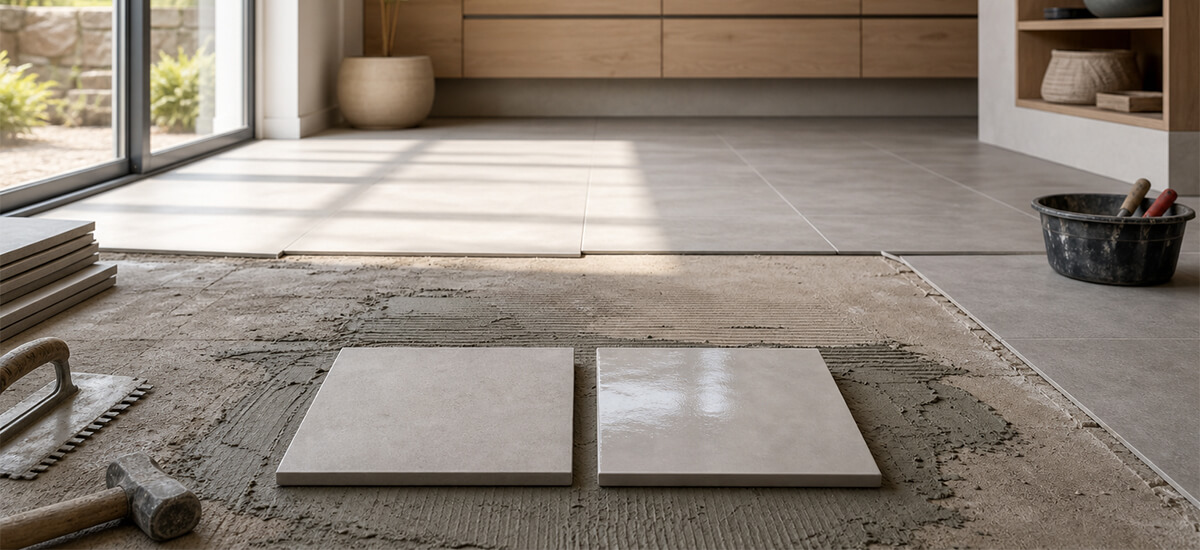

Most people shopping for a small bathroom reach for tiny tiles first. It feels logical: small room, small tiles. I'd push back on that, and so would most tilers I've spoken to. Tiny tiles mean more grout lines, more grout lines mean a busier surface, and a busy surface makes a compact room feel tighter than it is.
So what's the best size tile for a small bathroom? For most Irish bathrooms, the answer is a medium-to-large format on the floor (roughly 60x30cm up to 60x60cm), a slightly smaller or equal format on the walls, and mosaics saved for the places where they genuinely earn their keep. I'll walk through why, floor versus wall, and where large format tiles and wood-effect tiles fit in.
Why tile size changes how big a small bathroom feels
Your eye reads grout lines as breaks. Fewer breaks give you a calmer, more continuous surface, and a calm surface looks larger. That's the whole principle.
A 10x10cm tile on a 2m x 1.7m floor gives you hundreds of joints. A 60x30cm tile gives you a handful. Same room, completely different visual noise.
Two things soften or sharpen that effect:
-
Joint colour. Grout that matches the tile fades into the background. Contrasting grout draws a grid across the room, which is great in a big space with a design statement to make and rarely helpful in a small one.
-
Joint width. Narrow joints (rectified tiles can be laid with tight joints, typically 2 to 3mm) look neater than wide ones. Always check the manufacturer's guidance on the minimum joint for your chosen tile.
Size isn't the only lever, though. Colour and layout matter just as much, so let's start there.
Colour and layout matter just as much. We also sat down with an expert interior designer, who shared her four top tips for decorating tiny bathrooms, from choosing the right tiles to making the most of every centimetre. You can read them in The Best Tiles for Tiny Bathrooms: Interview with the Expert. For now, let's start with colour.
What's the best colour tile for a small bathroom?
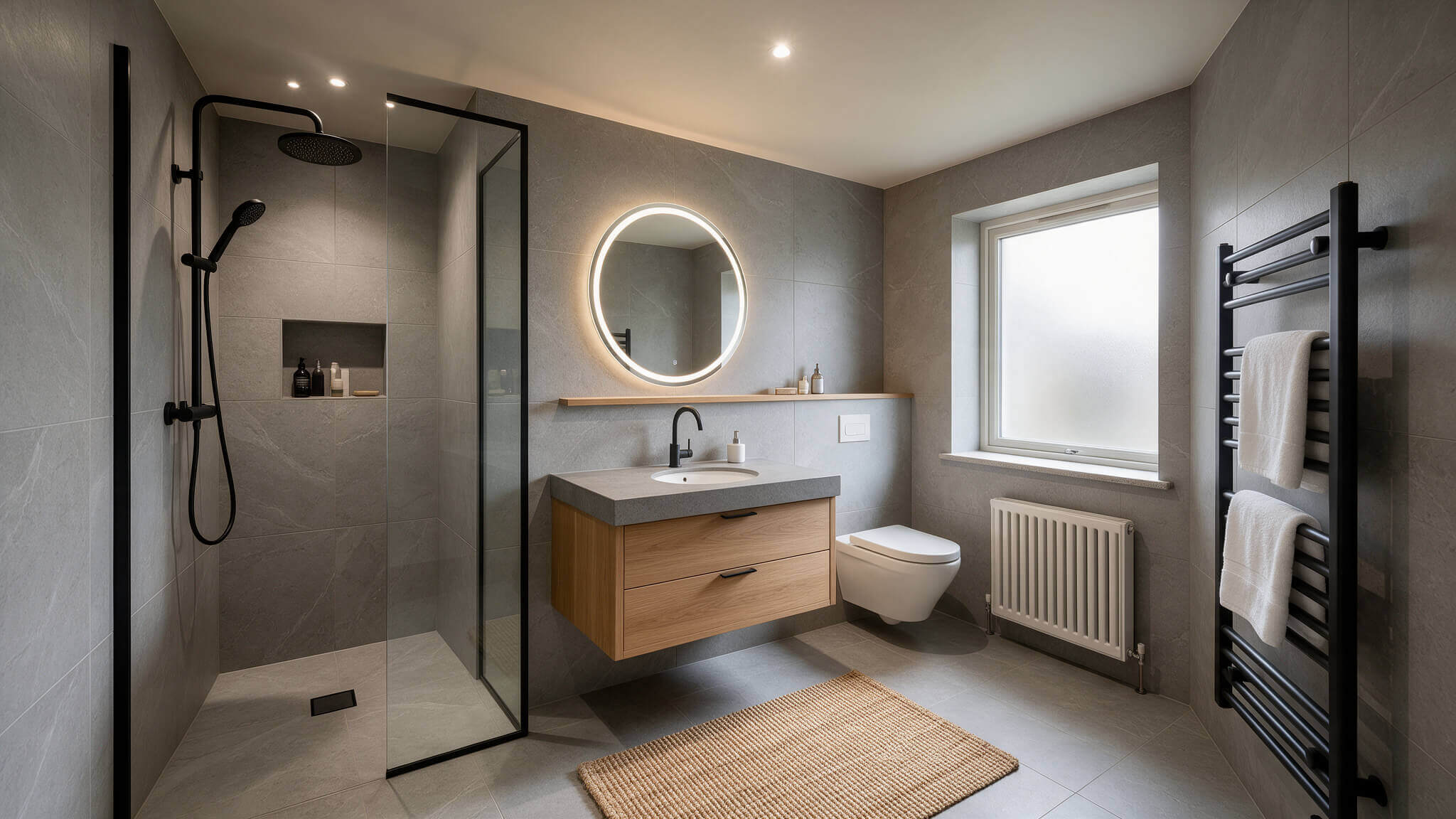
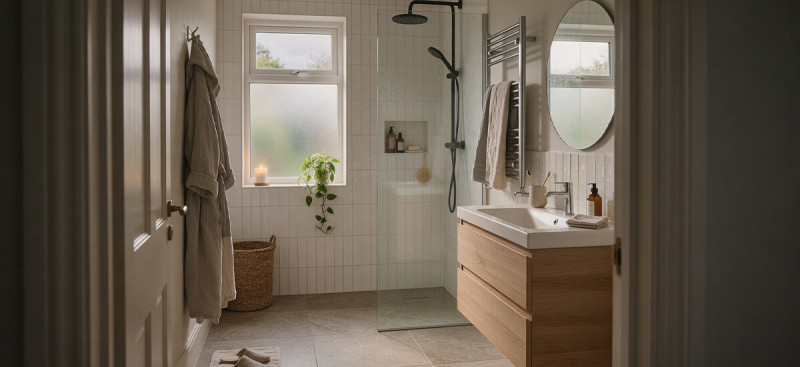
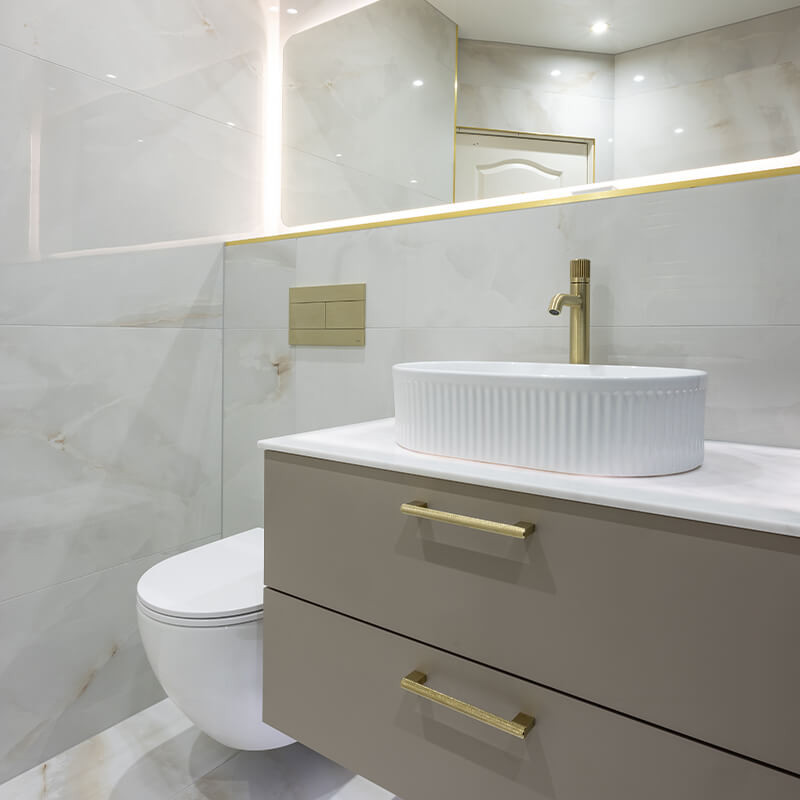
Light, warm neutrals are the safest answer. Soft greys, warm whites, greige, sand and pale stone tones bounce light around and keep the room feeling open. Pair them with a larger format and you get the most spacious effect available from tile alone.
Pure bright white can feel cold in an Irish bathroom, especially one with a small north-facing window. A warmer white or a soft stone shade usually reads as brighter in real life, because it doesn't turn grey under weak daylight. If you want a deeper look at how shade affects a room, our guide to tile colour psychology covers it room by room.
When contrast works
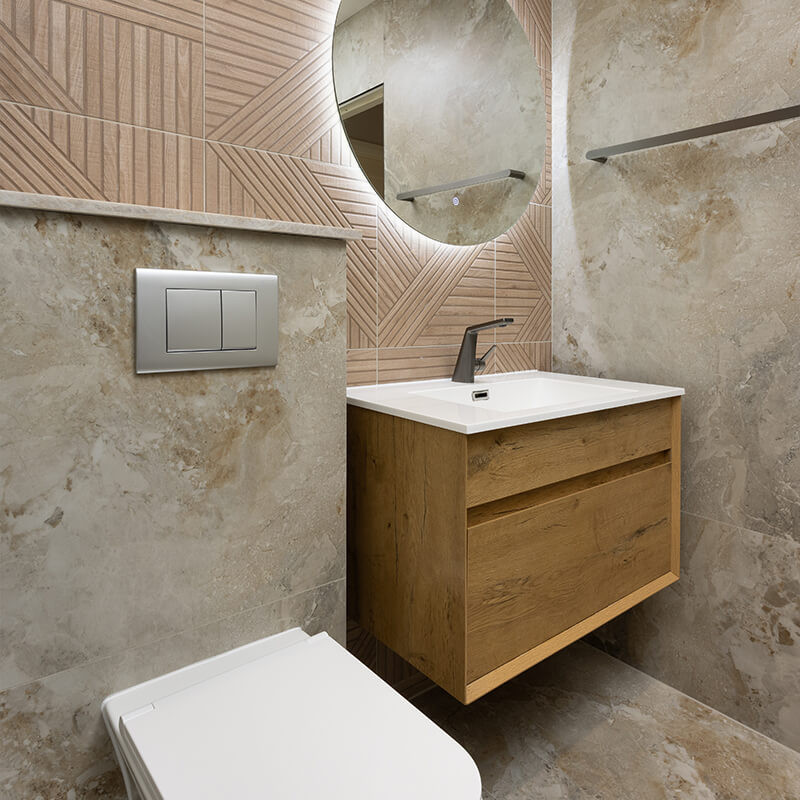
Dark or patterned tiles can work in a small bathroom, but use them as a feature rather than a blanket. A single feature wall behind the vanity, or one band of darker tile at mid-height, adds depth without chopping the room into segments. The rule I follow: one area of contrast, everything else quiet.
Where wood-effect tiles fit
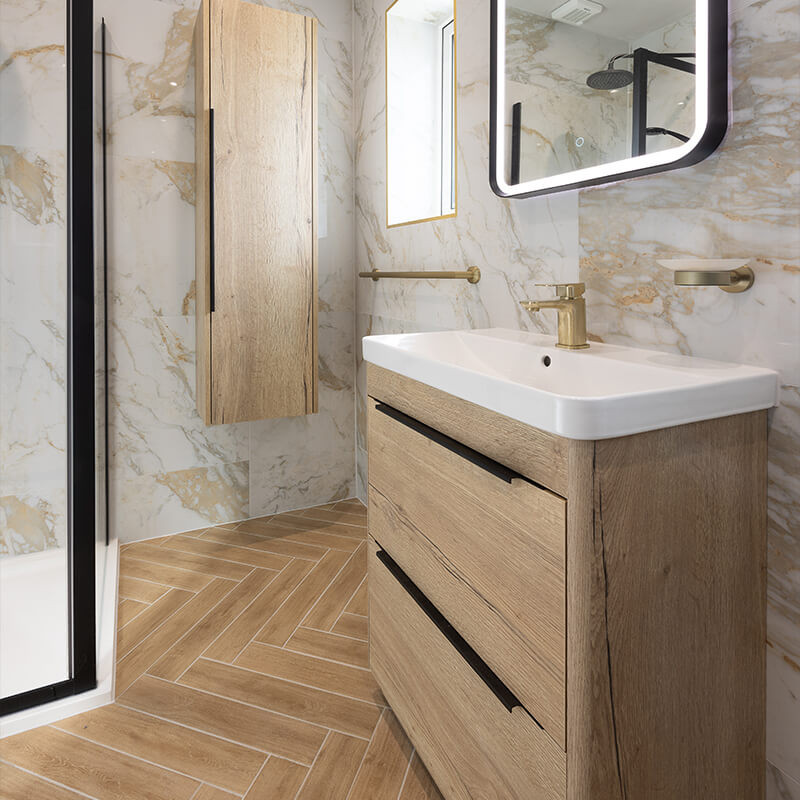
If cold stone looks leave you cold (literally), wood-effect tiles are a good alternative. They add warmth underfoot and visually, and they're far more forgiving of damp than real timber. Keep the palette cohesive: pale oak or light ash tones with soft neutral walls feel airy, while dark walnut shades suit a bigger room.
Wood-effect planks usually come in long, narrow formats such as 120x20cm or 90x15cm. In a small bathroom, lay them running along the longest dimension or toward the window to draw the eye through the space. For more ideas, see our interview with an interior designer on the best tiles for tiny bathrooms.
What size tile for a small bathroom floor?
For a small bathroom floor, I'd shortlist these:
-
60x30cm: the dependable all-rounder. Few joints, easy to cut around the toilet and vanity, and available in nearly every finish.
-
60x60cm: a very clean look with minimal grout. Works well if the floor is reasonably square and you plan the layout first.
-
Wood-effect planks (e.g. 120x20cm): brilliant for narrow bathrooms when laid lengthwise.
-
Up to 120x60cm: possible, but only in the right room (more on that below).
Smaller formats such as 30x30cm are fine and easier to lay in awkward spaces, but they give you more joints. If you love a smaller tile, match the grout carefully to keep it quiet.
Can you use large format tiles on a small bathroom floor?
Yes, and it often looks fantastic. Large format tiles mean fewer grout lines and a more continuous look. They're also easier to wipe clean, because there's simply less grout to scrub.
There are a few things to watch for:
-
Cuts. In a tiny room, almost every tile touches a wall, the bath or the toilet. A big tile with an awkward cut wastes more material than a small one.
-
Flatness. Large format tiles need a flat substrate. A floor with dips or humps can leave you with lippage (neighbouring tiles sitting at different heights) or hollow spots. Your tiler may need to level the floor first.
-
Access. Carrying a 120x60cm tile up a narrow staircase and through a tight door is less fun than it sounds. Measure the route.
If you've got a tiler on the job, ask them whether the floor is flat enough for the format you like before you order. It's a five-minute conversation that can save you a lot of hassle. Our post on large format tiles gives the full pros and cons.
Avoid slivers
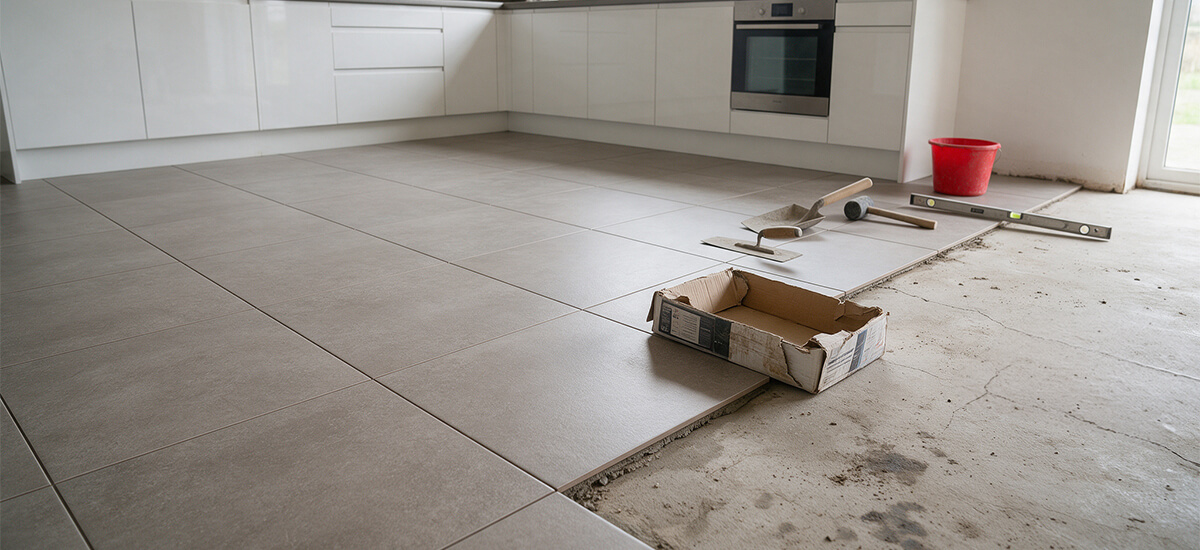
The mistake that ruins small bathroom floors is the sliver: a thin strip of tile, 2 or 3cm wide, along one wall or at the doorway. It looks like an error because it is one.
Before you order, measure the room, divide by the tile width, and see what's left at the far edge. If the remainder is under about a third of a tile, shift your starting line so you get two even cuts at either side instead of one full tile and one sliver. The most visible spot is the entrance, so make sure the doorway is where your cleanest cut or full tile lands.
What size tiles for a small bathroom wall?
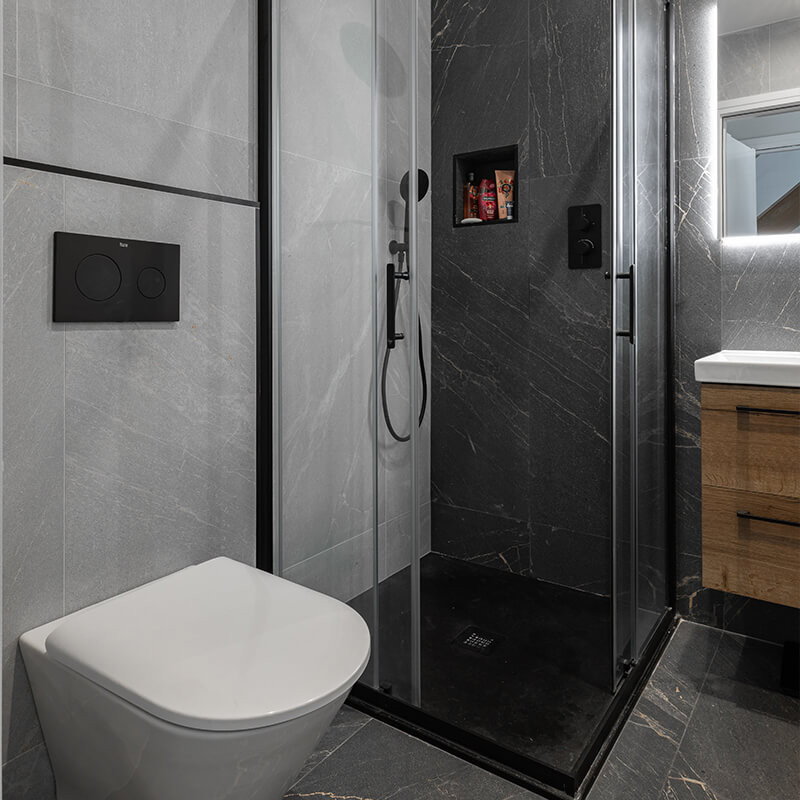
Walls play by slightly different rules. They have niches, pipes, windows, a bath edge, a vanity and shower screen fixings, and every one of those means more cuts. Because of that, wall tiles can sensibly be a bit smaller than floor tiles, or at least no bigger.
A few practical pairings:
-
Full-height tiling: 60x30cm laid horizontally or vertically is a safe choice. Laid vertically it makes the ceiling feel higher, while horizontal lays widen the room.
-
Shower and splash zones only: 30x60cm or even 20x40cm gives you easy cuts around fittings. Paint or panelling above keeps things light.
-
Feature wall: go larger (60x120cm) if the wall is a clean, uninterrupted rectangle. Skip it if there are lots of fittings.
Using the same tile on the floor and walls is a good trick in the tiniest bathrooms. The room reads as one continuous volume, which makes it feel bigger. If you want a floor tile and wall tile that are different, keep them in the same colour family.
Not sure which tile suits the shower itself? Our guide to choosing shower tiles explains wall versus floor needs in wet areas.
Where mosaics actually win in a small bathroom
I'm not anti-mosaic. I'm anti-mosaic-everywhere. A whole room of 2.5cm squares is a lot to look at, and a lot of grout to clean.
Mosaics shine in small, specific places:
-
Shower niches. Mosaic sheets wrap neatly around the niche edges and make a nice focal point. A mosaic shower niche is one of the easiest ways to make a plain bathroom look designed.
-
Shower floors. Small tiles follow the slope to the drain more easily than big ones, and more joints give extra grip underfoot. Check the slip rating of any shower floor tile in the product specification.
-
Accent bands or borders. One strip at eye height adds interest without breaking up the whole wall.
The reason accents look intentional is contrast of scale: big, calm tiles around a small, detailed one. If everything is detailed, nothing stands out.
Layout patterns that make a small bathroom look longer or wider
Tile layout patterns change how a room is perceived almost as much as size does. Three worth knowing:
-
Straight (stacked) lay. Clean grid lines, modern, and very orderly. Works well with large format tiles and matching grout. It does show up any wall that isn't square.
-
Offset (brick) lay. Staggered joints, a little more forgiving of uneven walls. For long rectangular tiles, offset by a third rather than a half, since big tiles can bow slightly at the centre and offsetting by half can emphasise this.
-
Diagonal lay. Draws the eye across the room corner to corner and can make a squarish bathroom feel larger. It means more cuts and more waste, so budget accordingly.
To make a narrow bathroom look wider, run the long edge of your tiles across its width. To make it look longer, run them lengthways, toward the window or a focal point.
Plan before you order
You don't need software. Measure the room, sketch it on paper to scale, and draw the tiles in. Mark where the door, bath and vanity sit and check where the cut lines fall. Ten minutes of drawing reveals most slivers before they get stuck to your floor.
Common mistakes when choosing small bathroom tile size
-
Picking size without thinking about grout. A great tile with a contrasting grid of grout loses its calm. Match the grout to the tile for a seamless look.
-
Going too big on walls with lots of fittings. More trims, more awkward cuts, more waste.
-
Ignoring the substrate. Large format tiles show up every dip in a floor.
-
Forgetting access. Check the stairs and doorways before ordering.
-
Not ordering enough. Allow for cuts and breakages. A common allowance is around 10%, and more for diagonal layouts or large format tiles. Running short halfway through means a possible batch or shade mismatch with the second order.
Your quick decision checklist
-
Colour strategy: light, warm neutral for the main surfaces, with one feature at most.
-
Floor size: 60x30cm or 60x60cm as a starting point, wood-effect planks for narrow rooms.
-
Wall size: same as the floor, or one step smaller if the walls are full of fittings.
-
Mosaic accents: niche, shower floor or a single band.
-
Layout: draw it to scale, check the doorway, kill the slivers.
-
Samples: see it in your own light before you commit.
That last step matters more than most people think. Tile looks different under your bathroom light than it does on a screen. Tile Merchant sends free tile samples, and customer reviews often mention them arriving within about two days, with some people getting them the next day. Put two or three candidates on your floor, check them morning and evening, then order. Our broader guide on how to choose bathroom tiles covers slip ratings and wet versus dry zones if you want the technical side.
FAQ: sizing tiles for a small bathroom
Can I use large format tiles in a small bathroom?
Yes. Fewer grout lines make the surface look calmer and the room larger. Check that the floor is flat, plan your cuts to avoid slivers, and make sure you can get the tiles into the room.
What tile size looks best on small bathroom walls?
60x30cm is a dependable choice. Use smaller formats for splash zones and shower areas with lots of fittings, and save very large tiles for clean, uninterrupted walls.
Is mosaic tile worth it in a small bathroom?
As an accent, yes. In a niche, on a shower floor or as a border, it adds detail and grip. Over the whole room, it tends to look busy.
Will big tiles make it harder to tile neatly around a shower?
They can. Walls with niches, pipes and fixings need more cuts, and big tiles leave less room for error. Many people go one size smaller on shower walls and keep the large format for the floor.
What grout approach makes the room look bigger?
Match the grout colour to the tile, keep the joints narrow where the tile allows it, and avoid a high-contrast grid. The less your eye catches on the lines, the bigger the room feels.
Why Choose Tile Merchant?
Don't shrink your tiles because your room is small. Use a medium-to-large format on the floor, keep walls the same or a touch smaller, choose a light and warm colour, match your grout, and keep mosaics for the details. Wood-effect planks and large format tiles both work well when you plan the layout first.
If you're torn between two options, order free samples from Tile Merchant, lay them down, and see which one feels right. You can also pop into one of our showrooms in Ballymount, Coolock, Deansgrange or Ashbourne to see the sizes in person. Which format are you leaning towards? I'd love to hear what you choose.
Ready to start? Browse the full tile range on tilemerchant.ie.
We offer extremely competitive pricing on our entire range of tiles and likewise. We stock a huge range of wall and floor tiles, and our prices are competitive for retail and trade. Our stock is widely available in our tile stores in Ireland, which are open 7 days a week.
Alternatively, if you’d prefer to shop our tiles online, we can supply you with free samples delivered for free.

 Website