- Introduction
- Why You Should Reconsider Painting Your Bathroom Walls
- Cleaning and Maintenance of Tiles vs Paint
- Aesthetics and Style of Tiles vs Paint
- How To Regularly Redecorate A Tiled Bathroom
- Exploring The Bathroom Tile Options Available at Tile Merchant
- Final Thoughts: Why Tiles Are Better for Bathrooms
- Why Tile Merchant?
Introduction
Deciding between tile or paint for bathroom walls is a pivotal choice during any home renovation. While painted bathroom walls and painted tiles have gained popularity as budget-friendly DIY fixes, high-humidity environments test decorative materials differently than dry living areas.
Bathrooms present unique environmental challenges: rapid thermal shifts, direct steam, splashing water, and persistent moisture. While painting offers an inexpensive short-term refresh, tiling remains the standard for long-term wall protection. This guide evaluates the technical performance, moisture resistance, maintenance overhead, and real installation costs of tiling versus painting your bathroom in Ireland.
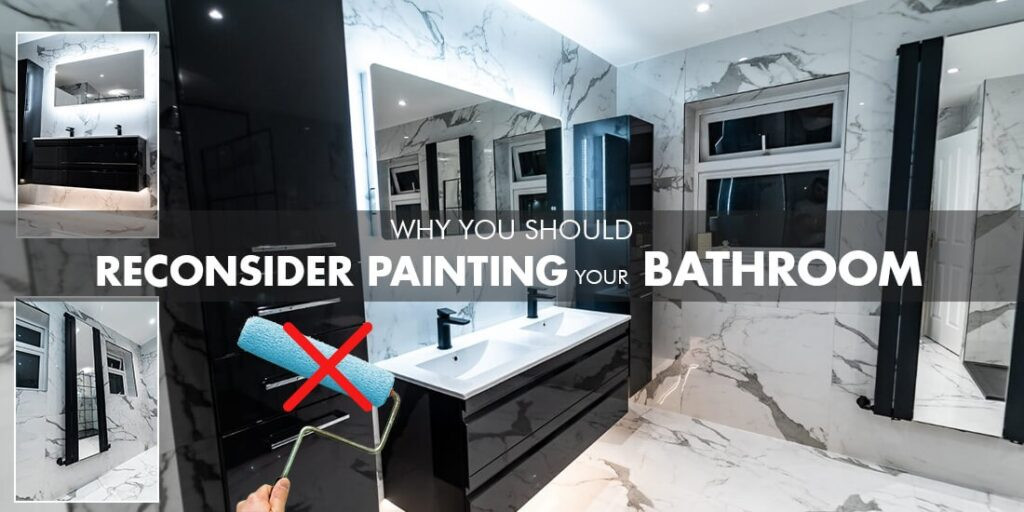
Do Bathroom Walls Need to Be Tiled? (Half-Tiled vs Full Tiling)
A common question among homeowners is: do you have to tile a bathroom floor-to-ceiling? The short answer is no. You do not need to tile every square inch of your bathroom, but specific wet zones require non-porous protection.
Building practices and moisture management split bathroom surfaces into two distinct zones:
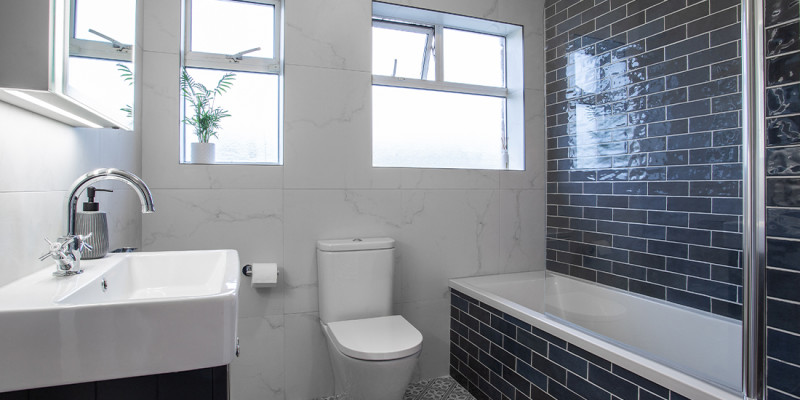
- Wet Zones (Mandatory Tiling): Shower enclosures, bath surrounds, and areas directly behind sink basins receive continuous splashing and standing moisture. These areas require non-porous materials like glazed ceramic, porcelain, or natural stone with sealed grout lines to prevent water from penetrating drywall or plasterboard.
- Dry Zones (Optional Tiling or Painting): Upper wall sections away from water sources, ceilings, and well-ventilated areas outside splash radii can be painted with specialist anti-mould bathroom paint.
Opting for a half-tiled bathroom—tiling up to mid-wall height (around 1.2 metres) in dry zones and using full-height tiling inside the shower—balances material costs while maintaining complete waterproof protection where it matters most.
Why You Should Reconsider Painting Your Bathroom Walls
How many of us have had this experience? Having moved into a new flat or perhaps bought our first home, we’ve found the modern decor of the living areas to our taste, but the old, 1970s-style tiling in the bathroom majorly old-fashioned and unsightly.
The thing is, those tiles have probably been there since the 1970s, and for good reason: they simply last that long.
Tiles are so low maintenance, sturdy, and effective at preventing the build up of damp and mould in a bathroom that the previous homeowners would never have had cause to update them.
We completely understand the desire to opt for the cheaper option and paint your bathroom, too, rather than to opt for a full retiling job. Heck, we even know that it can look really good, and we get that painted bathrooms are—for many people—the ‘in-thing’ right now.
Nevertheless, we urge you to reconsider painting your bathroom and think about tiling it instead.
Read on to learn exactly why painting a bathroom is counter-intuitive in terms of finance, maintenance costs, and aesthetics, and why redecorating your bathroom with modern tiles is your key to a long-lasting, lovely and luxurious toilet, shower room, or bathroom space!
Bathroom Tiles vs Paint: Which is Best in a Moist Environment?
In this section, we’ll be comparing various desirable bathroom decoration characteristics, such as durability, cost, and maintenance between bathroom tiles and paint.
Durability and Long-Term Cost of Tiles vs Paint
There’s no hiding the fact that painting a bathroom is a much cheaper in the short-term compared to tiling. This is especially true if you’re happy to do the painting yourself (whilst tiling is something often best left to the experts).
And yet, in a room as consistently and frequently damp as the bathroom, that short-term cost-cutting is guaranteed to haunt you in later years.
It goes without saying that bathrooms need special attention in construction and design. Unlike any other room in the house, they are going to face near-constant exposure to humidity, heat, and moisture.
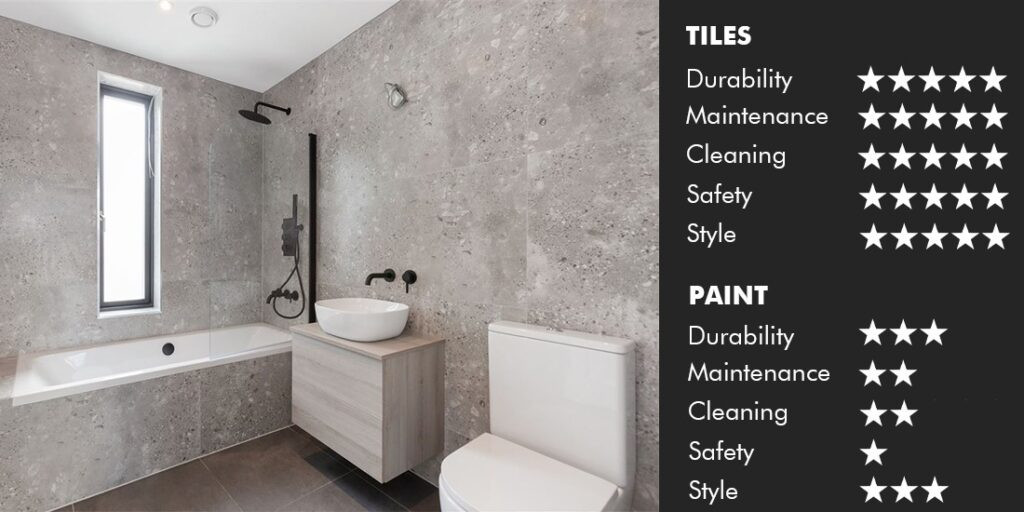
If a room like this is not properly treated, then dampness and mould will very quickly take hold, not only ruining your carefully-curated new look, but also putting your health and the health of your loved-ones at risk.
According to the NHS and HSE, exposure to damp and mould spores increase your likelihood of suffering respiratory problems, respiratory infections, allergies or asthma.
Durability And Cost of A Painted Bathroom
Of course, most paints these days are water-based, and there is a wide range of paints designed specifically for use in humid and damp rooms, such as bathrooms. However, even these paints are still based on organic-binders, meaning that after a relatively short time they will naturally begin to deteriorate, attracting fungi and bacteria thanks to their exposure to moisture.
As such, a painted bathroom requires re-painting every few years in order to keep it watertight and stave-off flare ups of damp and mould. Moreover, in order to better prevent said build-ups, you’d have to have your bathroom windows open regularly, year-round, to keep the painted room ventilated and to stop your paint from streaking due to surfactant leaching. Not ideal during an Irish winter!
Suddenly, the money you saved opting to paint your bathroom is being consumed by perpetual maintenance.
Durability And Cost of a Tiled Bathroom
In contrast, whilst more expensive during the initial renovation, bathroom tiles are infinitely more durable than bathroom paints (hence the fact that your new apartment or house is still sporting tiles from the ‘70s which, whilst ugly, are otherwise intact).
They are, by their very design, waterproof and watertight. Unlike bathroom paints, they’ll almost never require replacing, and will happily withstand all of the heat, humidity and moisture you can throw at them, without contributing to the spread of mould and damp.
Provided you choose a tile style which you’re sure to be happy with, the short-term costs of tiling a bathroom, when spread across the lifetime of those tiles, is negligible when compared to the maintenance costs of painting a bathroom and repainting.
Can You Paint Bathroom Tiles? Disadvantages & Reality Check
When looking for quick renovation shortcuts, homeowners frequently ask: can you paint tiles in a bathroom? While the technical answer is yes—using specialized tile primers and epoxy or masonry paints—professional tilers and decorators strongly advise against it for long-term results.
Understanding the disadvantages of painting bathroom tiles highlights why this short-term solution often leads to premature failure:
- Peeling and Delamination: Tile glazes are non-porous surfaces designed specifically to shed liquids. Paint cannot create a permanent chemical bond with glazed ceramic or porcelain. Once steam penetrates microscopic imperfections, the paint film blisters and peels off in sheets.
- Extreme Scratch Sensitivity: Painted tile surfaces chip easily under daily contact from shower caddies, toiletries, cleaning tools, or jewelry. Once chipped, water migrates beneath the surrounding paint layer.
- Unnatural, Plastic Finish: Painting over tiles covers both the tile face and the grout lines in a uniform layer of thick coating. This erases the crisp definition of tile layouts, leaving a flat, synthetic aesthetic that reduces house resale appeal.
- Grout Sealing and Mould Trapping: Tile paint coats porous grout lines, trapping pre-existing moisture or microscopic spores underneath the paint skin, accelerating hidden mould growth.
Painting Shower Tiles: Pros and Cons
If you are considering painting shower tiles as a temporary measure, evaluate these performance trade-offs:
| Pros of Painting Shower Tiles | Cons of Painting Shower Tiles |
|---|---|
| Low initial material cost compared to full retiling. | High failure rate due to direct daily hot water exposure. |
| Fast visual update without removing existing tile substrates. | Chemical cleaners and squeegees strip paint quickly. |
| No specialist tiling tools or tile removal equipment required. | Requires extensive surface sanding, etching, and toxic primer vapors. |
Cleaning and Maintenance of Tiles vs Paint
Unlike the living room or bedroom, the bathroom is one room in the house you can guarantee is going to get messy.
Naturally, it’s the room in the house which requires a good deep clean most often. It’s where you wash the daily grime from you, where you brush your teeth, where your kids splash about in the bath, where you go to the toilet.
Thus, keeping a bathroom clean is not just a matter of regular necessity, but also an important consideration to make during any bathroom renovation
Cleaning a Painted Bathroom
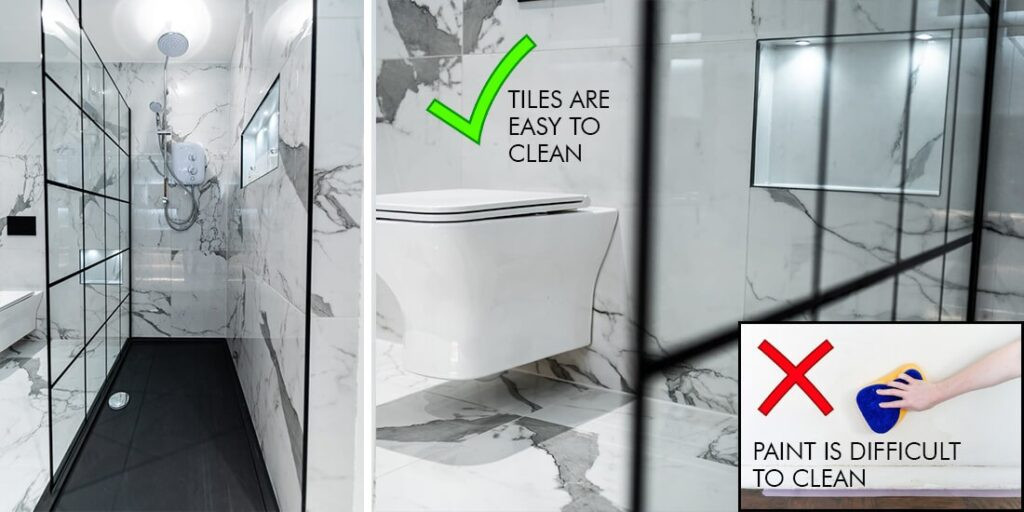
One of the major disadvantages of painting a bathroom is just how difficult it is to clean and keep clean.
Regardless of colour, marks on paint show up quickly and easily. Whether they be splashback marks from proximity to the bathroom sink, scrapes and scratches from the clumsiness of children, or the ugly black sootiness of mould and damp, when paint accrues marks, it looks terrible.And have you ever tried to clean a painted wall? Whilst possible, it is no easy feat, and the excess moisture used when attempting to clean marks from paint can be even more counterintuitive, as it may sew further moisture into the walls.
Cleaning a Tiled Bathroom
On the other hand, bathroom tiles are just about the easiest things in the world to clean. With a damp cloth you can clean almost any mark or stain from a tile, whilst their glossy, smooth texture (compared with the rough, dry texture of paint) usually allows for most splashes and spills to slip right off them in the first place.
When the weekly bathroom deep-clean already seems to take an age, why add to the burden by insisting on painted walls in the bathroom, all streaky and splotched with splash marks and dirt, when instead you could choose tiles, and save yourself the bother?
Can You Paint Bathroom Tiles? Disadvantages & Reality Check
When looking for quick renovation shortcuts, homeowners frequently ask: can you paint tiles in a bathroom? While the technical answer is yes—using specialized tile primers and epoxy or masonry paints—professional tilers and decorators strongly advise against it for long-term results.
Understanding the disadvantages of painting bathroom tiles highlights why this short-term solution often leads to premature failure:
- Peeling and Delamination: Tile glazes are non-porous surfaces designed specifically to shed liquids. Paint cannot create a permanent chemical bond with glazed ceramic or porcelain. Once steam penetrates microscopic imperfections, the paint film blisters and peels off in sheets.
- Extreme Scratch Sensitivity: Painted tile surfaces chip easily under daily contact from shower caddies, toiletries, cleaning tools, or jewelry. Once chipped, water migrates beneath the surrounding paint layer.
- Unnatural, Plastic Finish: Painting over tiles covers both the tile face and the grout lines in a uniform layer of thick coating. This erases the crisp definition of tile layouts, leaving a flat, synthetic aesthetic that reduces house resale appeal.
- Grout Sealing and Mould Trapping: Tile paint coats porous grout lines, trapping pre-existing moisture or microscopic spores underneath the paint skin, accelerating hidden mould growth.
How Much to Tile a Bathroom in Ireland? (Cost Comparison Table)
When comparing paint instead of tiles in a bathroom, initial expenditure is usually the deciding factor. While paint costs a fraction upfront, calculating the true installation expense helps benchmark your renovation budget effectively.
In Ireland, the average cost of quality porcelain or ceramic bathroom tiles sits at approximately €45 per square metre (though budget options start significantly lower). Professional tiler labor rates across Ireland average between €35 and €55 per square metre for standard formats, depending on surface preparation, tanking (waterproofing), and location.
The table below breaks down estimated material and labor costs for typical Irish bathroom dimensions:
| Bathroom Size | Average Surface Area (Walls & Floor) | Est. Tile Cost (@ €45/m²) | Est. Labor & Adhesive | Total Estimated Cost |
|---|---|---|---|---|
| Small (En-suite / Downstairs WC) | 12 - 15 m² | €540 - €675 | €600 - €850 | €1,140 - €1,525 |
| Medium (Standard Family Bathroom) | 20 - 25 m² | €900 - €1,125 | €1,000 - €1,400 | €1,900 - €2,525 |
| Large (Master Suite / Wet Room) | 30 - 40 m² | €1,350 - €1,800 | €1,500 - €2,200 | €2,850 - €4,000 |
Note: Labor prices vary based on room preparation, removal of existing tiles, and tanking kit applications for showers. Choosing large-format tiles or standard ceramic options can also adjust total material expenses.
Painting Shower Tiles: Pros and Cons
If you are considering painting shower tiles as a temporary measure, evaluate these performance trade-offs:
| Pros of Painting Shower Tiles | Cons of Painting Shower Tiles |
|---|---|
| Low initial material cost compared to full retiling. | High failure rate due to direct daily hot water exposure. |
| Fast visual update without removing existing tile substrates. | Chemical cleaners and squeegees strip paint quickly. |
| No specialist tiling tools or tile removal equipment required. | Requires extensive surface sanding, etching, and toxic primer vapors. |
Aesthetics and Style of Tiles vs Paint
For the longest time, the tiles that were available to the general consumer market were drab, lifeless, and limited in style and colour. Again, think of those garish tiles from the 1970s that your landlord or previous owner left for you!
This was the case for so long, in fact, that many homeowners now considering bathroom renovation simply have no idea of the multitudinous style, pattern, colour and size options available to them on the tile market.
In fact, when compared with the range of paints which are actually suitable for use in a bathroom, the incredible diversity of porcelain and ceramic tiles is far greater. Though the modern style trend may be toward painted or half-painted bathrooms, often this is the case simply because the renovator was unaware of the thousands of gorgeous modern tile options available to them.
In fact, they could have quite easily found the perfect tiles to suit the aesthetic they were going for, and in doing so would have saved themselves all of the hassle associated with painted bathrooms.
Understandably, homeowners often express concern over the adaptability or flexibility of a tiled bathroom. Because of the relatively high short-term expense, they feel they would be locked into a style or colour combination, when with paint they could redecorate again in a year or two.
But here’s the thing: you can absolutely still redecorate with a tiled bathroom!
How To Regularly Redecorate A Tiled Bathroom
Pick a high-quality, neutral tone tiling for your bathroom, and adapt your colour palette as and when you like with the accessories, instead.
Think of shower curtains, bath mats, candle holders, posters, prints, and towels. There is an endless roulette of options open to the homeowner who carefully selects the right tile for their space.
Oh, and here’s a top tip: remember that brighter colours are the better option for space-limited bathrooms. Darker colours absorb light, and can make your bathroom feel more claustrophobic, whilst lighter coloured tiles will give the room space to breathe.
Exploring The Bathroom Tile Options Available at Tile Merchant
Here at Tile Merchant, we stock Ireland’s widest and highest-quality range of tiles, from bathroom and kitchen tiles to tiles for your hallway, outdoor patio, bedroom, living room and more.
When it comes to selecting the perfect bathroom tile for your next Irish interior renovation project, there is an almost limitless range of styles, shapes, textures and finishes to choose from.
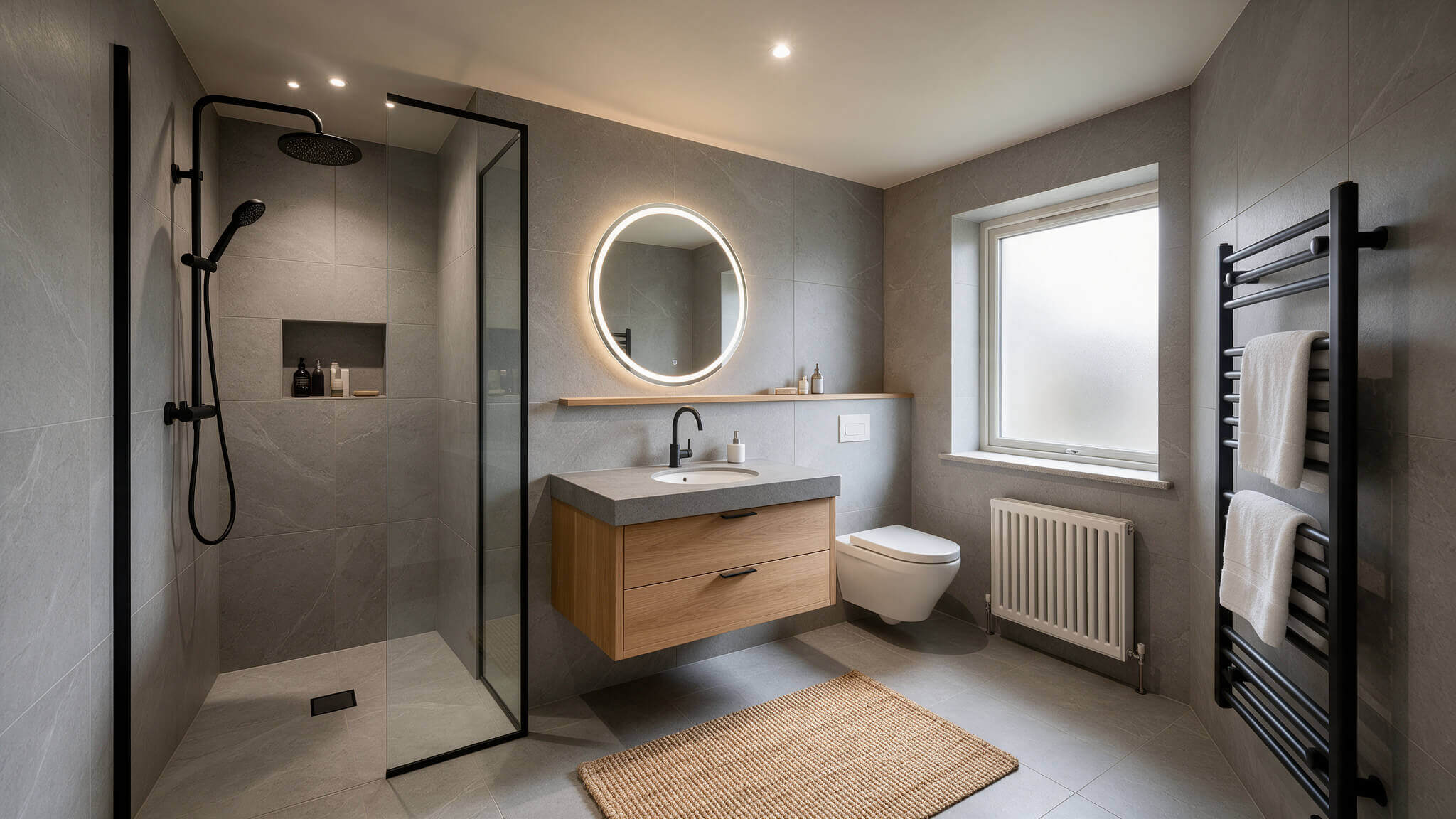
- Neutral tone tiles: Neutral tiles are ideally suited to a modern, minimalist aesthetic, or to bathrooms with lots of furnishings and accessories creating noise. They hold up particularly well in natural light.
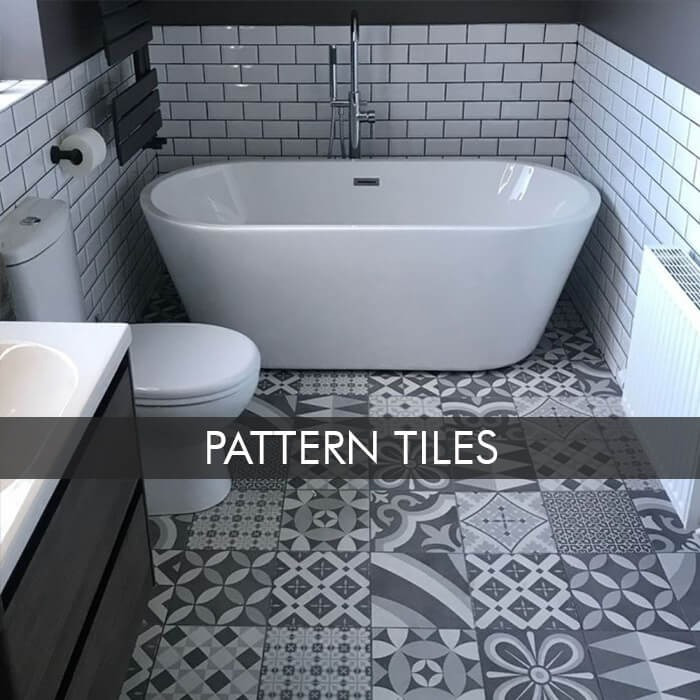
- Patterned tiles: Patterned tiles offer something different and often retro to your modern Irish bathroom renovation, with lots of different patterns to choose from you can create uniquely eye-catching feature walls or floors which draw the eye and add flow to the room.
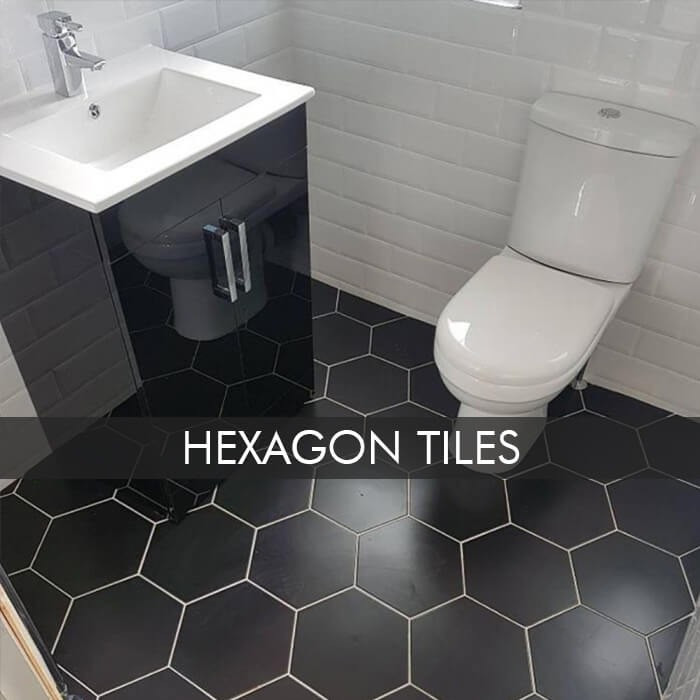
- Large tiles: Especially useful in small, dimly lit bathrooms and toilets, large-format tiles create the illusion of more space and light thanks to their long lines and minimal grouting.
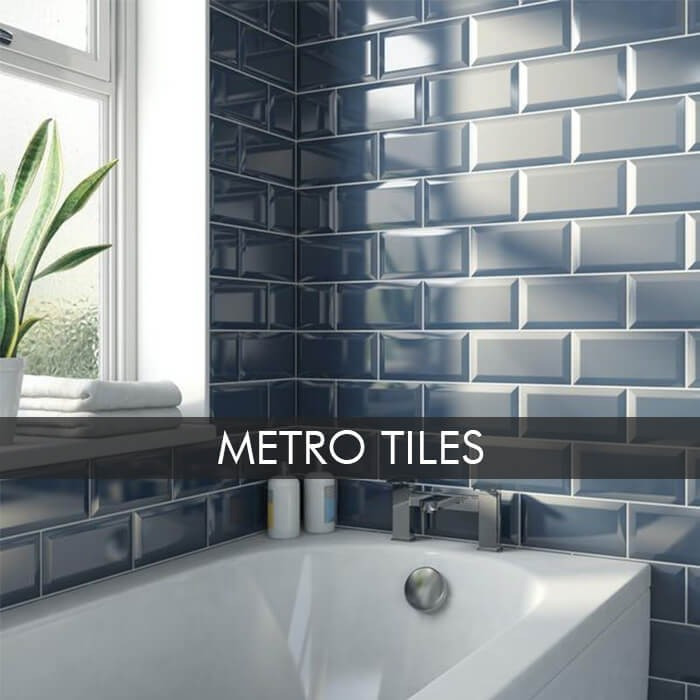
- Small tiles: On the other hand, small-format tiles can also work really well to add a bit of variation in style to your bathroom makeover. Small tiles tend to look especially good as shower and bath surrounds, or for detailing in corners and around bathroom furniture.
- Wood-effect tiles: We’re super proud of our gorgeous and expansive selection of wood-effect tiles. Made from 100% waterproof porcelain, our wood-effect tiles photo-realistically replicate the natural beauty of real wood without any of the maintenance hassle or costs.
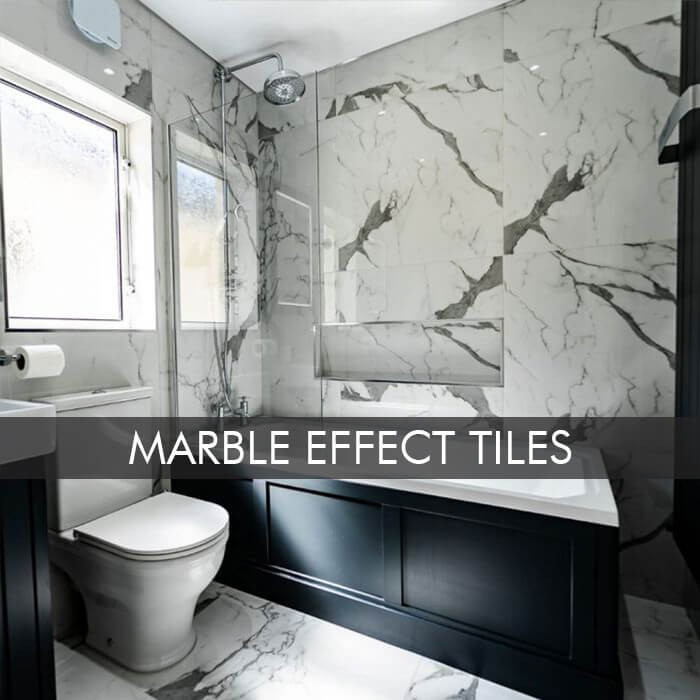
- Natural stone-effect tiles: Natural stone, like wood, creates a really gorgeous, calming effect in any bathroom, turning it from drab to spa-like in an instant. We stock tiles designed to replicate the aesthetic of limestone, sandstone, marble and more.
- Mosaic tiles: Finally, why not consider adding some Mediterranean and North-African luxury to your bathroom remodelling project? With our diverse range of mosaic tiles, you can create elaborate patterns and textures anywhere you like—creating a truly unique bathroom look guaranteed to make your neighbours’ jaws drop.
Final Thoughts: Why Tiles Are Better for Bathrooms
While painting bathroom walls offers an affordable weekend touch-up, it cannot match the structural waterproofing, scrub resistance, and long-term value of genuine porcelain or ceramic tiles. In wet areas like shower surrounds and splash zones, non-porous tiles remain essential to protect your home against hidden damp and structural moisture damage.
If you want flexibility, combine both: tile your wet zones with durable, timeless tiles and paint upper dry zones with easily updated moisture-resistant paint.
Ready to plan your renovation? Explore Ireland's largest online selection of bathroom tiles at Tile Merchant, or visit our showrooms in Dublin and Ashbourne to order free cut samples delivered directly to your door.
If you are still intent on painting some parts of your bathroom, we highly recommend that you limit the painted areas to those which are least likely to come into contact with humidity and splashback.
Browse Tile Merchant’s wide range of bathroom tiles today and discover the perfect combination needed to create your dream space, tomorrow.
Why Tile Merchant?
We offer extremely competitive pricing on our entire range of tiles and likewise. We stock a huge range of wall and floor tiles and our prices are competitive for retail and trade. Our stock is widely available in our tile stores in Ireland which are open 7 days a week.
Alternatively, if you’d prefer to shop our tiles online, we can supply you with samples delivered for free.

Article written by Calum
Cal Bannerman is a freelance writer, editor, podcaster and voice actor from the Scottish Borders. He runs the storytelling podcast "Stories from the Hearth" and lives in a wee Glasgow Flat with his partner and their cat".