- Introduction
- The 5 Key Advantages of Waterproof Kitchen Flooring
- Disadvantages to Waterproof Kitchen Vinyl Flooring in Ireland
- The 3 Best Materials for Waterproof Kitchen Flooring in Ireland
- How to Waterproof Your Kitchen Floor
- Choosing the Best Water-Resisting Flooring for Kitchens in Ireland
- Why Tile Merchant?
Introduction
We’ll walk you through the 3 best water-resisting flooring for kitchens on the Irish market today, the advantages of waterproof flooring and give instructions on how to waterproof your sublayers.
Selecting the best waterproof flooring for kitchen spaces requires balancing visual design with long-term moisture management. Kitchens experience daily exposure to water splashes, steam, dropped cookware, and frequent foot traffic. In Ireland's humid climate, installing a non-waterproof floor leads to swelling planks, mold growth, and subfloor rot.
Whether you prefer traditional porcelain, modern luxury vinyl, or high-density laminate, choosing a water resistant flooring for kitchen areas protects your home investment. This guide evaluates the top performance characteristics, structural waterproofing steps, and material options available for kitchen floors in Ireland.
The 5 Key Advantages of Waterproof Kitchen Flooring
Why waterproof your kitchen floor anyway? Why opt for a water resistant flooring when there may be other materials which are cheaper, or more in keeping with your style — natural hardwood, for example?
Well, for very good reasons indeed!
Installing waterproof flooring for kitchen environments protects structural building sublayers while simplifying daily cleaning routines. Below is a practical breakdown of how water resistant surfaces perform compared to traditional untreated materials:
| Key Advantage | Technical & Practical Benefit |
|---|---|
| Mould & Spore Prevention | Stops surface liquid from seeping into subfloors, blocking fungal growth and airborne spores. |
| Structural Foundation Safety | Prevents subfloor timber joists from rotting and concrete screeds from absorbing moisture. |
| Surface Hygiene & Pest Control | Eliminates damp pockets that attract household insects, keeping cooking areas hygienic. |
| Stain & Wear Resistance | Non-porous wear layers resist grease, food spills, detergent stains, and high-foot-traffic marks. |
| Long-Term Cost Efficiency | Reduces lifetime maintenance by eliminating frequent plank replacements and subfloor repairs. |
Mould prevention
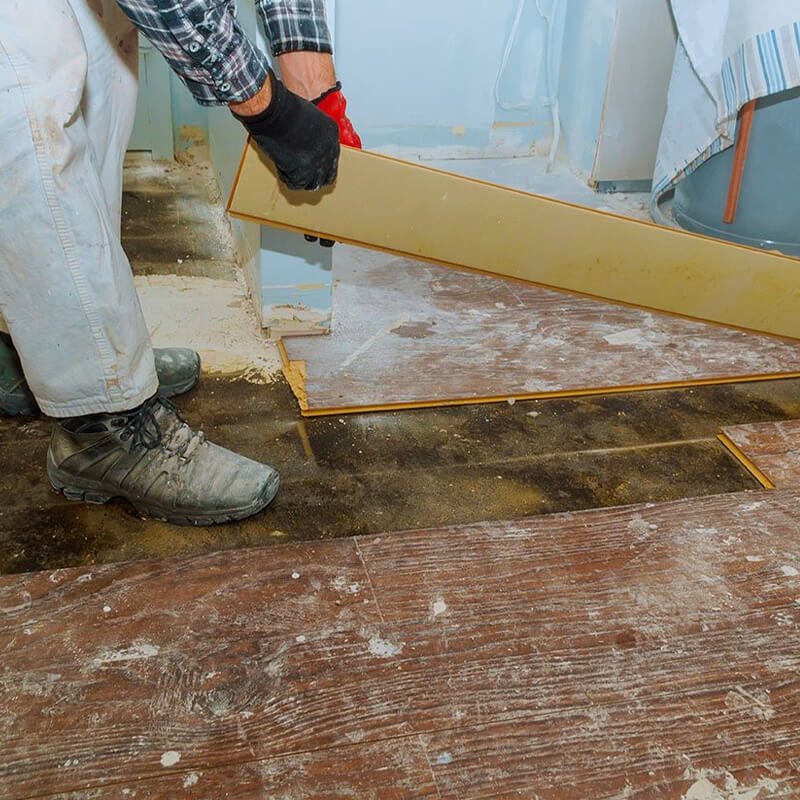
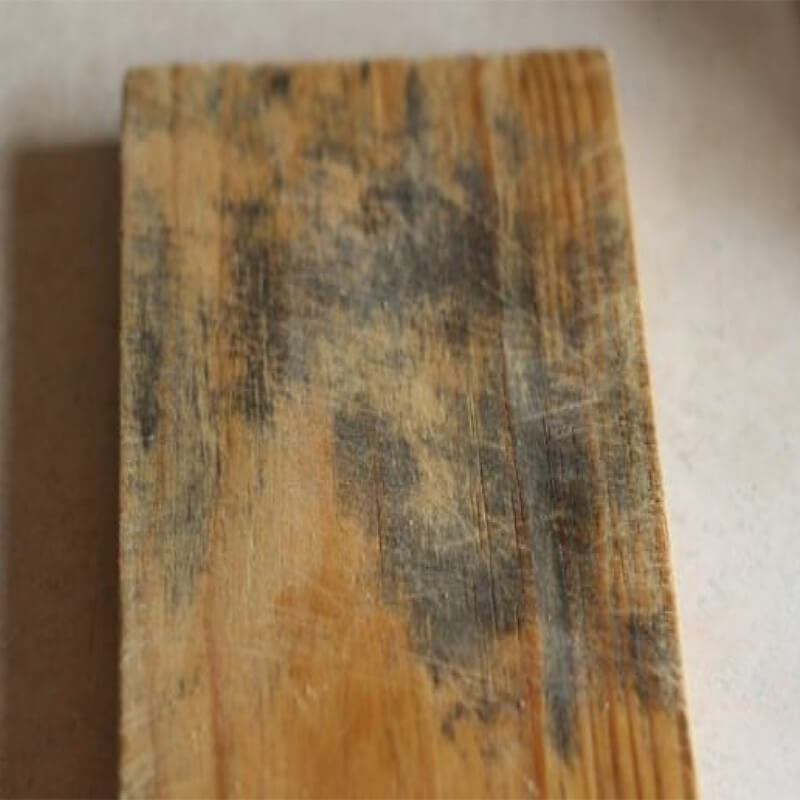
If kitchen flooring isn’t 100% waterproof, there is almost a 100% chance that various moulds — including damp, or black mould — will begin to build up.
Not only are moulds unsightly, and capable of ruining the quality and aesthetic of your flooring, but they can also pose serious threats to the health of you, your family, your pets and guests.
Among the most common health conditions aggravated by mould in the home are respiratory infections, asthma, and skin diseases like eczema and psoriasis.
Waterproof flooring, especially in conjunction with a fully waterproof sublayer, ensures that mould cannot take hold in your kitchen.
Pest control
Pests are another unwelcome guest attracted to damp spaces.
Woodlice, cockroaches, mice, rats, and other unsuitable kitchen visitors are more likely to make their beds where there is a ready supply of warmth, damp, and water.
Ensuring your kitchen flooring is 100% resistant to water makes it all the more resistant to pests at the same time.
Structural safety
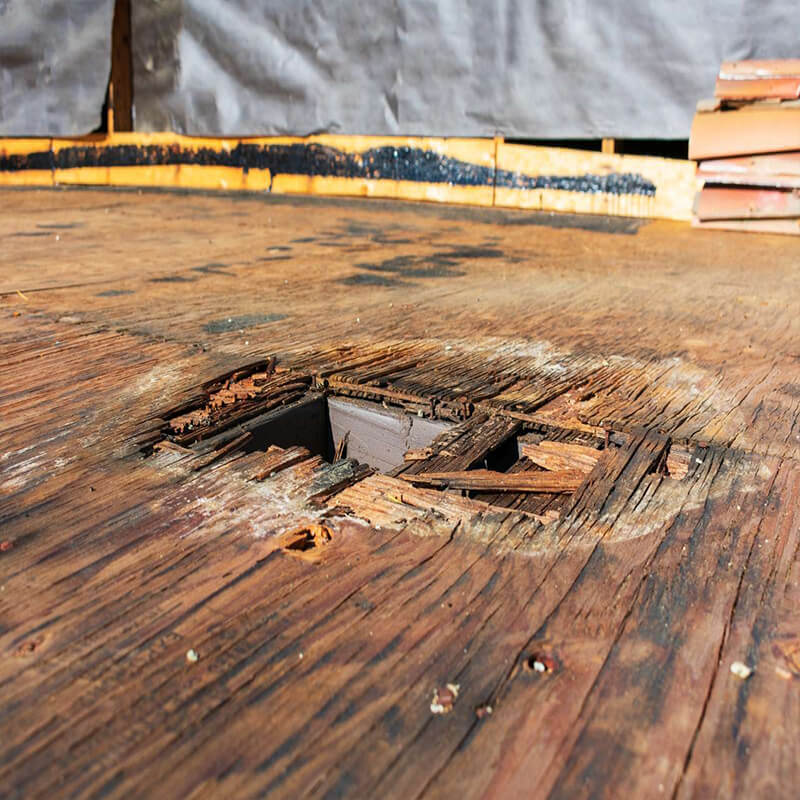
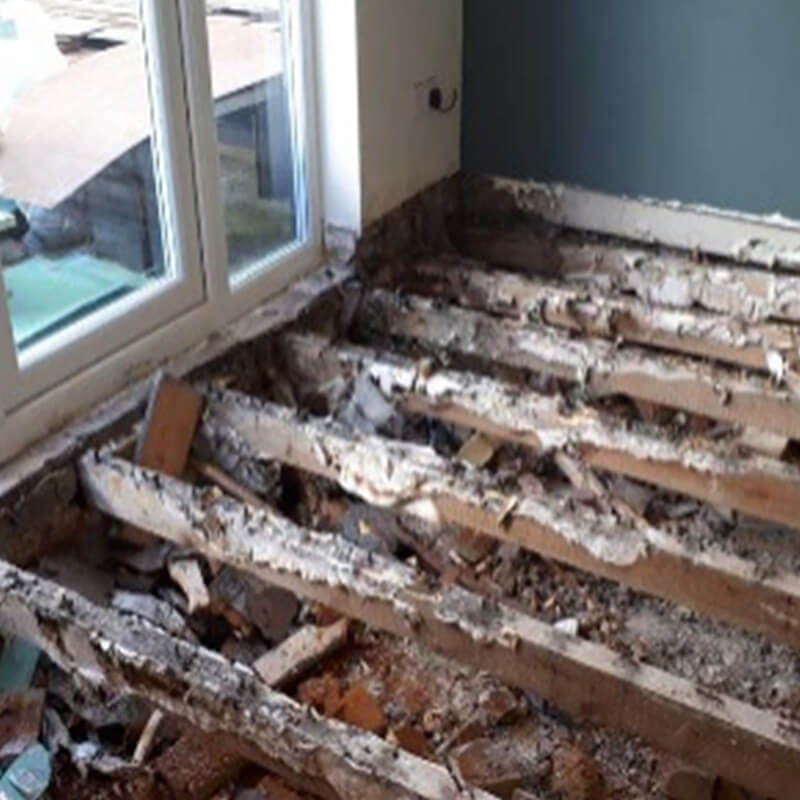
Depending on the construction of your home’s foundations, or the placement of your kitchen, a lack of waterproof kitchen flooring could prove irreversibly damaging for the substructures.
Wooden floorboards, for example, may quickly rot if left exposed beneath non-waterproof kitchen flooring, whilst metal foundations will rust and soon need replacing.
At best, the lack of a waterproof kitchen floor will gradually reduce the value of your property. At worst, it will force you into conducting regular and costly maintenance.
Aesthetics
Whilst damaging the foundations beneath your kitchen floor is, of course, of greater consequence than its appearance, we’d be lying if we didn’t say aesthetics is important, too!
When you go to choose a new kitchen floor, you want something that speaks to your individual, unique taste. Something which stands out from the crowd and makes your kitchen a calming, welcoming, open space to be.
Without waterproof flooring, however, the build-up of damp, mould, fungi and rodents will quickly destroy your hard design work.
Cost-effectiveness
And last but not least, choosing waterproof kitchen flooring is simply the more cost-effective way to design, or redesign, your kitchen.
Without waterproof flooring, you’ll need to carefully treat and maintain your floor material on a regular basis, perhaps even replacing the flooring every couple of years. In the worst case scenario, you’ll be shelling out some serious bucks for repair costs such as those caused by leaks and wood rot underneath the flooring
What Are the Best Tiles for a Kitchen Floor?
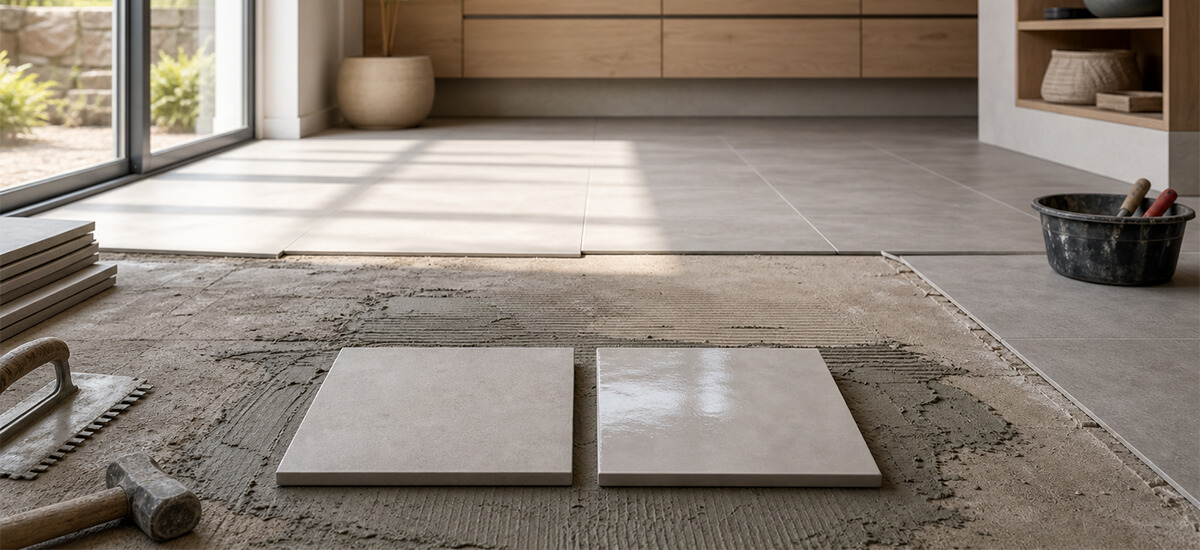
The best tiles for a kitchen floor are full-body porcelain tiles due to their ultra-low water absorption rate of less than 0.5%. Unlike standard ceramic, porcelain is fired at extreme temperatures, creating a dense, non-porous tile that withstands heavy foot traffic, dropped utensils, and standing liquids without staining or cracking.
For optimal kitchen safety, choose porcelain floor tiles with an R10 anti-slip rating and rectified edges for tight grout lines. Modern manufacturing allows kitchen porcelain tiles to replicate natural slate, polished marble, concrete, and real timber. Selecting wood effect porcelain tiles combines the organic aesthetic of hardwood with the complete waterproof performance and scratch resistance required in busy culinary spaces.
The 3 Best Materials for Waterproof Kitchen Flooring in Ireland
Now that we’re all aware of the benefits of, let’s discuss three of the best possible water-resistant materials you can choose from.
Each of the below is available on the Tile Merchant online shop, in a wide range of colours, shapes, styles and finishes to match a variety of tastes and budgets.
We also stock most of our waterproof kitchen flooring solutions in a wood-effect style, so that you can achieve the highly desirable look and feel of real hardwood without risking rot and rising repair costs
Tip: Read below the best 3 water-resisting flooring for kitchens in Ireland. Please note that proper installation with quality grout and sealant will further protect against moisture and prevent mould growth.
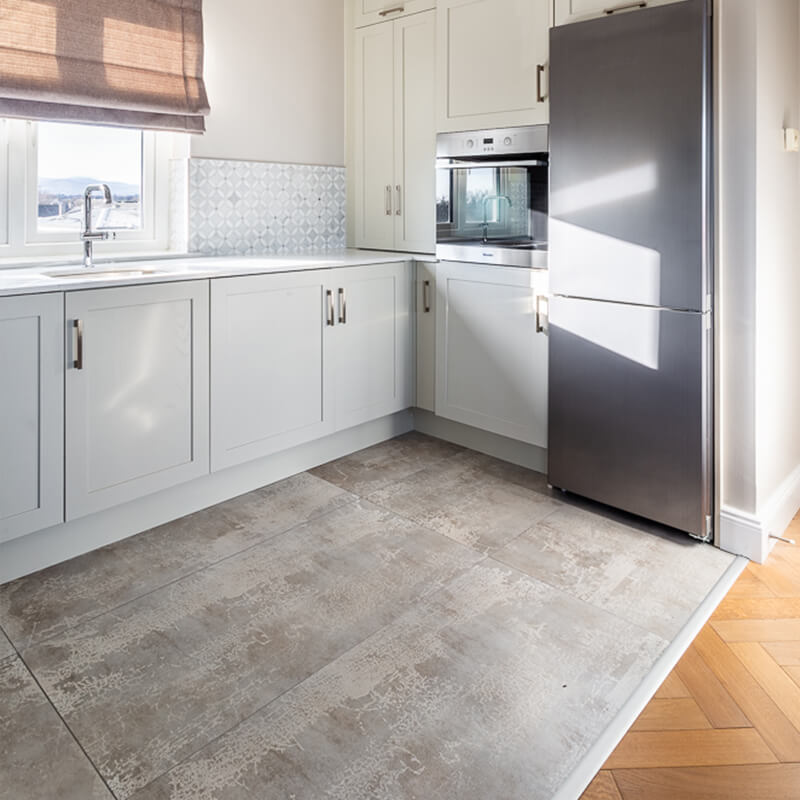
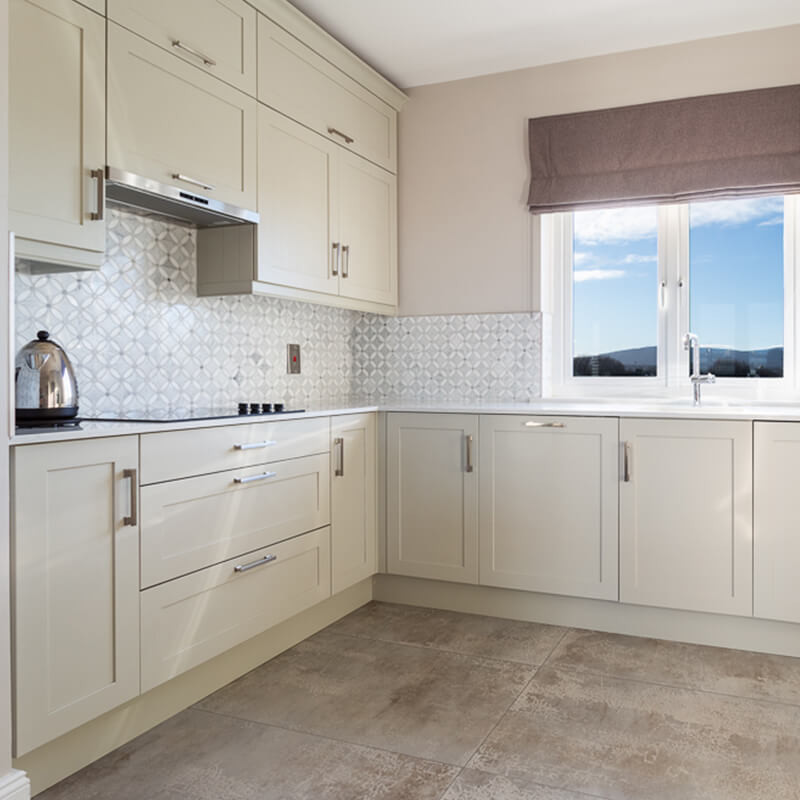
Waterproof porcelain tiles for kitchens
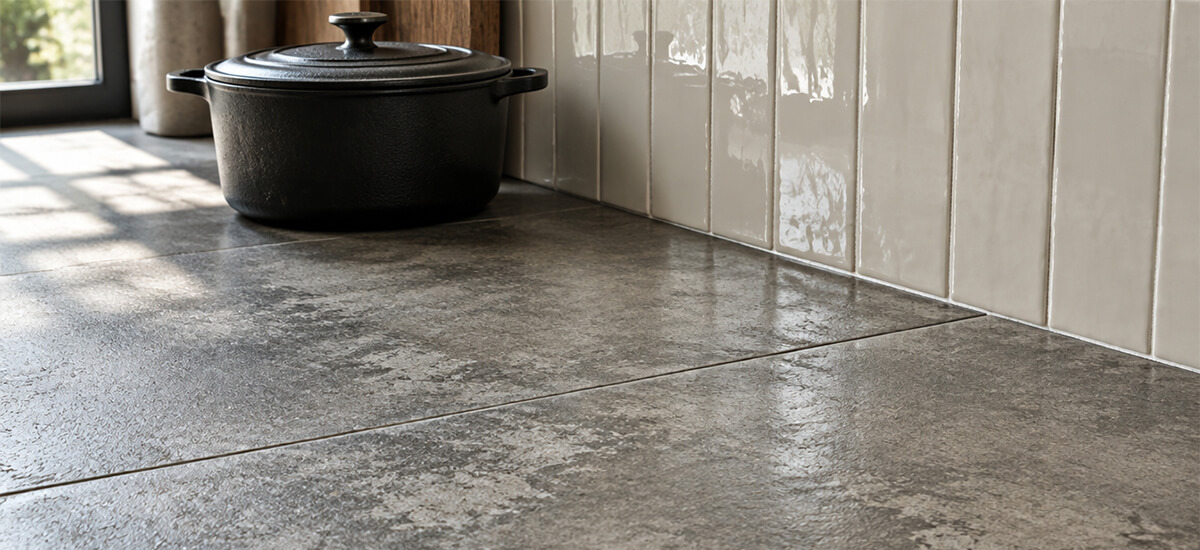
Porcelain stands out as the single best waterproof kitchen flooring option available. Engineered from refined clay fired at high temperatures, kitchen porcelain tiles feature a surface structure that completely repels water, oils, and chemical cleaning products.
Porcelain tile collections match any interior style. Options range from rustic flagstones and sleek concrete slabs to intricate Moroccan pattern tiles and wood effect porcelain tiles that deliver the visual warmth of timber without the risk of moisture distortion. Porcelain remains compatible with underfloor heating systems, clean-wiping effortlessly while offering decades of slip-resistant service in high-use kitchens.
Easy to install, easy to clean, waterproof and slip-resistant, porcelain tiles make for a classy, traditional Irish kitchen floor capable of complimenting your unique interior style.
Waterproof vinyl Flooring for kitchens
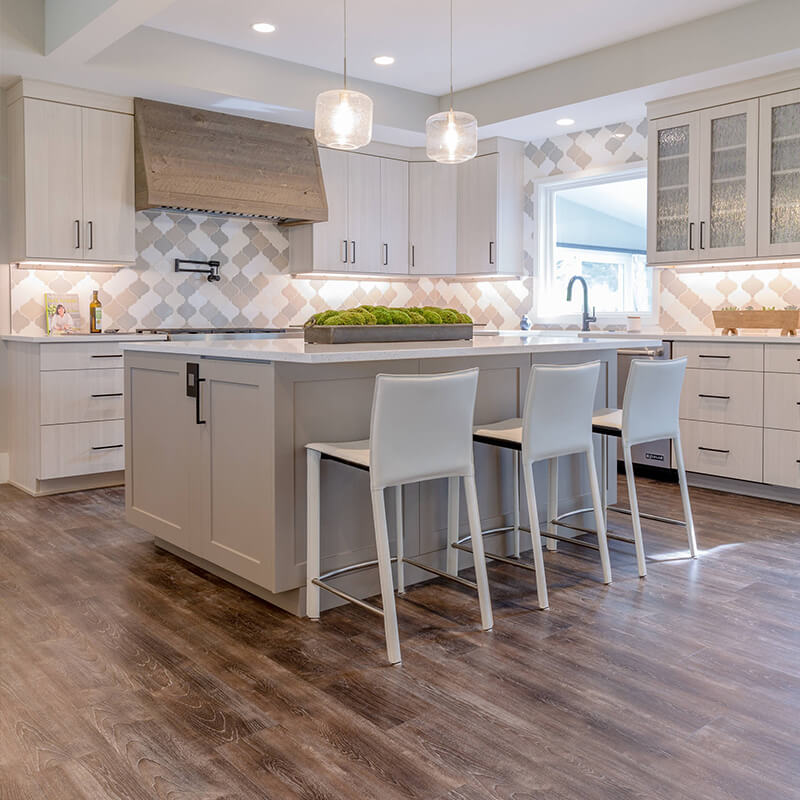
For homeowners seeking a fast, DIY-friendly installation, waterproof vinyl flooring for kitchen applications is an exceptional choice. Modern Stone Polymer Composite (SPC) rigid core flooring combines limestone powder with durable polymers, creating an ultra-dense plank that is 100% waterproof from surface to core.
Unlike traditional cushion vinyl, SPC vinyl planks feature integrated click-lock joinery that locks moisture out. The top wear layer resists pet claws, heavy furniture drops, and food spills, while built-in acoustic underlays dampen footstep sound. SPC planks convincingly emulate natural oak, walnut, and stone textures, providing an accessible alternative to real timber.
SPC stands for ‘stone polymer core’ or ‘stone polymer composite’, meaning that the rigid core of these vinyl planks is constructed from a mixture of waterproof stone and waterproof plastics.
Together, the stone and polymer of our SPC Vinyl kitchen floor tiles create a supremely durable and 100% water-resistant product, which is arguably even easier to install and keep clean than porcelain.
SPC Vinyl Flooring comes in planks resembling real hardwood — both in aesthetic and shape — with the nifty addition of an innovative click-and-slide design.
The tongues and grooves along the edges of each vinyl plank are made to be slotted into each other for a quick and DIY-friendly installation.
SPC Vinyl Flooring for Irish kitchens comes available in a wide range of authentic wooden styles, from raw natural oak to matured chestnut, mahogany, driftwood and more. Or, of course, you can elevate your kitchen to the more modern with SPC Vinyl in neutral blacks, whites, and greys.
Laminate flooring for kitchens
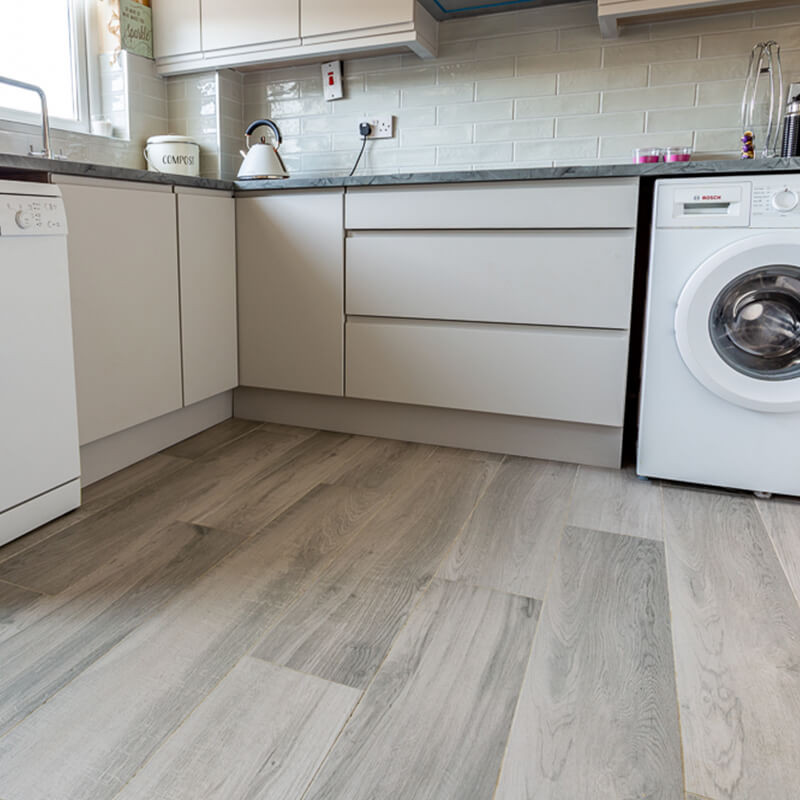
Last but not least, we have our good old friend laminate. Laminate flooring has been around for a long time now, and has improved tenfold in terms of look, longevity, price and style over the years.
Today, laminate doesn’t have to come in unwieldy rolls of uncomfortable plastic. Instead, here at Tile Merchant we stock laminate boards which click together much like our more luxurious SPC Vinyl.
And, just like SPC, laminate planks have a UV-protected image layer capable of imitating the grain and depths of colour in real wood, to a photorealistic degree!
The only drawback to using laminate for kitchen flooring is that it is not, technically, 100% waterproof.
Whilst highly resistant to water, the compressed wood-fibre core of our laminate kitchen flooring can be susceptible to water damage if left exposed to leaks and spills for too long.
Laminate technology has advanced significantly in recent years. Today, high-grade waterproof laminate flooring for kitchens provides strong protection against daily spills while delivering a cost-effective hardwood aesthetic.
Standard laminates utilize a high-density fiberboard (HDF) core, which can swell if exposed to standing water over prolonged periods. However, modern moisture resistant laminate flooring uses water-repellent surface coatings, tight interlocking joint systems, and hydrophobic edge seals that prevent liquid from penetrating the core. For homeowners seeking a stone visual, tile effect laminate flooring waterproof designs give the appearance of ceramic tiles with a warmer feel underfoot.
How to Waterproof Your Kitchen Floor
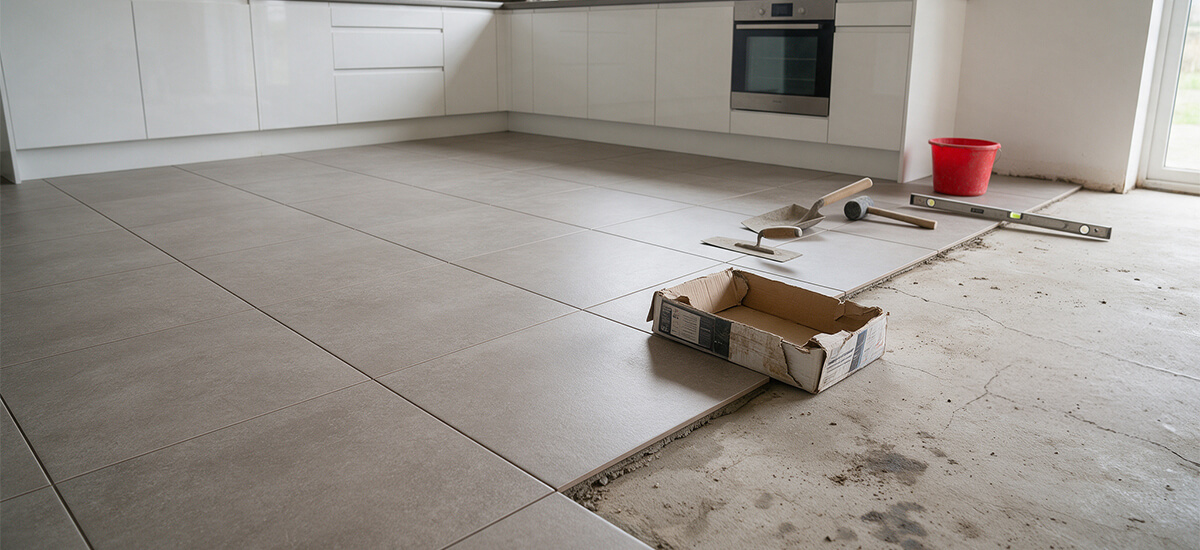
Ensuring your kitchen floor remains 100% watertight requires preparing the subfloor before laying your primary surface material. Following a correct subfloor sealing procedure prevents structural damage caused by sub-surface condensation or unexpected plumbing leaks.
Choosing the Best Water-Resisting Flooring for Kitchens in Ireland
Selecting the best waterproof kitchen flooring comes down to your home's foot traffic, budget, and design vision. Porcelain tiles provide maximum durability and lifelong waterproofing, SPC luxury vinyl offers high comfort with easy DIY installation, and moisture-resistant laminate delivers budget-friendly style across dry and semi-wet zones.
Explore Ireland's extensive range of kitchen flooring solutions at Tile Merchant. Browse our online collection of porcelain tiles, SPC vinyl, and laminate boards, or visit our showrooms in Ireland to order free cut samples delivered directly to your home.
Discover a wide range of fully-waterproof and 100% water-resistant kitchen flooring materials at Tile Merchant, from the old faithful laminate to more modern SPC Vinyl Flooring and porcelain floor tiles for kitchens in countless different styles.
We deliver to any and all addresses in Ireland. Thanks for reading.
Frequently Asked Questions: Kitchen Waterproof Flooring
1. What is the absolute best waterproof flooring for a kitchen?
Full-body porcelain tile is the most durable, 100% waterproof flooring available for kitchens. Fired at extreme temperatures, porcelain has a water absorption rate under 0.5%, making it completely immune to liquid damage, steam, spills, and heavy foot traffic over decades of use.
2. Is waterproof laminate flooring good for kitchens?
Yes, modern moisture-resistant and waterproof laminate flooring works very well in kitchens. High-quality options feature water-repellent surface glazes, tight click-lock seams, and treated HDF cores that protect against everyday cooking spills, splashing, and mop cleaning.
3. What is the difference between water-resistant and 100% waterproof kitchen flooring?
Water-resistant flooring (such as standard laminate) repels surface water for a limited window, usually 24 to 72 hours, but will absorb liquid if standing water sits indefinitely. 100% waterproof flooring (such as porcelain tiles and SPC luxury vinyl) contains non-porous materials that will never swell, warp, or degrade, even if completely submerged.
4. Can you install tile-effect laminate flooring in a kitchen?
Yes, tile-effect waterproof laminate flooring is a popular alternative to genuine ceramic or stone. It provides the visual aesthetic of slate, marble, or concrete tiles while offering a softer, warmer feel underfoot and a simpler click-lock installation process.
5. Is SPC vinyl flooring better than porcelain tiles for a kitchen?
Neither is universally better; it depends on your renovation priorities. SPC luxury vinyl is warmer underfoot, offers built-in sound absorption, and is easier to install as a DIY project. Porcelain tiles offer higher scratch resistance, handle heavier loads, last longer, and pair seamlessly with underfloor heating systems.
6. How do I protect my kitchen subfloor from water damage underneath?
Protect your subfloor by sealing perimeter room joints with waterproof caulking and applying a dedicated waterproof membrane or tanking primer before laying your floor surface. This prevents accidental pipe leaks, sink overflows, or spillages from seeping into subfloor joists and screeds.
7. Are wood-effect porcelain tiles suitable for Irish kitchens?
Yes, wood-effect porcelain tiles are ideal for Irish kitchens. They offer the exact grain texture, warmth, and aesthetic appeal of real timber flooring without the risk of warping, cupping, or rotting due to kitchen humidity and wet foot traffic.
8. Will waterproof vinyl flooring melt or warp near kitchen appliances?
High-quality SPC (Stone Polymer Composite) vinyl flooring will not melt or warp under standard kitchen operating temperatures. Its rigid stone core ensures high dimensional stability near dishwashers, ovens, and refrigerators, provided recommended perimeter expansion gaps are left during installation.
Why Tile Merchant?
Tile Merchant Ireland offers extremely competitive pricing on our entire range of tiles and likewise.
Tile Merchant stocks a huge range of wall and floor tiles and our prices are competitive for retail and trade. Our stock is widely available in our tile stores in Ireland which are open 7 days a week.
Alternatively, if you’d prefer to shop our tiles online, we can supply you with samples delivered for free.
Read Tile Merchant Reviews on Trustpilot

Article written by Calum
Cal Bannerman is a freelance writer, editor, podcaster and voice actor from the Scottish Borders. He runs the storytelling podcast "Stories from the Hearth" and lives in a wee Glasgow Flat with his partner and their cat".