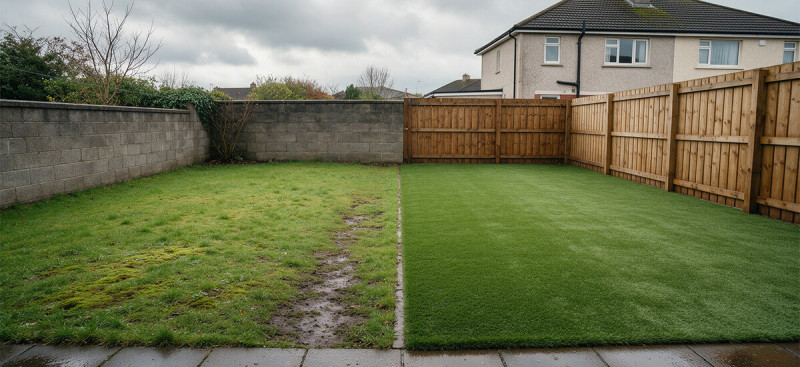

It's a wet Saturday in March. The mower won't start, there's a muddy patch where the kids' goal posts used to be, and you're standing at the back door wondering whether the whole lawn is worth the bother. That's the moment a lot of people start comparing artificial grass and real grass.
It's a bigger decision than it looks. A lawn decides how you spend your weekends, how much mud comes into the house and whether the kids and the dog can use the garden at all between October and March. Get it right and you stop thinking about it. Get it wrong and you're mowing in the drizzle for another ten years, or living with a surface that was laid badly.
So here's a lifecycle comparison for Irish gardens, using Irish prices. It covers cost over 10 and 25 years, maintenance, year-round use, water, heat, environmental impact, soil and drainage. Then it matches each option to the kind of household it suits. We sell artificial grass, so we'll tell you plainly where we think it wins, and also where a real lawn still makes more sense. You'll make a better decision, and you'll be happier with it in year eight.
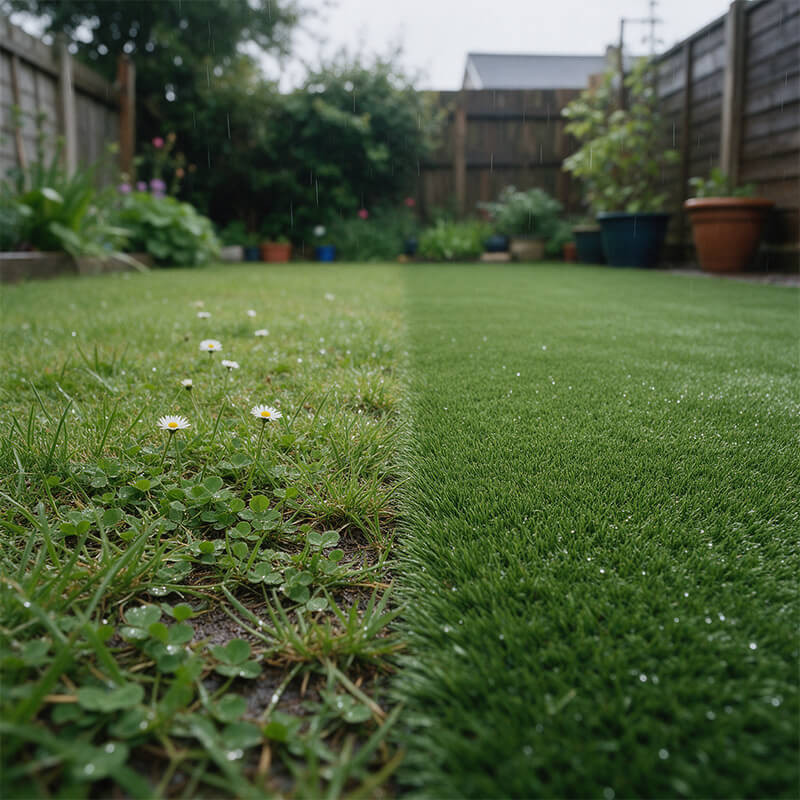
Artificial grass vs real grass at a glance
This is the quick version. Details and caveats follow below.
| Factor | Real grass | Artificial grass |
|---|---|---|
| Upfront cost | Low | Higher (base preparation is a big part) |
| Lifetime cost | Low if you do every job yourself, high if you pay for upkeep | Higher upfront, then very low running costs |
| Maintenance time | 15 to 20 hours a year on mowing alone, plus feeding, moss and weed control | A few hours a year of brushing and rinsing |
| Year-round use | Soft and muddy from autumn to spring | Usable every month, no mud |
| Water | Rarely needed in Ireland, but browns in dry spells | No irrigation, stays green through a dry summer |
| Drainage | Good on healthy soil, poor when compacted | Free-draining when laid on a proper sub-base |
| Lifespan | Indefinite with care, with periodic renovation | Many years on a good base (check the warranty) |
| Surface heat | Stays cooler | Warmer in direct sun, rarely an issue in an Irish summer |
| Appearance | Seasonal, mossy and patchy in shade and heavy use | Green and even all year |
| Kids and pets | Soft, but muddy and worn in wet weather | Clean and hard-wearing, with regular rinsing where dogs go |
| Soil and biodiversity | Living soil, insects, earthworms | No living soil layer under the surface, so planting nearby helps |
| Waste | Clippings to bin or compost all season | Turf to dispose of at end of life |
Neither column wins outright. Which one suits you depends on how you use the garden and what your time is worth.
10-year example (50 m²)
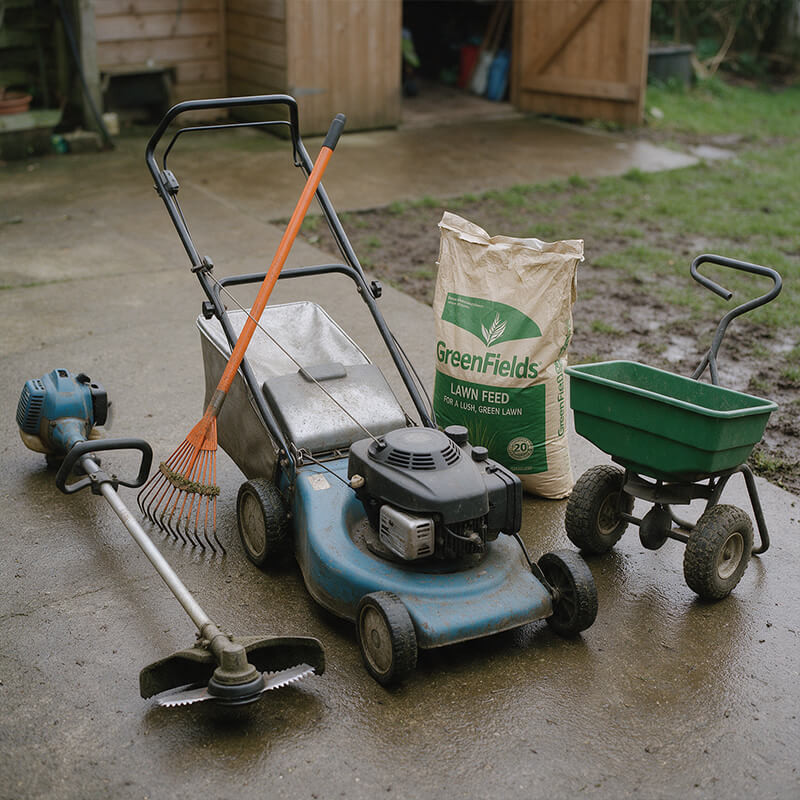
Assumptions: artificial grass at a mid-range €70 per m² installed (€3,500). Real grass laid as turf on prepared ground at €15 per m² (€750). The DIY column assumes a €400 petrol mower, €100 a year on fuel and servicing, €100 a year on feed, moss control, weedkiller and seed, and €200 for hand tools over the decade. That covers a strimmer (about €100), a lawn rake, edging shears and a feed spreader (about €25 to €30 each), plus replacement strimmer line. The paid column assumes a gardener at €40 a visit, 20 visits a year, plus two professional feed-and-moss treatments a year at €90 each. Artificial grass upkeep is budgeted at €40 a year for a brush, infill top-up and cleaning products.
| Cost item | Real grass (DIY) | Real grass (paid gardener) | Artificial grass |
|---|---|---|---|
| Install or establish | €750 | €750 | €3,500 |
| Mower, fuel, servicing | €1,400 | €0 | €0 |
| Hand tools (strimmer, rake, edging shears, spreader) | €200 | €0 | €0 |
| Mowing labour | €0 | €8,000 | €0 |
| Feed, moss and weed control, seed | €1,000 | €1,800 | €0 |
| Upkeep (brushing, infill top-up, cleaning) | €0 | €0 | €400 |
| 10-year total | €3,350 | €10,550 | €3,900 |
The gardener brings their own tools, so the paid column has no hand-tool cost. Artificial grass upkeep covers a stiff brush, the odd bag of kiln-dried sand for infill, a pet odour product such as Stontex, and weed spray for the edges. Real grass has no line here because its upkeep sits in the mowing, tools and feed rows.
Over 10 years, a DIY lawn comes in about €550 cheaper. That saving costs you somewhere between 150 and 200 hours of mowing, edging and feeding, which works out at roughly €3 an hour for your time. If you pay someone to cut the grass, artificial grass costs about a third as much.
25-year example (50 m²)
Different assumptions apply here. The real lawn needs one full renovation (scarifying, topsoil, reseeding) at €750 and two mower replacements. The artificial grass is replaced once, around year 15 to 18, reusing the original base. That's budgeted at €50 per m² (€2,500) including removal and disposal of the old turf. On the DIY side, the hand tools are replaced once more over the period (€500 in total).
| Cost item | Real grass (DIY) | Real grass (paid gardener) | Artificial grass |
|---|---|---|---|
| Install or establish | €750 | €750 | €3,500 |
| Renovation or surface replacement | €750 | €750 | €2,500 |
| Mower, fuel, servicing | €3,700 | €0 | €0 |
| Hand tools (strimmer, rake, edging shears, spreader) | €500 | €0 | €0 |
| Mowing labour | €0 | €20,000 | €0 |
| Feed, moss and weed control, seed | €2,500 | €4,500 | €0 |
| Upkeep (brushing, infill top-up, cleaning) | €0 | €0 | €1,000 |
| 25-year total | €8,200 | €26,000 | €7,000 |
Over 25 years, artificial grass is the cheapest of the three, even against a homeowner who does every job themselves, coming in around €1,200 cheaper than a DIY lawn. Against a paid gardener, it saves around €19,000.
The pattern is the same in both tables. Real grass is cheap to start and keeps charging you every year. Artificial grass costs more on day one and then goes quiet. If you enjoy mowing and value your Saturday mornings at zero, a real lawn stays competitive for the first decade. Most of us don't value them at zero.
There's one case where a real lawn is hard to beat: you already have healthy, well-drained soil, a mower that works, and you like cutting the grass. Then there's little reason to rip anything out.
Maintenance: what each lawn asks of you
The cost tables above only count money. They leave out the other thing a lawn costs you, which is your time. A real lawn needs attention almost every week from March to October, while artificial grass needs a few short jobs spread across the year. Here's what each one involves in practice.
Real grass
Grass grows roughly from March to October in Ireland, and in a mild, wet summer it feels like it never stops. A typical year looks like this:
- Mow weekly in peak season, less often in spring and autumn
- Strim edges and tidy borders
- Feed in spring and autumn
- Treat moss and weeds, which Irish weather encourages, especially in shaded or damp spots
- Aerate compacted areas and overseed bare patches
- Repair damage after heavy use, such as a summer of football or a dog's favourite sprint path
- Bag or compost the clippings after every cut
The winter problem
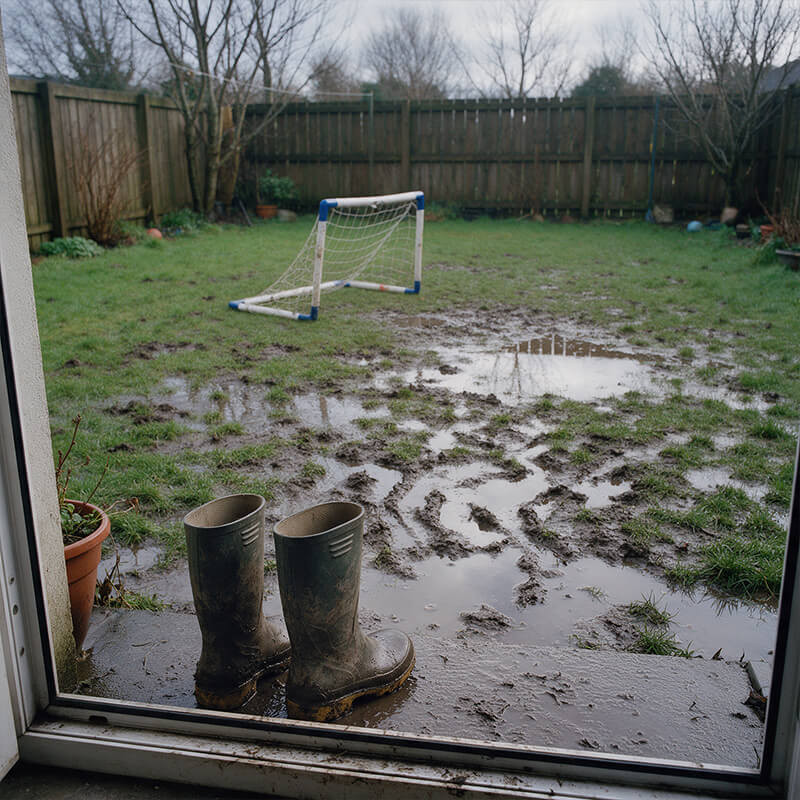
The bigger issue with a real lawn in Ireland is the six months when you can't use it properly. From October to March the ground stays soft. A few days of football or a dog doing laps leaves ruts and bare mud, and that mud ends up on boots, paws and the kitchen floor. Plenty of families simply stop using the garden for half the year.
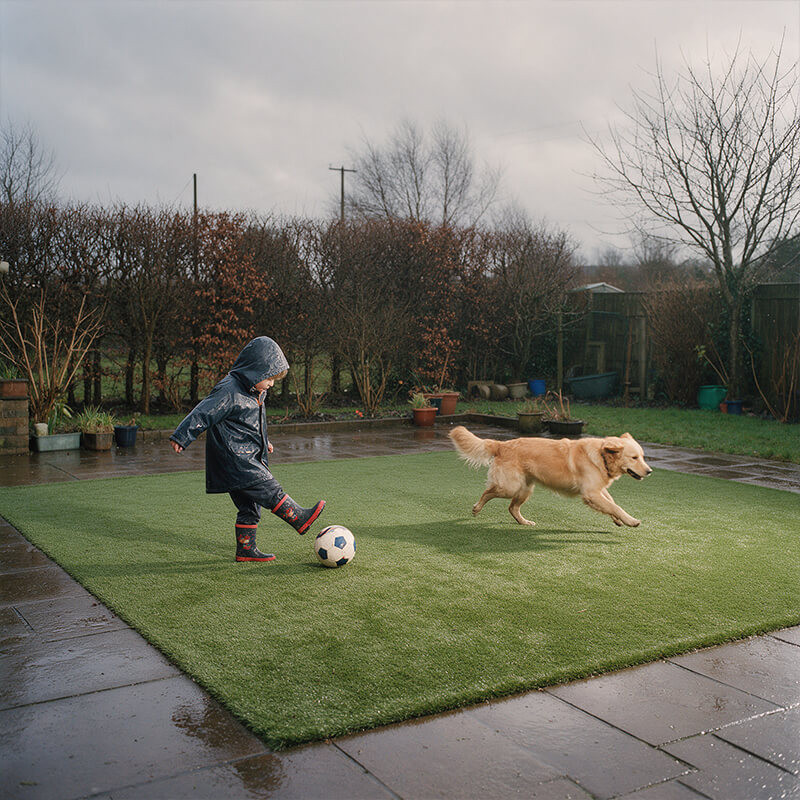
Artificial grass on a free-draining base is usable the morning after heavy rain. The kids can play on it in January and the dog comes back in with clean paws.
Artificial grass
Maintenance is lighter, though it isn't zero. Plan on:
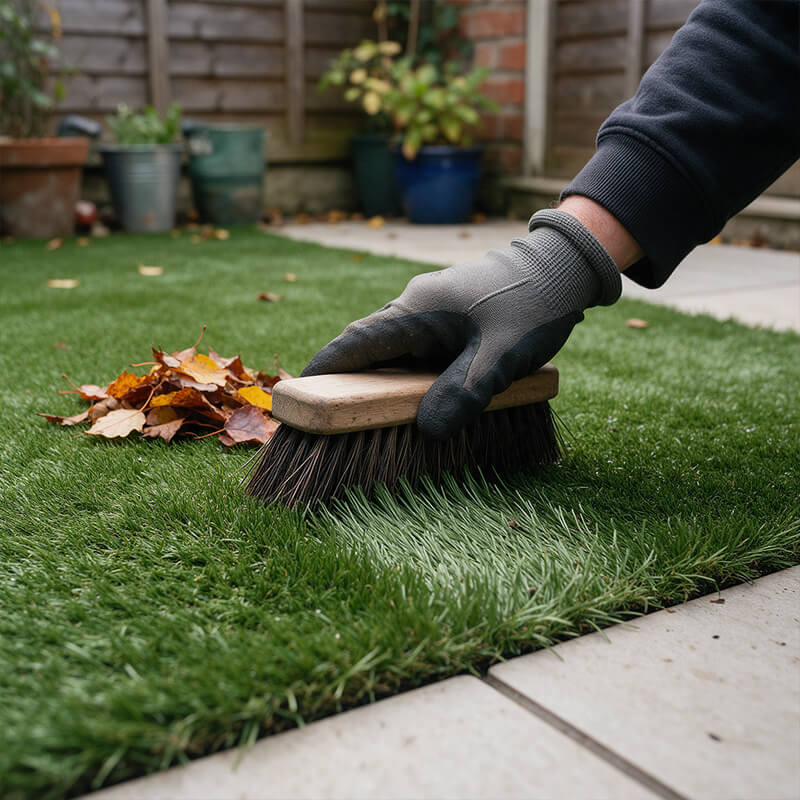
- Brushing against the pile every few weeks to keep it upright, with a stiff artificial grass brush
- Clearing leaves and debris so organic matter doesn't build up and let weeds take hold
- Rinsing with a hose, especially where pets use it
- Topping up infill if your product uses it
- Checking edges and joins once or twice a year and treating any weed growth early
With dogs, urine is the job to stay on top of. Solid waste is picked up as usual. Rinsing with water alone tends to spread urine around rather than remove it, because residue settles into the infill and backing. A concentrated neutraliser such as Stontex Pet and Urine Odour Neutraliser 5L deals with the smell at the source instead of masking it. Dilute it 1:50 for routine cleaning or 1:30 for heavy use, leave it for up to 20 minutes, then rinse. Because it's diluted, one 5 litre container covers a lot of cleans. Our guide to artificial grass for dogs covers the rest of what to look for.
To compare time: a 50 m² lawn cut 20 to 25 times a season takes roughly 15 to 20 hours a year for mowing, edging and clearing clippings, before feeding and repairs. Artificial grass is usually a few hours of brushing and rinsing across the whole year. Those are estimates and your garden will differ, but the gap is large.
The environmental trade-offs
Both options have an environmental footprint. They just sit in different places.
A real lawn's impact comes from looking after it. Petrol mowers burn fuel and make noise every week of the season. Lawn feed, moss killer and weedkiller can wash off into drains in heavy rain. Clippings fill brown bins all summer, and some households water their lawns through dry spells.
Artificial grass needs no mowing, no fertiliser, no chemical lawn treatments and no irrigation. Its footprint is concentrated at two points: manufacture, because it's a plastic product, and end of life. Recycling routes for used turf are still limited in Ireland. Ask your supplier what happens to old turf, and remember that a well-made product on a good base lasts longer and spreads that impact over more years.
Microplastics and crumb rubber
Crumb rubber, made from shredded tyres, is used as infill on some sports pitches, and it's the source of most of the microplastic debate. Domestic gardens rarely use it. Most residential products use sand infill or none at all. A dense, well-made product also sheds fewer fibres over time.
Runoff and stormwater
Rain has to go somewhere. On a properly built, permeable base, water passes straight through artificial grass and drains away, much as it does on a healthy lawn. Compacted or waterlogged lawns shed water badly, and so does artificial grass laid on compacted soil or on concrete without falls. The common factor is the base. We come back to that in the Irish drainage section.
Soil health and biodiversity
This is where real grass keeps a clear advantage. A real lawn sits on living soil, with roots, fungi, earthworms and insects, and clover and daisies feed pollinators if you let them flower. A heavily treated, tightly clipped lawn offers much less, but it's still alive.
Under artificial grass, the soil is cut off from light and rain, so it loses that life over time. That doesn't mean you have to choose all or nothing. Some practical middle ground:
- Use artificial grass where you live, play and walk, and give wildlife the borders and corners
- Add planted beds, shrubs or a small wildflower patch around the edge
- Put up a bird box or a bee hotel, which take up no lawn at all
- Choose a permeable base and avoid sealing off the whole garden
- If you keep some real lawn, mow it less often and let clover come through, as the All-Ireland Pollinator Plan encourages
In many gardens, a usable artificial lawn plus well-planted borders does more for wildlife than a mossy, compacted lawn that's sprayed every spring.
Heat: does artificial grass get hot?
Yes, in strong direct sun it gets warmer than real grass. Plastic fibres absorb sunlight, while real grass cools itself by releasing moisture. One published case study measured a gap of more than 20°C under hot test conditions.
In Ireland, those conditions are rare. On most days you won't notice any difference, and the odd hot, still afternoon is easy to manage:
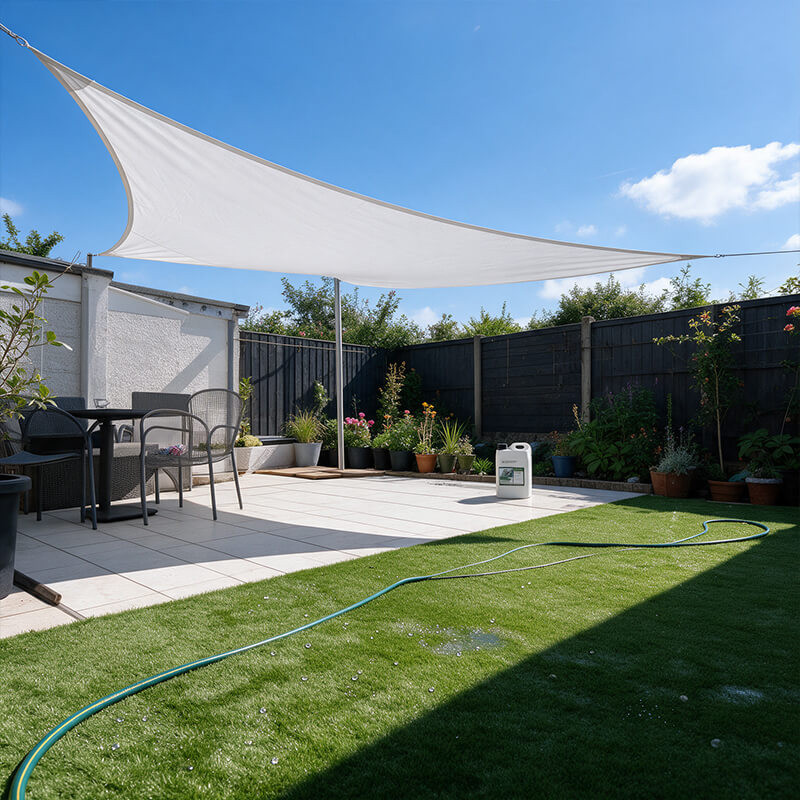
- Lay it in partial shade where you can, or add a sail, pergola or tree
- Hose it down on very hot days, which cools the surface quickly
- Choose a lighter-coloured pile and avoid dark rubber infill
- During a heatwave, let kids and pets play on it in the morning or evening
Which one fits your garden? A quick decision path
Work down these questions in order and stop at the first one that applies.
- Do you have dogs or young children who wear the lawn out? Artificial grass. It copes with heavy use, it's usable all winter and there's no mud tracked inside. Build it on a free-draining base and rinse and neutralise where the dog goes.
- Is the area mostly shaded and damp, with moss or bare soil every year? Artificial grass on a good base beats a lawn that struggles. Add planting nearby if wildlife matters to you.
- Is it a small patio, courtyard, balcony or front garden? Artificial grass. Mowing 12 m² isn't worth owning a mower, and it lays well over tiles or concrete.
- Are you renting out the property, away a lot, or finding mowing harder than it used to be? Artificial grass, because it looks the same in March and August with almost no work.
- Is the garden in full sun all afternoon? Artificial grass still works with a lighter product and some shade. A real lawn is the alternative if you enjoy looking after it.
- Do you enjoy gardening and already own a mower that works? Real grass will keep your costs low for years.
- Still undecided? Split the garden: artificial grass where you use it most, real grass or planting where it thrives.
Every option comes with a caveat:
- Artificial grass: the base and drainage matter more than the product
- Real grass: soil health and drainage matter more than the seed, and neglected lawns don't look good
- Both: a poor base ruins either
For a real household's experience, our write-up Life After Artificial Grass tells one family's story. For small plots, there are patio ideas for small gardens worth a look.
Drainage in Irish conditions
Ireland's rain is the reason drainage deserves its own section. Heavy, frequent rainfall and clay-heavy soils in many areas mean water sits where it shouldn't. Whatever you choose, plan for that first.
If you choose artificial grass
The sub-base does the real work. A compacted, free-draining layer of crushed stone, usually topped with a blinding layer, lets water move straight through, so the surface is dry and usable soon after rain. Skimp on it and you'll get pooling, odours and an uneven surface within a couple of winters.
Other points to confirm with your installer:
- Falls and drainage outlets if you're laying over concrete or tiles
- A weed membrane and proper edging, because weeds at the edges are the most common complaint
- Properly taped or glued joins
- Where the water is going to go, and that it isn't toward the house or a neighbour
Our guide on artificial grass installation goes through the steps over concrete, soil, decking and tiles. If you're renoIf you choose artificial grassvating your patio at the same time, a tiler or builder can sort the base for both in one visit.
If you choose real grass
Drainage and soil structure often matter more than your turf choice. Compacted ground, low spots that hold water and cutting too short all lead to moss and bare patches. Aerating, topdressing and raising your mowing height solve a lot of lawn problems before you spend on a replacement.
If you live in an apartment or managed estate, check your management company's rules. For front gardens, check your local authority's guidance, where permeable surfaces are the safer option.
Frequently asked questions
How much does artificial grass cost in Ireland?
Fully installed, expect roughly €50 to €90 per m², depending on the product, the site and how much groundwork is needed. Dublin jobs usually sit at the higher end. A 50 m² garden at a mid-range €70 per m² comes to about €3,500.
How long does artificial grass last compared with a real lawn?
A real lawn lasts as long as you keep looking after it, with a renovation every so often. A quality artificial lawn on a proper base is typically expected to last many years, but the exact figure depends on the product, the traffic and the warranty. Check the written warranty rather than relying on a headline number.
Does artificial grass use less water?
Yes. It needs no irrigation, only an occasional rinse, and it stays green through a dry spell when a real lawn turns brown.
Does artificial grass get hot?
In strong direct sun it gets warmer than real grass. In Ireland that's an occasional summer issue rather than an everyday one. Shade, a lighter product and hosing it down on hot days all help.
Is artificial grass OK for dogs?
Yes, and it's one of the main reasons people switch: no mud, no worn patches and clean paws all year. Build it on a free-draining base, rinse it regularly and use a pet odour neutraliser such as Stontex Pet and Urine Odour Neutraliser on the spots your dog uses most. The artificial grass for dogs guide covers this in detail.
Is real grass easier in the long run?
It's cheaper to start and good for wildlife, but it's a recurring job from March to October, and hard to use through an Irish winter. If you enjoy it, it's easy. If you don't, the hours add up fast.
Should I worry about microplastics or crumb rubber?
Crumb rubber is mainly a sports pitch issue. For a home garden, ask what infill a product uses, whether it contains rubber crumb, and for written confirmation on PFAS. Dense, well-made products shed fewer fibres.
What should I ask an installer?
Ask about the sub-base depth and material, drainage plan, edging, weed membrane, infill, warranty and end-of-life options. A good installer will answer all of this without hesitation.
The verdict, and what to do next
For most Irish gardens, artificial grass is the more practical choice. It costs less than a paid-for lawn from the first decade and less than a DIY lawn over 25 years. It's usable all winter, keeps mud out of the house, copes with dogs and children, and frees up your weekends. Real grass still makes sense if you enjoy the work, have healthy soil and want the most wildlife value from the space. Plenty of gardens use both.
The easiest way to decide is to see and feel the product. Order a few free samples, put them on the actual patio or lawn, and leave them out for a week through rain and sun. Customer reviews mention samples arriving two days after ordering. You can also visit our showrooms in Ballymount, Coolock, Deansgrange or Ashbourne.
When you're ready, our artificial grass range has 20mm, 25mm and 40mm pile heights to compare, and the artificial grass buying checklist will help you narrow them down. If you have a dog, add aThe verdict, and what to do next Stontex Pet and Urine Odour Neutraliser to the order. If you're renovating the patio too, talk to your tiler or builder before you order, so the base, falls and edges are planned once.
Got a question about your own garden? Leave it in the comments and we'll help you work out which lawn fits.
Why Choose Tile Merchant?
Don't shrink your tiles because your room is small. Use a medium-to-large format on the floor, keep walls the same or a touch smaller, choose a light and warm colour, match your grout, and keep mosaics for the details. Wood-effect planks and large format tiles both work well when you plan the layout first.
If you're torn between two options, order free samples from Tile Merchant, lay them down, and see which one feels right. You can also pop into one of our showrooms in Ballymount, Coolock, Deansgrange or Ashbourne to see the sizes in person. Which format are you leaning towards? I'd love to hear what you choose.
Ready to start? Browse the full tile range on tilemerchant.ie.
We offer extremely competitive pricing on our entire range of tiles and likewise. We stock a huge range of wall and floor tiles, and our prices are competitive for retail and trade. Our stock is widely available in our tile stores in Ireland, which are open 7 days a week.
Alternatively, if you’d prefer to shop our tiles online, we can supply you with free samples delivered for free.

 Website