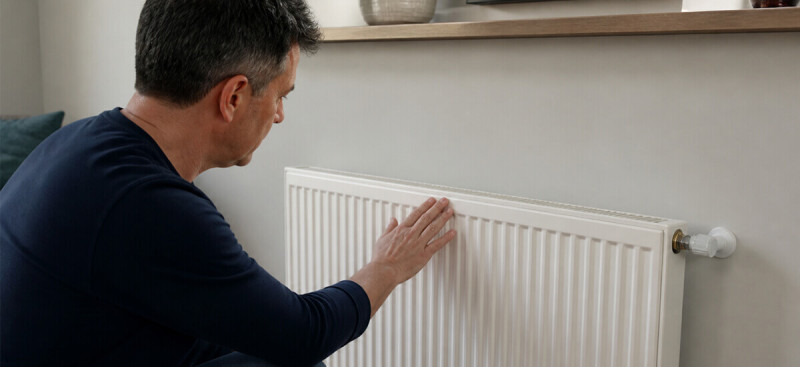

You may need to bleed a radiator if it's warm at the bottom but cold at the top. This means that there is air trapped inside. It stops hot water from moving properly through the radiator and can leave part of the room colder.
Bleeding a radiator is usually a quick job you can do yourself. All you need is a few simple tools and a few minutes to spare.
How to Tell a Radiator Needs Bleeding
The easiest way to understand whether your radiator needs bleeding is to turn the heating on and carefully feel how evenly it warms up. There are a few common signs that the air may be trapped inside:
-
The radiator is cold at the top but warm at the bottom
-
You hear gurgling or bubbling sounds
-
The radiator takes longer than usual to heat up
-
Some parts of the radiator stay cold
-
The room does not warm up as well as expected
Pay the most attention to a cold top - it is one of the clearest signs that trapped air may be stopping hot water from filling the whole radiator. However, if the radiator is cold at the bottom while the top is warm, the problem may be sludge or poor water circulation instead of trapped air.
What You'll Need For Radiator Bleeding
Fortunately, you do not need many tools for bleeding radiators. You need to collect the following items:
-
A radiator bleed key
-
A small bowl, cup, or container
-
An old towel or cloth
-
A flat-head screwdriver if your radiator valve allows one
A radiator key fits into the small bleed valve, which is normally found near the top corner of the radiator.
How to Bleed a Radiator: a Step-by-Step Guide
It is time to proceed to the actual process once you have your tools ready. Follow the next steps to bleed the radiator properly.
1. Check Which Radiators Need Bleeding
First, turn the heating on and check each radiator. Then look for cold areas near the top or listen for gurgling. Make a note of the radiators that need attention. Switch the heating off before you start bleeding them.
2. Let the Radiators Cool Down
Wait until the radiators are cool enough to touch safely. Do not try to open a bleed valve while the heating is running, as the water in the system can be quite hot and may come out through the valve.
3. Choose Where to Start
Start with the radiator furthest from the boiler and work your way towards it if you are bleeding several radiators. It's better to start with the radiators downstairs, then move upstairs if you live in a two-story home.
4. Find the Bleed Valve
You are more likely to find the bleed valve in one of the top corners of the radiator. Place a cloth around or under the valve, and keep a small container nearby to catch the water as it drains.
5. Open the Valve Slowly
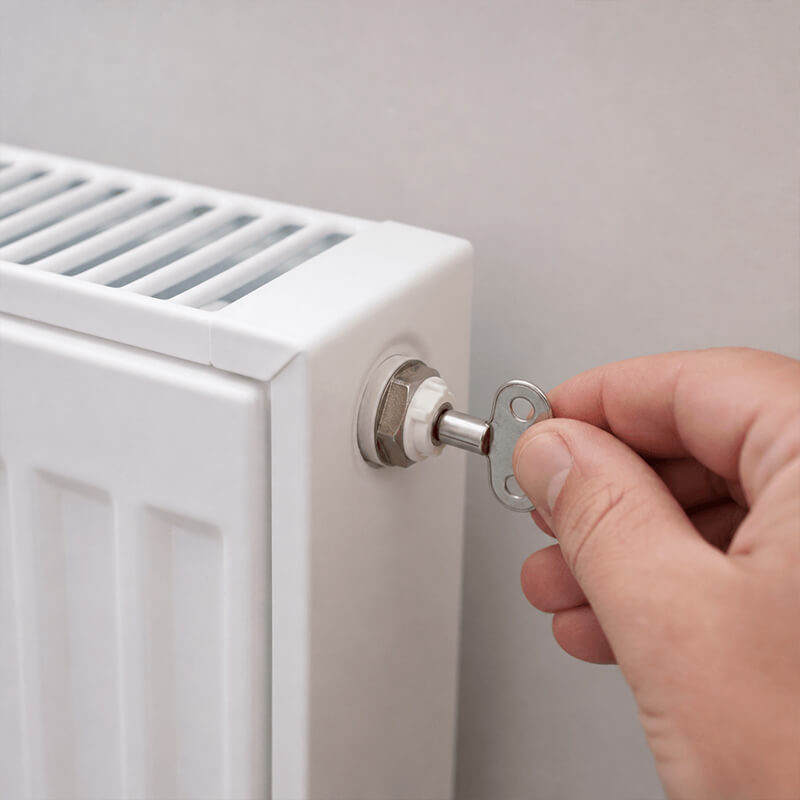
Insert your radiator key into the valve and slowly turn it anticlockwise by about a quarter turn. Once you hear a hissing sound, this is the trapped air leaving the radiator. Do not fully unscrew the valve at this point.
6. Wait for Water
Keep the valve slightly open while the air escapes. The hissing will gradually stop, and you should begin to see water coming from the valve. You know that trapped air has been released once you get a steady flow of water without spluttering.
7. Close the Valve
Finally, turn the radiator key clockwise to close the valve. Turn the heating back on and check that the radiators now heat evenly.
How to Bleed a Radiator Without a Key
Lost your radiator key? Do not worry, you can still bleed a radiator without a key.
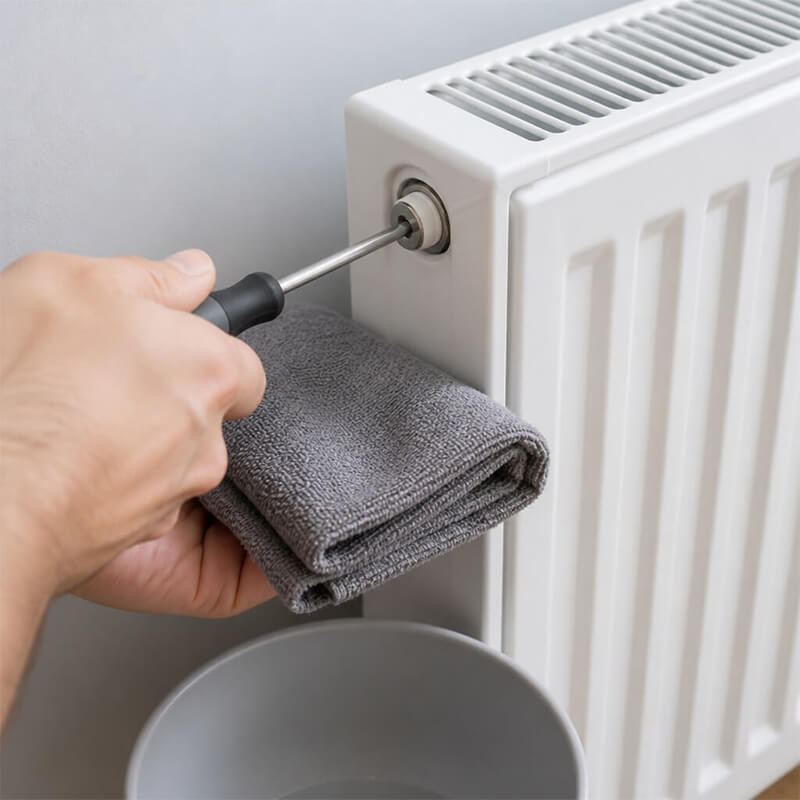
First, look closely at the bleed valve. Some modern valves have a straight slot that can be opened with a flat-head screwdriver.
With the heating switched off and the radiator cool, place a cloth under the valve. Insert the screwdriver and gently turn the valve anticlockwise. Open it only slightly until you hear air escaping.
Close it again when a steady amount of water appears.
Should the Heating Be On or Off When Bleeding Radiators?
The heating should always be off before you bleed a radiator. Hot water is moving through the system under pressure when the heating is running, so high-temperature water may escape.
Circulating water can also move air around the system, making it harder to remove properly. You can turn the heating on first to identify cold radiators, but then switch it off and let everything cool before opening any valves.
What If the Radiator is Still Cold After Bleeding?
Trapped air is not necessarily the cause if your radiator is still cold after bleeding.
The heating system may not work properly if bleeding the radiators has lowered the pressure too much. So you need to start by checking the boiler pressure
You can also check the radiator's thermostatic valve. Make sure it is open and working correctly. If several radiators heat unevenly, your heating system may need balancing, which adjusts the hot-water flow so that each radiator receives the right amount of heat.
Another possible issue is sludge. Unlike trapped air, which usually creates cold spots near the top, sludge often collects near the bottom of a radiator. In this case, the system may need professional cleaning or flushing.
How Often Should You Bleed Radiators?
Checking your radiators once or twice a year is enough for most homes. A good time is before the colder months, when you start using your central heating regularly again.
You do not need to bleed every radiator simply because time has passed, without any specific reason. Check for cold spots, slow heating, or unusual noises first.
The same basic process can be used for many heated towel rails that are connected to a central heating system.
Looking to update your home heating? Shop Radiators
FAQ | How To Bleed Radiators
Can you bleed a radiator when the heating is on?
Always bleed radiators with the heating switched off and allow them to cool first. This reduces the risk of hot water escaping from the bleed valve and helps trapped air settle where it can be released.
What Are the Signs Your Radiator Needs Bleeding?
The most common sign is a radiator that is warm at the bottom but cold at the top. You may also hear gurgling sounds or notice that the radiator takes longer than usual to warm up.
When You Bleed a Radiator, Do You Let All the Water Out?
No. The purpose is to release trapped air, not drain the radiator. Close the bleed valve once the hissing stops and a steady amount of water begins to come out.
How Long Does It Take to Bleed a Radiator?
It usually takes only a few minutes per radiator. If you have several radiators, allow extra time for them to cool, work through the system, and check the boiler pressure afterward.
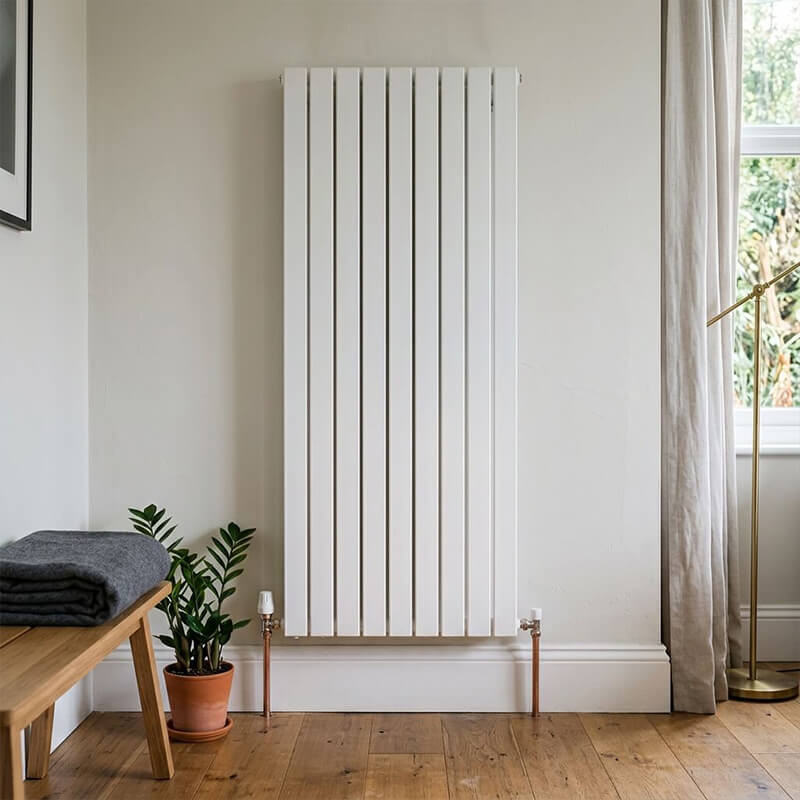
How to Bleed a Vertical Radiator or Towel Radiator?
The process is generally the same. Turn off the heating, let the radiator cool, find the bleed valve near the top, and slowly release the trapped air. Close the valve when water begins to flow steadily. You may also find our guide to underfloor heating for more home heating ideas.
Why Choose Tile Merchant?
Ready to start? Browse the full range of radiators.
We offer extremely competitive pricing on our entire range of tiles and likewise. We stock a huge range of wall and floor tiles, and our prices are competitive for retail and trade. Our stock is widely available in our tile stores in Ireland, which are open 7 days a week.
Alternatively, if you’d prefer to shop our tiles online, we can supply you with free samples delivered for free.

 Website