
Introduction
Whether you’re just starting out in the trade, or you’ve been in the game for decades, the tools you use to install tiles play a huge part in how good the finished project turns out. We’ve all heard the old saying: “A bad worker blames their tools”, but at the end of the day we also all know that even the best tiler in the biz can’t work with shoddy equipment.
Tiling is more than just a job, it’s an art. And for those of us, like the gang here at Tile Merchant, who really care about tiles – their design, spacing, security and longevity – it’s important that the right tools be available to professional tilers at the right price.
Tile Merchant TradePLUS+ Account
We’ve put together this guide to 10 essential tile tools for tilers in Ireland to help you take your profession to the next level. First, though, we want to share a bit about our TradePLUS+ programme, designed with Irish tradespeople specifically in mind.
Whether you’re a tiler, joiner, or bathroom fitter, a plumber, builder, landscaper, interior designer, or architect, opening a TradePLUS+ account with Tile Merchant ensures you get 24/7 online access to the best materials in Ireland, at highly-competitive trade prices, with both delivery and early collection options available.
A Tile Merchant TradePLUS+ account opens the door to all of the essential tiling tools in our list at impressive discounts. Whatever you need, whenever you need it – whether as a DIYer at home, or a contractor on-site – unlock access to everything you need at discount prices and speedy delivery with a Tile Merchant business account, today.
10 essential tools for professional Irish tilers
Different tiling jobs require different materials, from primers, grout and adhesives, to sealants and silicones. But there are some tools which remain constant, no matter where or what tiles you’re installing. The Tile Merchant top 10 essential tile tools for professional tilers in Ireland are:
● Tile cutters
● Trowels
● Grout sponges
● Tile spacers
● Floats
● Knee pads
● Levels
● Marking tools
● Tile trims
● Tile drill bits and blades
What Do Professional Tilers Use to Cut Tiles?
Most professional tilers use a manual tile cutter for the majority of day-to-day cuts, switching to an electric wet saw for thicker or harder materials like full-body porcelain and natural stone. For curved cuts, holes, or working around pipes and fittings, tile nippers and diamond drill bits round out a typical professional setup.
The reason professionals rarely rely on a single tool is that different materials and cut types genuinely need different equipment: a scoring-and-snap cutter that works perfectly on a standard ceramic wall tile will struggle or chip on a dense 20mm outdoor porcelain slab, which is why a proper trade toolkit includes several cutting tools rather than one universal option. For a full breakdown of technique by material and cut type, see our guides on how to cut tiles and how to drill through tiles without cracking them.
Tile Cutters and Blades
No tool matters more to the finished look of a tiling job than the cutter, and most professional tilers keep more than one type on hand rather than relying on a single all-purpose cutter. A manual tile cutter with a tungsten carbide scoring wheel handles the majority of straight cuts on ceramic and standard porcelain quickly and without dust. For thicker or dense full-body porcelain, particularly 20mm outdoor tiles, an electric wet saw with a diamond blade gives a cleaner, more controlled cut and reduces the risk of chipping that a manual cutter can struggle with on tougher materials.
Blade choice matters as much as the cutter itself: a diamond-tipped blade is essential for porcelain, while a carbide-tipped blade is usually sufficient for softer ceramic. Keeping a spare blade or scoring wheel on-site is worth the small cost, since a dulled blade is one of the more common causes of chipped edges and slowed-down jobs. See our full tile cutters range for both manual and electric options.
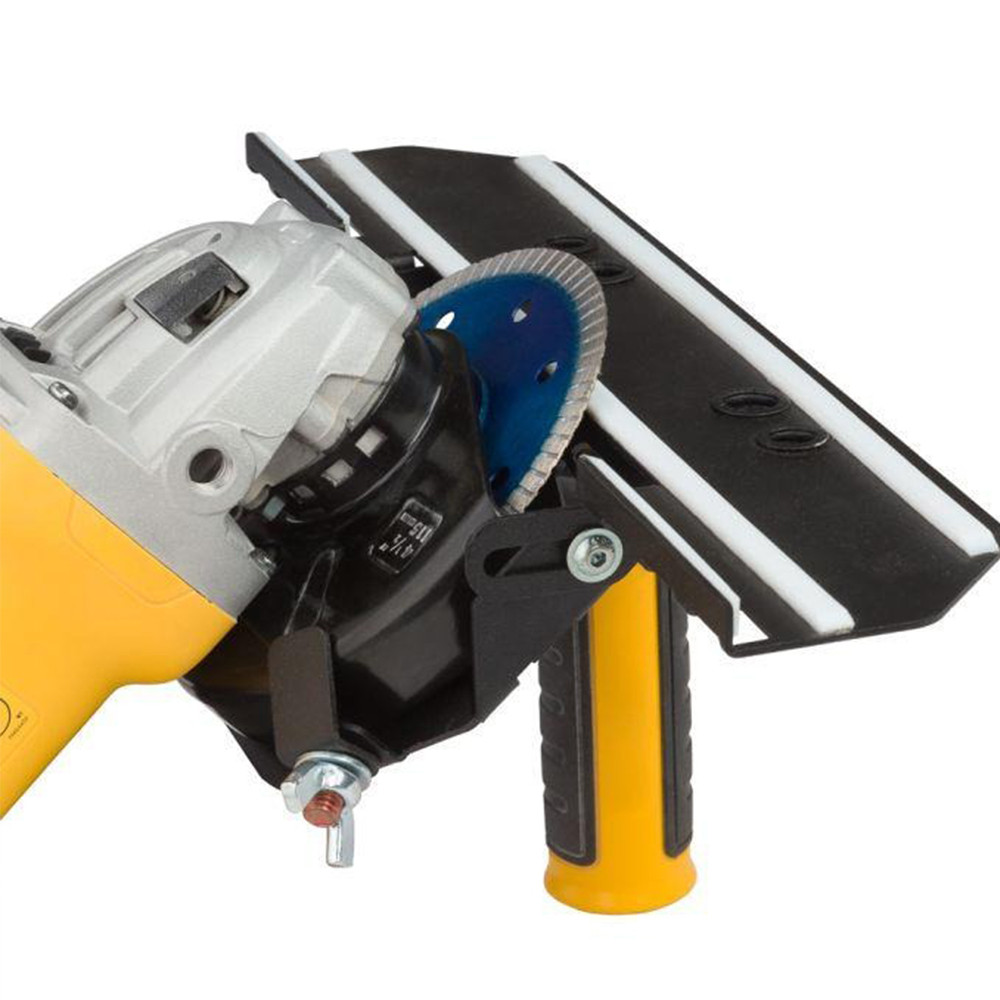
Arguably the most important tool in any professional tiler’s arsenal, a tile cutter allows you to cut tiles to size to ensure a flawless finish to any installation job. Laying tiles around baths, showers, door frames, windows, and other awkwardly-shaped obstacles is impossible without a tile cutter which gives you precision control over the shape and size of each tile.
You’ll need to pair a 45° tile-cutting slider with the right circular tile blade to achieve the cut you want. Different blades are best suited to different materials. E.g. a circular saw good for cutting porcelain and ceramic tiles won’t be strong enough for natural stone tiles, and vice versa.
Trowels
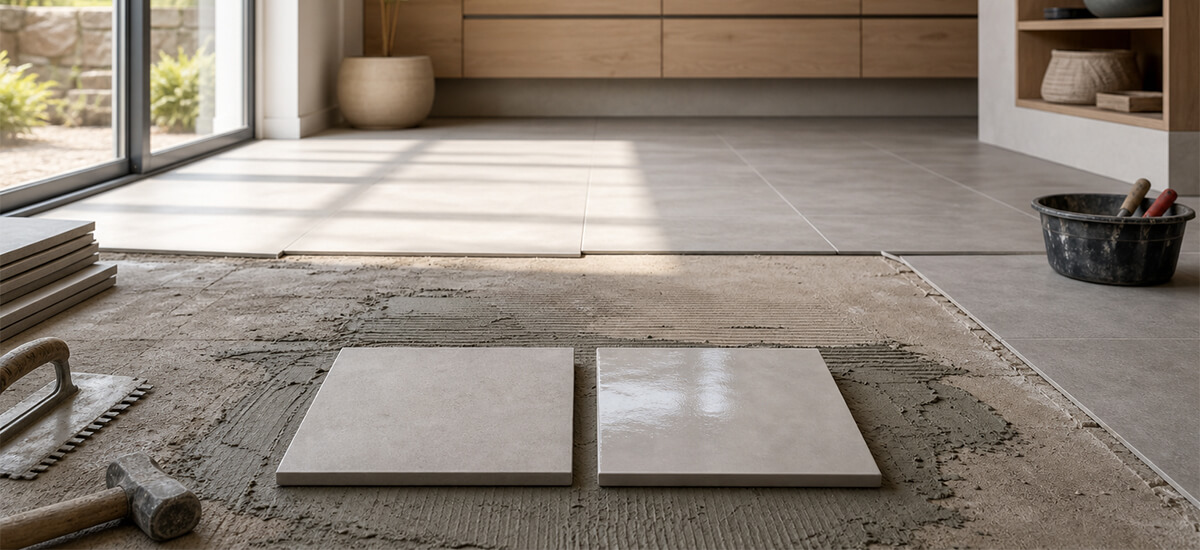
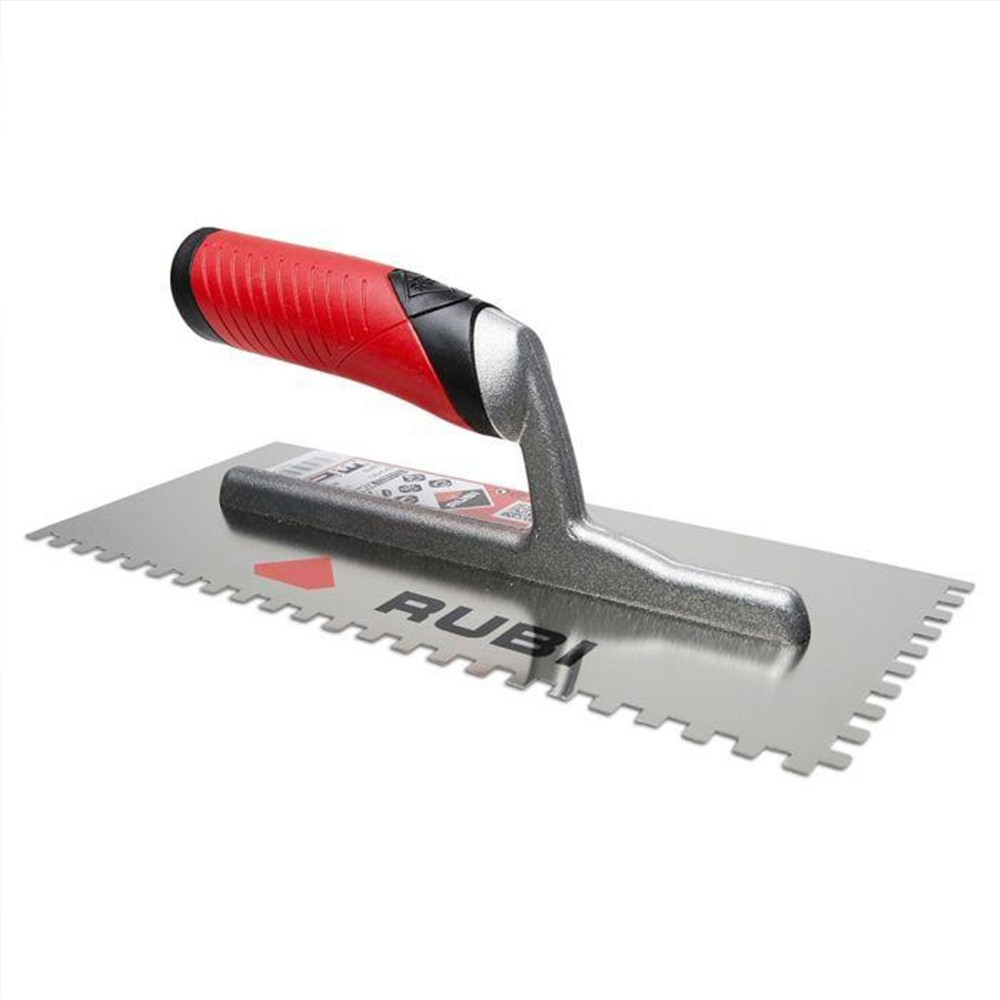
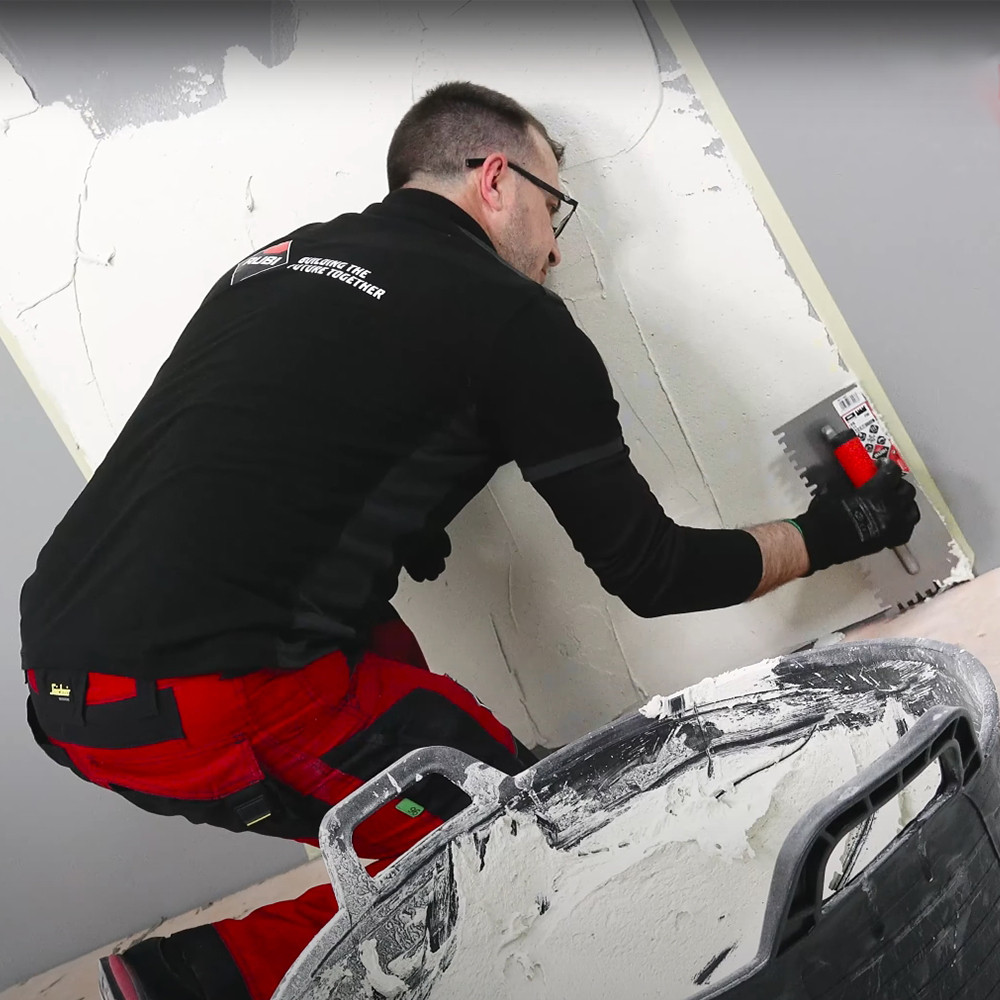
Like a sculptor needs a range of hammers and chisels, a tiler needs a range of top-quality notched trowels to achieve a consistently smooth layer of adhesive backing for every tile. You should always keep a number of different tile trowels on hand to suit different tile sizes and different applications.
For example, a square-notched trowel is best for installing floor tiles, since a thicker layer of mortar can be used, whereas a round-notched trowel is preferable for spreading thinner layers of adhesive for wall tiles.
Grout Sponges
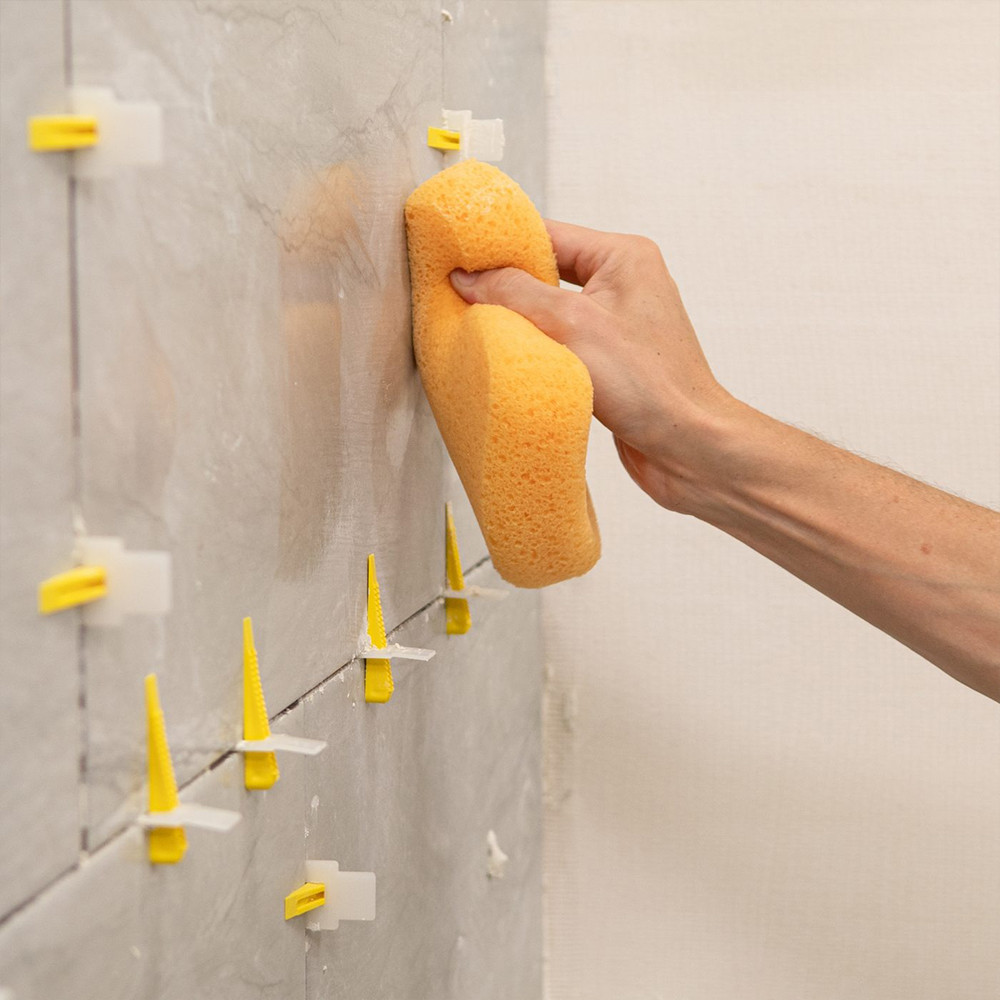
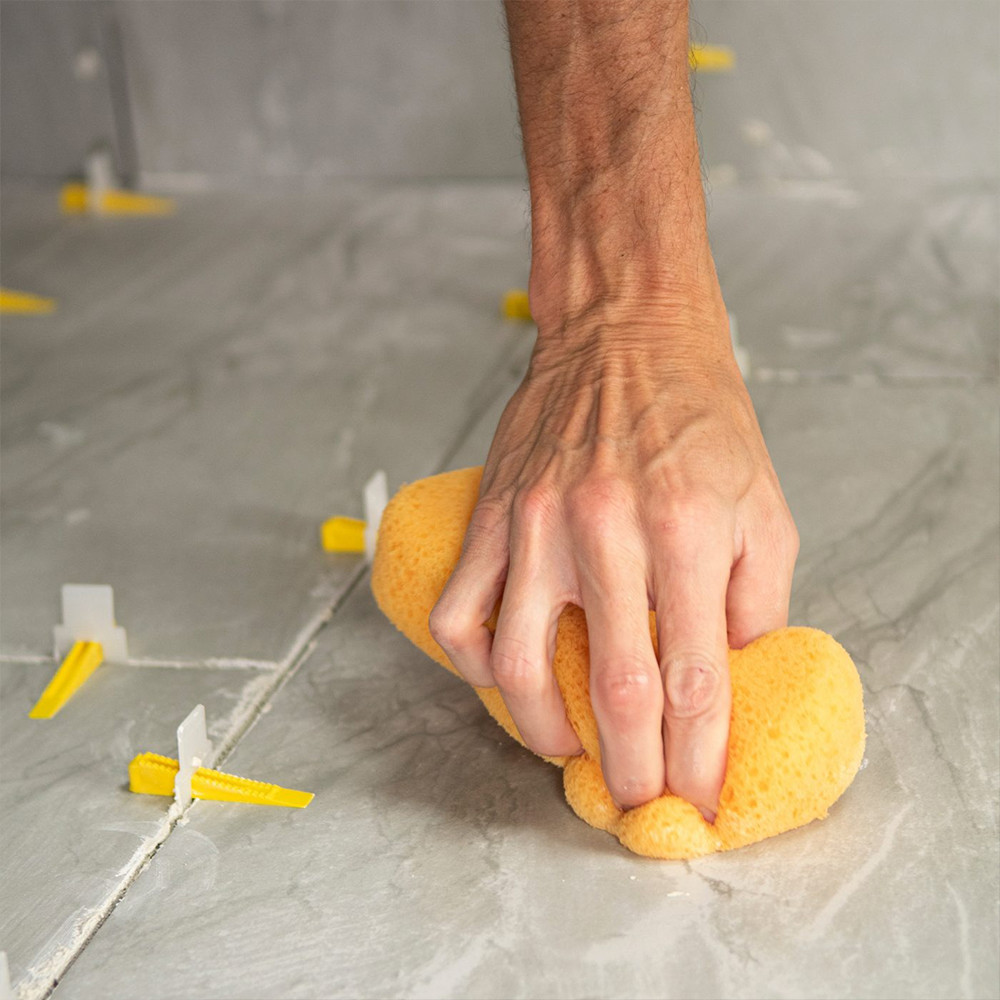
Without doubt one of the most satisfying parts of any tile installation is cleaning grout from the tile surface to leave the new wall or floor glossy and gorgeous.
A good grout sponge needs to be sturdy, highly absorbent and heavy-duty in order to remove all traces of grout from your tiles. Sponges with handles are an added bonus, as they make your life that little bit easier.
Tile Spacers
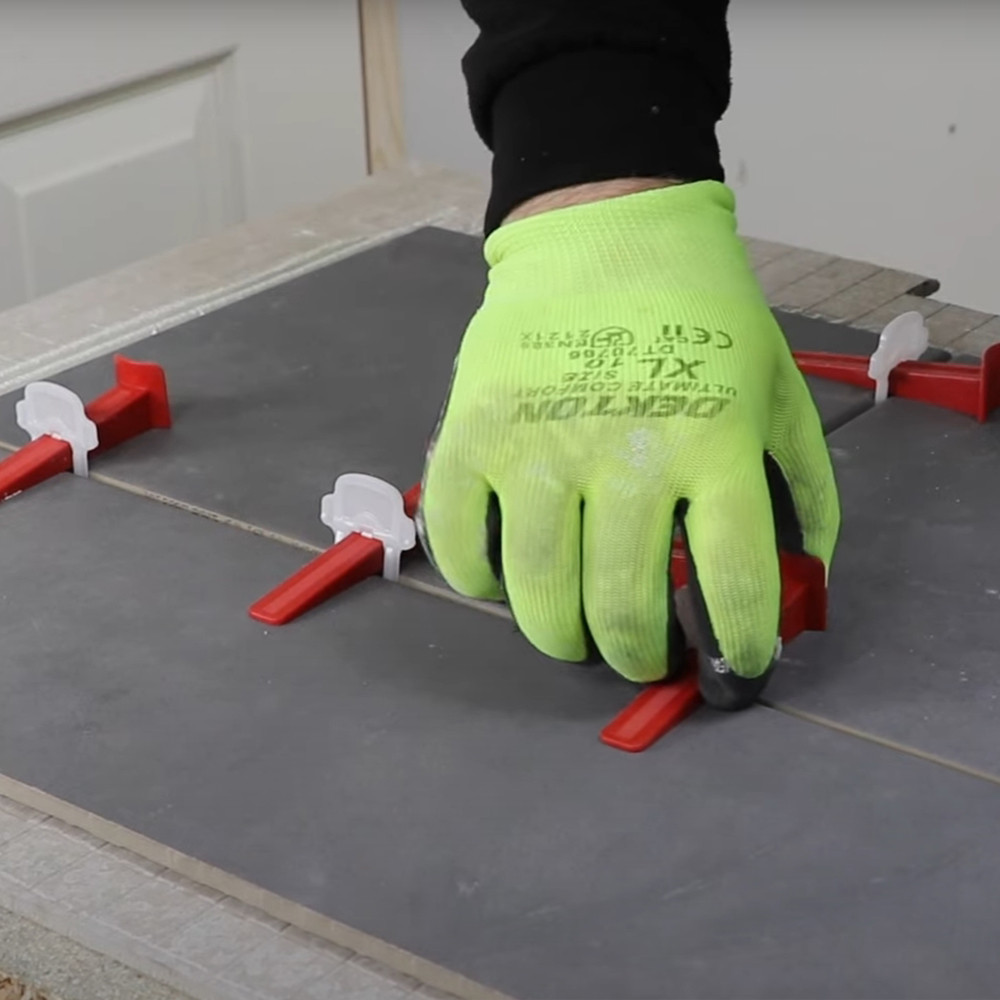
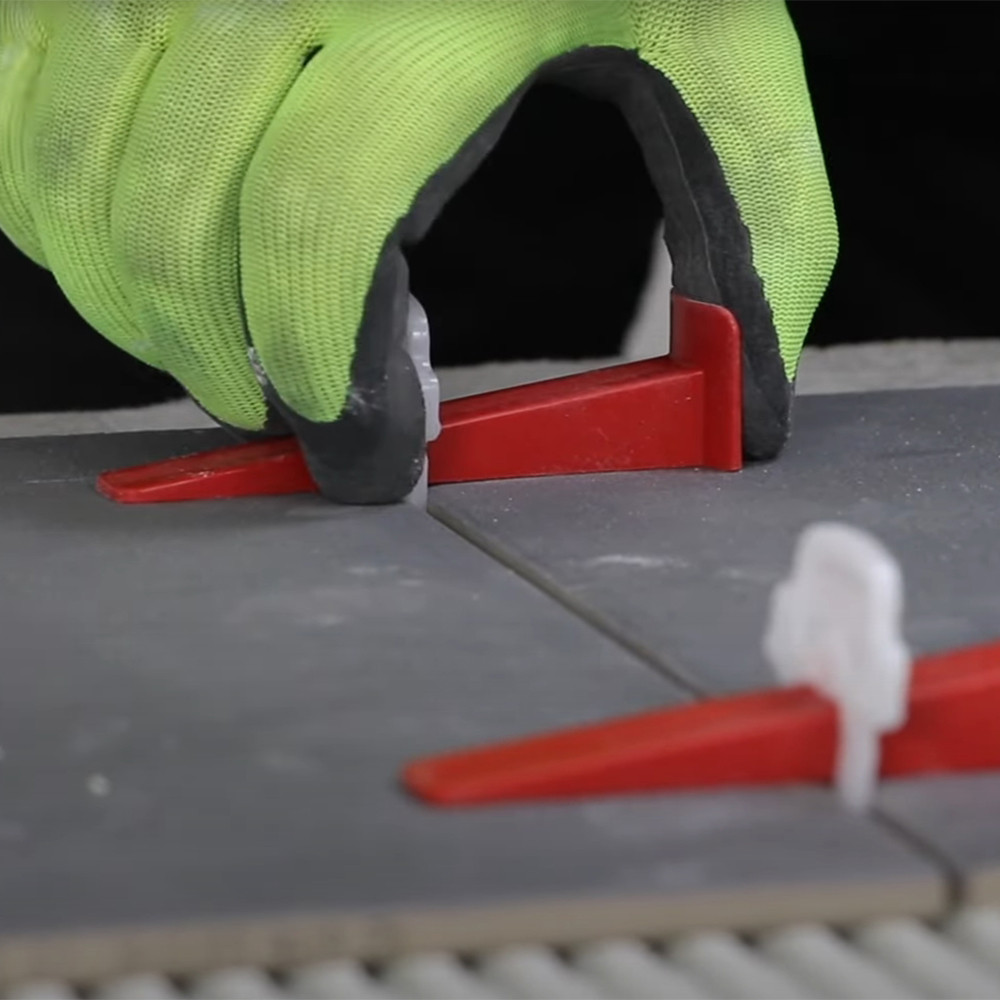
Highly affordable, yet indispensable, tile spacers allow you to achieve uniform distances between tiles with total ease.
We stock a wide range of quality tile spacers in different sizes, including 1.5mm, 2mm, 2.5mm, 3mm, 5mm and 10mm thickness, so that whatever pattern you’re laying or tile material you’re working with, you can be confident the end result is going to look a million euros.
Floats
Just as important as ensuring a uniform distance between tiles, and a smooth layer of adhesive behind them, is spreading your grout evenly.
Tile floats are the tool tilers use to force grout into every nook and cranny of their new tile installation, whilst protecting the tiles’ surfaces from scratches and stains. A quality grout float has an ergonomic handle for comfortable use, and is easy to clean.
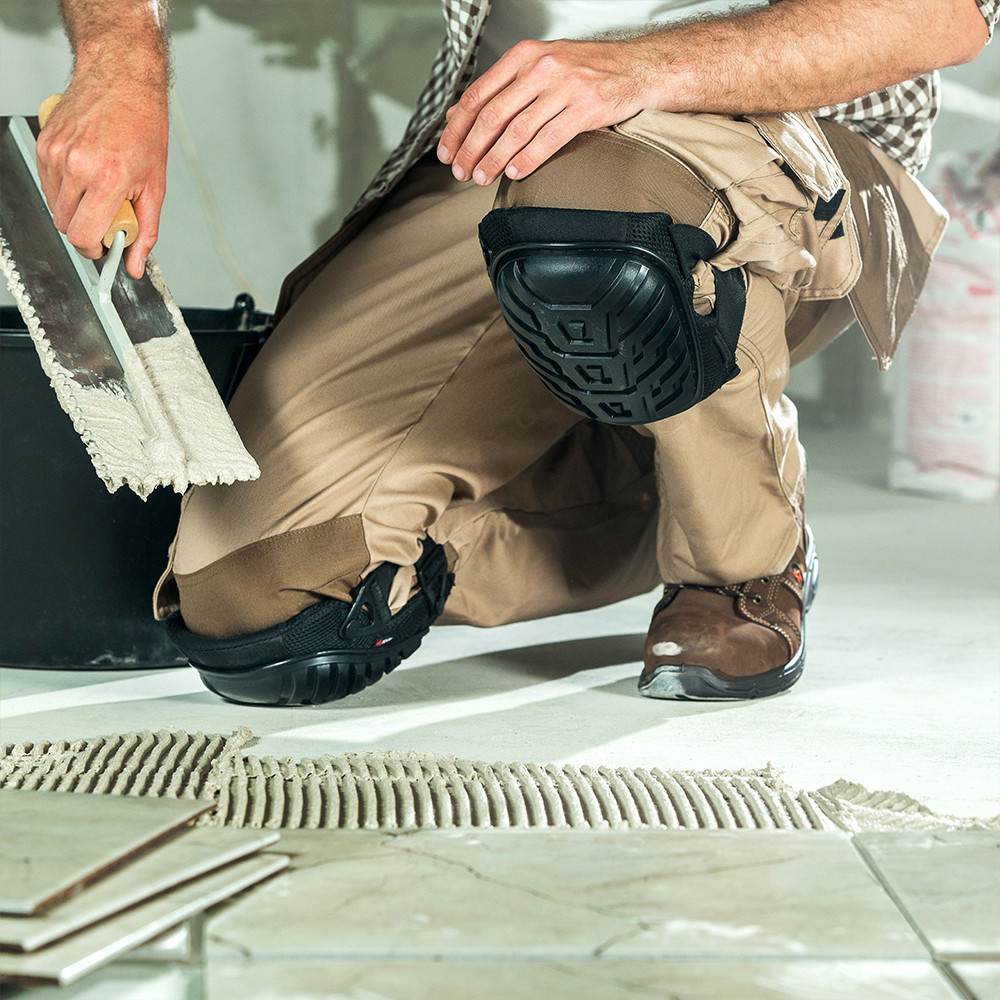
Knee Pads
Woe betide the man or woman who forgets their knee pads on a tiling job!
As any craftsperson, labourer or contractor knows, you’ll be spending a lot of time on your knees during any renovation project.
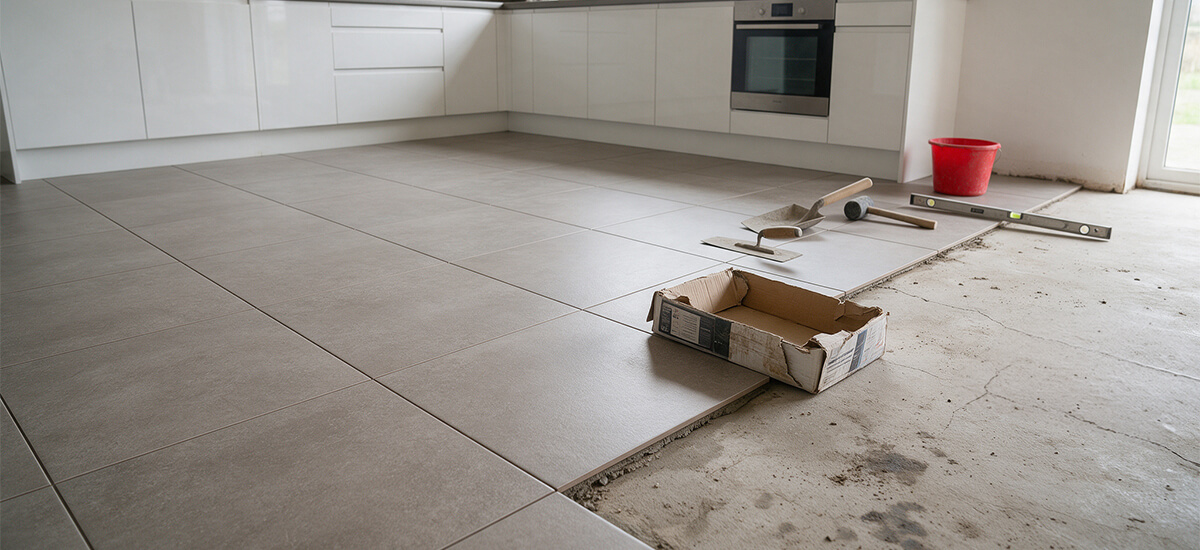
As a tiler, this can often be the case more so than in other professions, especially when installing floor tiles.
Protect yourself and your knees from injury and long-lasting wear on the joints with the best knee pads money can buy.
Waterproof, anti-slip and easy to adjust, Tile Merchant’s knee pads are no joke.
Levels
The flatness and evenness of your finished tile surface is key to the satisfaction of your customer, and therefore also to repeat business. A simple spirit level may be enough at first – at least with floor tile installations – to ensure an even surface, but as the tile adhesive activates, warping can quickly occur if additional tile levelling tools are not employed.
Use a combination of tile levelling wedges, tile levelling clips, and the Alpha tile levelling hand tool for ultimate control over the finish of each tiling job.
Marking Tools
Prior preparation prevents p*** poor performance, or so they say! If you’ll forgive our French, we can confirm this old saying to be true.
To achieve the highest quality finish for your tiling projects, you need to ensure as much thought and effort goes into the planning stage as does into the actual application of the tiles.
Marking tools – such as pencils or washable, non-permanent markers – are essential when it comes to cutting tiles to size and laying them in the perfect pattern and order.
Tile Trims
Whether they’re a tool or a material, the fact remains that tile trims are essential if you want to achieve a professional finish.
They both protect and cover the exposed edges of your tile installation: both for the floor and wall.
Available in a range of styles and finishes to suit different tile sizes and colours, our Tile Merchant tile trim looks stunning, and is resistant to erosion by any of the chemicals you might use during installation.
Tile Drill Bits
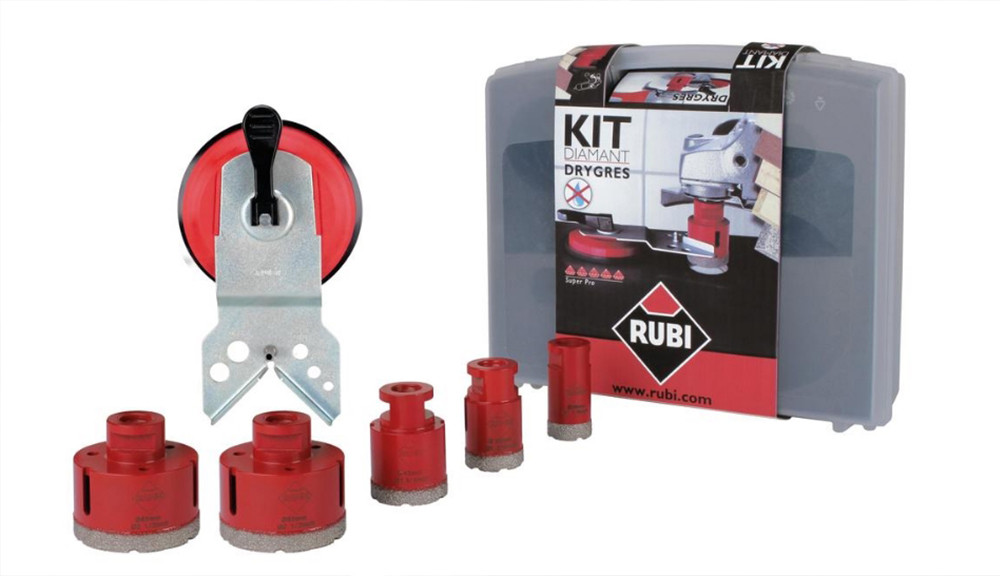
And finally, no complete list of essential tile tools for professional tilers in Ireland would be complete without talking about drill bits.
Because tiles are often installed in places which require wiring or plumbing (think kitchens and bathrooms) it’s crucial that you are able to drill holes into any tile material cleanly, safely, and with ease.
We stock a diverse range of diamond drill bits in various styles and sizes, capable of drilling directly through ceramic, porcelain, sandstone, limestone and granite tiles.
Tiling Tools and Their Uses: A Quick Reference
| Tool | Main Use |
|---|---|
| Tile cutter | Straight cuts on ceramic and porcelain tiles |
| Notched trowel | Spreading adhesive evenly behind tiles |
| Grout sponge | Cleaning excess grout from the tile surface |
| Tile spacers | Keeping consistent gaps between tiles |
| Grout float | Forcing grout evenly into joints |
| Knee pads | Protecting knees during floor installation |
| Spirit level / levelling clips | Keeping the finished surface flat and even |
| Marking tools | Planning cuts and layout before installation |
| Tile trim | Finishing and protecting exposed tile edges |
| Diamond drill bits | Drilling clean holes for pipework and fittings |
Browse the full tiling tools range to see every product covered in this guide.
Additional equipment for Irish tilers
Of course, there are other tiling tools which the Irish professional tiler might find super handy,
depending on the way they like to work. Naturally, we stock these too!
For example, electric mixers and heavy duty buckets make preparing adhesive for both indoor and outdoor tiles a breeze, whilst tile backer boards provide insulation, resistance to moisture and mould, and a perfectly-flat surface to tile onto.
Tungsten-blade tile nippers are great for correcting tile cuts on porcelain or ceramic tiles, or for cutting ceramic tiles without the need for heavy machinery.
And when working with heavier tiles, such as our ever-popular 20mm outdoor porcelain tiles or range of natural stone paving slabs, make sure you use a double-suction cup handle for safe and easy material transportation.
Whatever you need to take your professional tiling skills to the next level, we’ve got it for you. Pop into one of our showrooms, or chat with us online if you have any questions.
Don’t forget to sign up for a TradePLUS+ Tile Merchant business account to get all your tiling tools at trade prices, and delivery direct to your job site, anywhere in Ireland.
Register here for your FREE Trade Account.
Please Note: Trade Accounts are reserved for tilers, builders, landscaping, bathroom fitters, decking installers, architect, interior designers, dealers, or other professionals involved in the Irish market.

FAQs: Tiling Tools
What do professional tilers use to cut tiles?
A manual tile cutter for most straight cuts, an electric wet saw for thicker or harder materials like porcelain and natural stone, and tile nippers or a diamond drill bit for curved cuts and holes.
What tools do I need to start tiling?
At minimum: a tile cutter, notched trowel, tile spacers, a grout float and sponge, a spirit level, and marking tools. Knee pads and tile trim are worth adding for floor jobs and finished edges.
What size tile spacers should I use?
This depends on the tile and desired grout line width, with common sizes ranging from 1.5mm up to 10mm. Larger format tiles and natural stone often use wider spacers than small ceramic wall tiles.
What's the difference between a square-notched and round-notched trowel?
A square-notched trowel spreads a thicker layer of adhesive and suits floor tiles, while a round-notched trowel spreads a thinner layer better suited to wall tiles.
Do I need an electric tile cutter or is a manual one enough?
A manual cutter handles most ceramic and standard porcelain tiles. An electric wet saw becomes necessary for thicker, full-body porcelain or 20mm outdoor tiles, where a manual cutter is more likely to chip the edge.
What drill bits do professional tilers use?
Diamond drill bits, which are capable of drilling cleanly through ceramic, porcelain, and natural stone materials like sandstone, limestone, and granite without cracking the tile.
Why do tilers use levelling clips as well as a spirit level?
A spirit level checks the surface is even at the time of laying, but tile adhesive can shift slightly as it cures, causing warping. Levelling clips and wedges hold tiles in place during that curing period to prevent lippage.
What is a tile trim used for?
Tile trim protects and finishes the exposed edges of a tile installation, on both floors and walls, and is available in various styles and finishes to match different tile types.
Why Tile Merchant?
We offer extremely competitive pricing on our entire range of tiles and likewise. We stock a huge range of wall and floor tiles and our prices are competitive for retail and trade. Our stock is widely available in our tile stores in Ireland, which are open 7 days a week.
Alternatively, if you’d prefer to shop our tiles online, we can supply you with samples delivered for free.

Article written by Calum
Cal Bannerman is a freelance writer, editor, podcaster and voice actor from the Scottish Borders. He runs the storytelling podcast "Stories from the Hearth" and lives in a wee Glasgow Flat with his partner and their cat".